What Is a Certified Barber? Licensing and Career Guide

A certified barber is a professional who has met specific credentialing or licensing requirements that authorize them to perform barbering services legally and competently. The term covers two distinct but related concepts: a state-issued barber license, which is legally required to practice, and professional certifications awarded by industry organizations like the American Barber Association (ABA), which signal advanced expertise. Understanding the difference between these two credentials is the first step toward building a serious career in barbering. Both matter, but they serve very different purposes.
What is a certified barber, and what does the license actually mean?
A barber is defined as a professional whose work centers on cutting, grooming, styling, and shaving hair and beards, with the exact scope of practice set by local regulation. The word “certified” gets used loosely in everyday conversation, but in the industry it points to one of two things: a state barber license or a credential from a recognized professional body. Knowing which one someone means changes everything about how you read a job posting or evaluate a shop’s reputation.
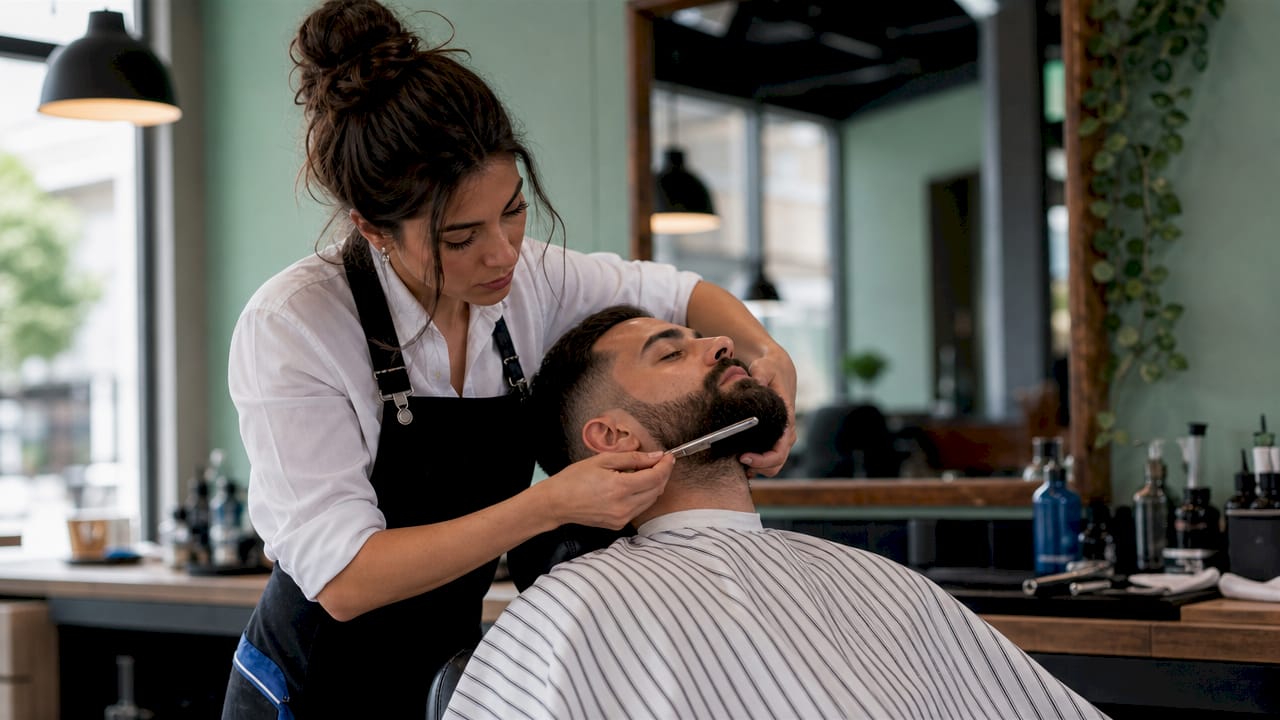
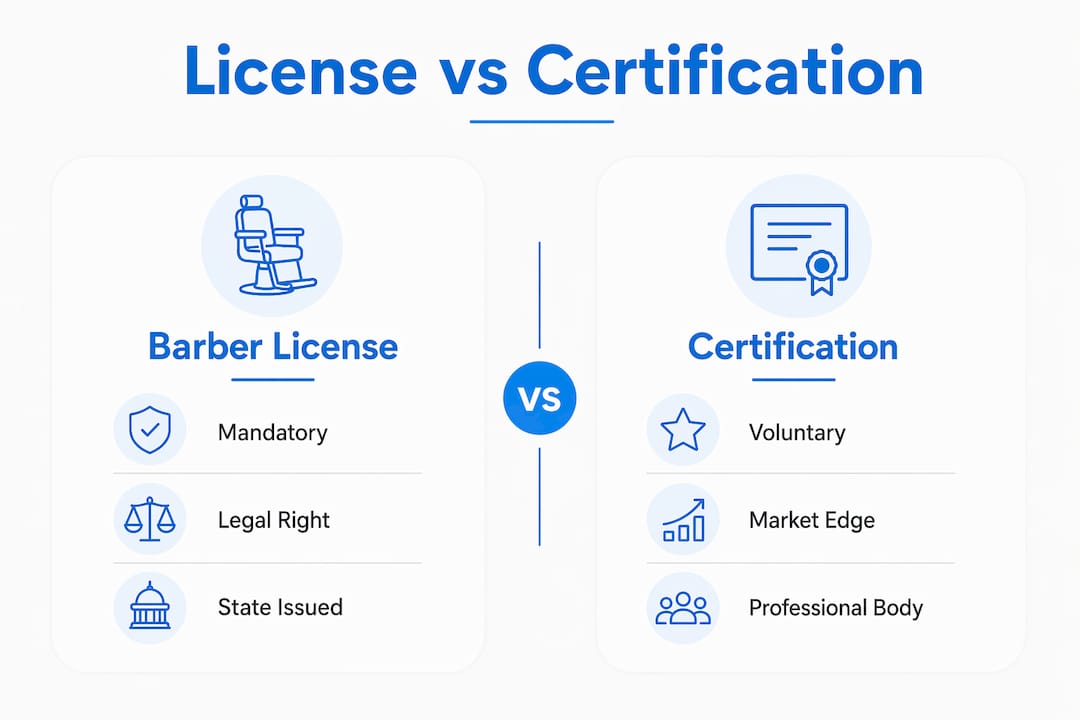
A state barber license is the legal foundation. Without it, you cannot legally cut hair or perform shaving services for pay in any U.S. state. The license is issued by a state board after you complete an approved training program, pass written and practical exams, and meet any additional state requirements such as minimum age. Think of it as your right to practice.
Professional certification, by contrast, is voluntary. It is awarded by organizations like the ABA and signals that a barber has gone beyond the minimum requirements. The ABA offers credentials including Professional Barber and Master Barber recognition, each tied to experience thresholds and demonstrated skill. These credentials do not replace a license. They build on top of it.
What are the licensing requirements for barbers in the U.S.?
Barber licensing requirements vary by state, but the core structure is consistent across most of the country. Licensing typically requires 1,000 to 1,500 hours of approved training and passing both a written theory exam and a practical skills exam. Some states set the minimum age at 16, others at 18. All states require an application and a fee submitted to the state cosmetology or barber board.
A standard state barber license authorizes you to perform:
- Haircutting and styling for men and boys
- Beard trimming and shaping
- Straight razor shaving and facial shaving
- Scalp treatments and basic hair coloring in most states
- Chemical services such as relaxers in many jurisdictions
The training hours cover both theory and hands-on practice. Coursework typically includes anatomy, sanitation, skin and scalp conditions, tool handling, and state law. Barber schools must align their curricula with state licensing requirements, combining classroom instruction with supervised floor time on real clients.
Pro Tip: Before enrolling in any barber school, confirm that the program is approved by your state’s licensing board. An unapproved program means your hours will not count toward licensure, no matter how good the instruction is.
The exam process is straightforward but requires preparation. Most states use the National Interstate Council of State Boards of Cosmetology (NIC) written exam alongside a state-specific practical component. After passing, you submit your license application, pay the fee, and receive your license. Renewal is required every one to two years depending on the state, and continuing education may be required.
How does certification differ from a barber license?
Licensing is the right to practice. Certification is a market differentiator. That single distinction separates two credentials that aspiring barbers often confuse.
The ABA’s certification programs are built specifically for licensed professionals who want to demonstrate mastery. The Professional Barber credential is designed for working barbers with solid experience. The Master Barber recognition requires more than seven years of licensed practice and represents the highest tier of industry professionalism the ABA awards. Earning it signals to clients and employers that you have not just met the minimum bar. You have exceeded it significantly.
The benefits of holding an ABA certification include:
- Increased client trust and perceived expertise
- Stronger positioning when applying to premium shops or opening your own
- Access to ABA’s professional network and continuing education resources
- A credential that travels across state lines, unlike a state license
“A key difference between certification and licensing is legal authority versus industry recognition, and both are important depending on your career goals.” — Milady Career Insights
Certification also functions as a career ladder. A new barber starts with a state license. With experience and continued skill development, they pursue the ABA’s Professional Barber credential. With seven-plus years of practice, the Master Barber designation becomes attainable. Each step adds weight to a resume and depth to a client relationship.
Barber license vs. cosmetology license: what’s the real difference?
The practical difference between a barber license and a cosmetology license comes down to one signature service: straight razor shaving. Cosmetologists cannot perform traditional straight razor face shaving in most U.S. states. That service is legally reserved for licensed barbers.
| Feature | Barber License | Cosmetology License |
|---|---|---|
| Straight razor shaving | Authorized in most states | Not authorized in most states |
| Men’s haircuts | Yes | Yes |
| Beard sculpting | Yes | Limited |
| Hair coloring | Included in many states | Yes |
| Nail services | No | Yes |
| Skin care (esthetics) | No | Partial |
| Training hours | 1,000–1,500 hours | 1,500–2,100 hours |
Cosmetology programs typically require more training hours overall because they cover a broader range of services including nails, skin care, and chemical treatments for women’s hair. Barber programs go deeper on men’s grooming specialties: short haircuts, bald fades, beard shaping, and traditional straight razor shaves. That depth is what makes a licensed barber the right professional for a classic men’s grooming experience.
Pro Tip: If your goal is to work in a men’s grooming shop or open a traditional barbershop, a barber license is the correct path. A cosmetology license will not authorize the straight razor services that define the classic barbershop experience.
State regulations do vary. A handful of states allow cosmetologists to perform some shaving services with additional training. Always check your specific state board’s rules before choosing a program.
How to become a certified barber: education, training, and advancement
Becoming a licensed and certified barber follows a clear sequence. Here are the steps most aspiring barbers take:
- Meet your state’s basic requirements. Confirm the minimum age, education level (usually a high school diploma or GED), and any other prerequisites your state board sets.
- Enroll in an approved barber school. Programs typically run 1,000 to 1,800 hours depending on the state. Tuition ranges from $6,500 to $10,000 including supplies, though costs vary by region and school reputation.
- Complete your training hours. Coursework covers theory, sanitation, tool use, skin and scalp science, and hands-on client work. Most programs take 12 to 18 months full-time.
- Pass the written and practical exams. The written exam tests your knowledge of theory and state law. The practical exam evaluates your technique on a live model or mannequin.
- Apply for your state license. Submit your exam results, training documentation, and application fee to your state board. Processing times vary.
- Start working and building experience. Most new barbers begin as apprentices or junior barbers in an established shop. Real-world client work is where skills sharpen fastest.
- Pursue ABA certification when eligible. Once you have solid experience, apply for the ABA’s Professional Barber credential. After seven or more years of licensed practice, the Master Barber designation becomes your next milestone.
The barbering profession blends tradition with modern regulatory standards. Razor shaving remains the signature service that separates a true barber from other hair professionals. Building that skill early and refining it over years is what separates good barbers from great ones.
Key takeaways
A certified barber holds both a state-issued license granting legal authority to practice and, ideally, a professional credential from a body like the American Barber Association that signals mastery beyond the minimum standard.
| Point | Details |
|---|---|
| License is legally required | No barber can legally charge for services without a valid state barber license. |
| Certification adds credibility | ABA credentials like Master Barber signal expertise that a license alone does not convey. |
| Straight razor shaving is exclusive | Licensed barbers can perform straight razor shaves; cosmetologists cannot in most states. |
| Training takes 1,000–1,800 hours | Barber school costs range from $6,500 to $10,000 and typically take 12–18 months. |
| Career ladder is clear | License first, then ABA Professional Barber, then Master Barber after seven-plus years. |
What 20 years behind the chair taught me about certification
Most beginners focus entirely on getting licensed and treat certification as something to think about later. That is understandable. The license is the gate you have to pass through first. But the barbers I have seen build real careers and loyal client bases are the ones who treated certification as a goal from day one, not an afterthought.
The ABA’s Master Barber credential is not just a plaque on the wall. It tells a client that the person holding the clippers has put in the years, the study, and the discipline to earn something most barbers never pursue. At Phillythebarber, that credential is part of how we communicate trust before a client even sits in the chair.
My honest advice: choose your barber school carefully. Not all programs are equal, and the quality of your practical training will shape your technique for years. Look for schools with strong floor time ratios, meaning more hours on real clients and fewer hours in a classroom. And start learning about your state’s specific rules early. The variation between states on chemical services and shaving authorizations catches a lot of new barbers off guard.
Certification is not a shortcut to success. It is evidence of a commitment you have already made.
— Stephen
Philly’s Barber Shop: where certified expertise meets classic craft
At Phillythebarber, every service is delivered by a certified Master Barber with over 20 years of experience. That credential is not a marketing phrase. It represents the licensing, training, and professional recognition that the American Barber Association reserves for its most experienced practitioners.
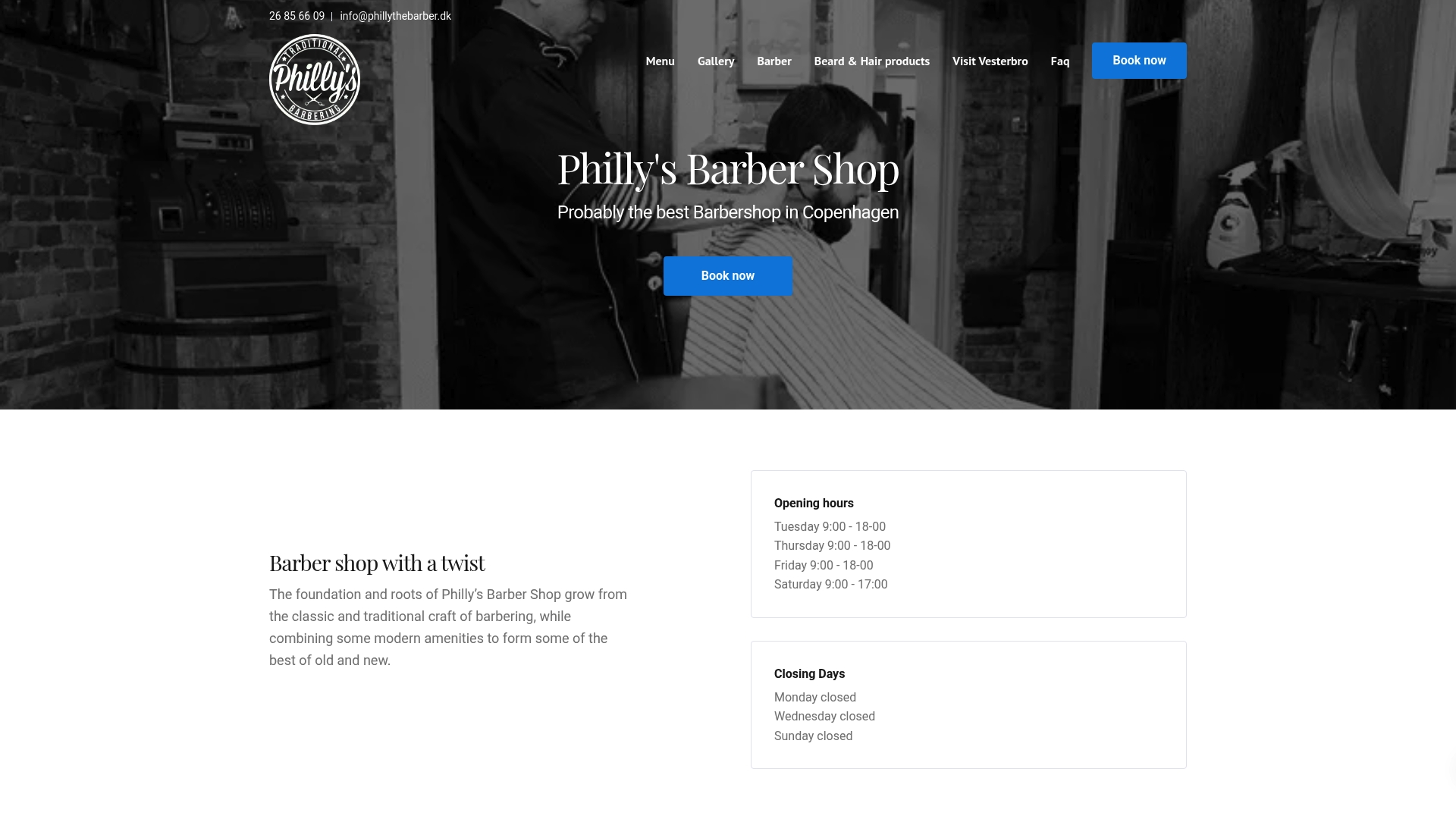
Whether you are looking for a clean bald fade, a beard sculpt, or a classic straight razor shave with a hot towel finish, Phillythebarber brings certified skill to every appointment. Walk-ins are welcome, and online booking is available for those who prefer to plan ahead. You can also browse barber-recommended grooming products to maintain your look between visits. When you sit in Philly’s chair, you are in the hands of a professional who has earned every credential the hard way.
FAQ
What is the difference between a barber license and certification?
A barber license is a state-issued legal requirement that authorizes you to practice barbering for pay. Certification, such as the ABA’s Professional Barber or Master Barber credential, is a voluntary industry recognition that signals expertise beyond the minimum standard.
How many hours does it take to become a licensed barber?
Most states require 1,000 to 1,500 hours of approved barber school training before you can sit for the licensing exam. Some states require up to 1,800 hours.
Can a cosmetologist perform straight razor shaves?
In most U.S. states, straight razor face shaving is legally reserved for licensed barbers. Cosmetologists are not authorized to perform this service in the majority of states.
What does the ABA Master Barber credential require?
The American Barber Association’s Master Barber recognition requires more than seven years of licensed barbering practice. It represents the highest level of professional credentialing the ABA awards.
How much does barber school cost?
Barber school tuition typically ranges from $6,500 to $10,000 including supplies, though costs vary by state and school. Program length runs from 12 to 18 months for most full-time students.