The Role of Craftsmanship in Barbering: 2026 Guide
Craftsmanship in barbering is defined as the skilled combination of technical precision and artistic expression that transforms a routine haircut into a personalized grooming experience. The industry recognizes this as “barbering artistry,” a standard that separates trained professionals from anyone holding a pair of clippers. The Bureau of Labor Statistics projects 7% job growth and roughly 15,800 annual openings in the profession. That number reflects one clear truth: demand for skilled hands has not slowed. The role of craftsmanship in barbering shapes every outcome a client walks out with, from a clean taper fade to a straight razor shave that leaves skin smooth for days.
What technical skills and techniques embody craftsmanship in barbering?
Barbering artistry lives in the details of specific techniques, not in general talent. Three techniques define the craft at its highest level: taper fades, scissor-over-comb, and straight razor work. Each one demands a different kind of physical intelligence, and each one takes years to master.
Taper fades and the discipline of guard progression
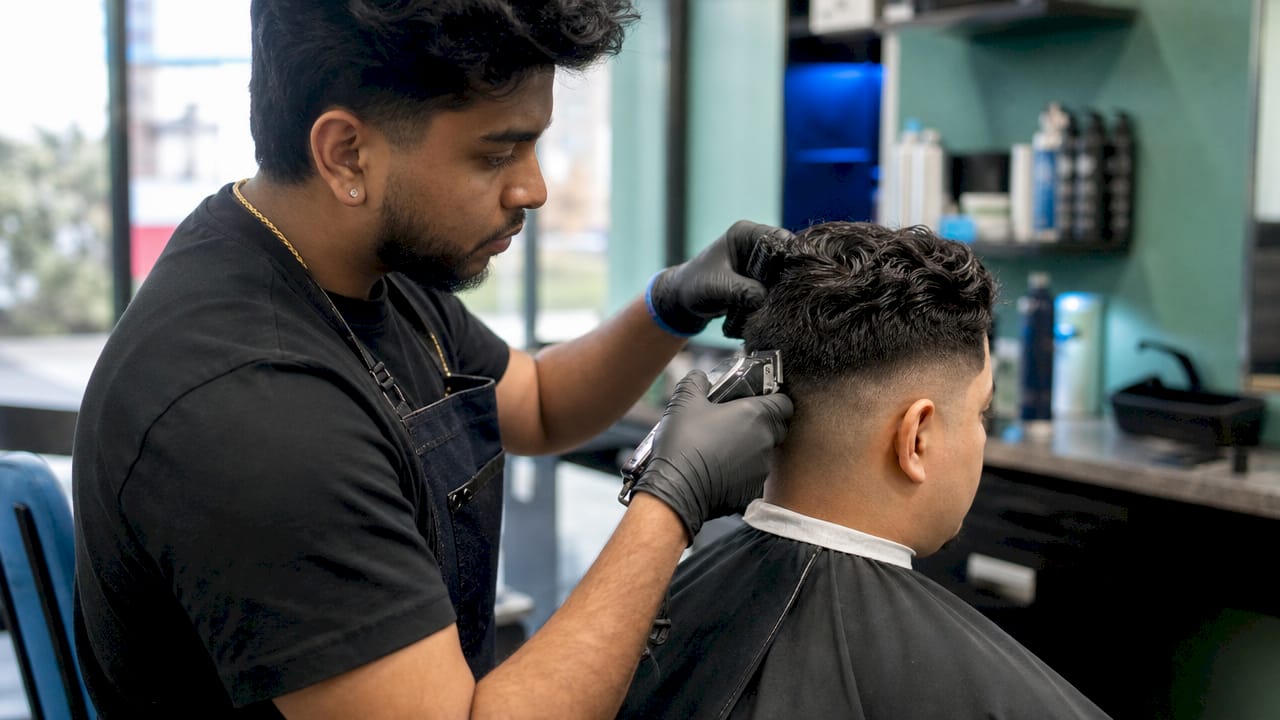
The taper fade is the most requested cut in most modern shops. In high-volume barbershops, taper fades are performed 40+ times daily, relying on a ritualized guard progression and feathering technique to maintain consistency across every single client. That volume means a barber cannot afford to improvise. The guard sequence, the angle of the clipper, and the flicking motion at the blend line must be automatic. Skilled barbers also know that fades rely more on flicking motions and scissor-over-comb refinement than on clipper guards alone. The guard gets you close; the technique gets you clean.
Scissor-over-comb as a foundation of blade mastery
Scissor-over-comb is the technique that separates barbers from stylists in the eyes of most grooming professionals. Blade stability and comb angle are the key variables in producing smooth, graduated fades without clipper guards. The comb lifts the hair at a consistent angle while the scissors cut parallel to it, creating a blend that looks natural rather than mechanical. This technique rewards investment in quality shears and hours of deliberate practice. A barber who masters scissor-over-comb can produce results that no clipper guard combination can replicate.
Straight razor work and beard shaping
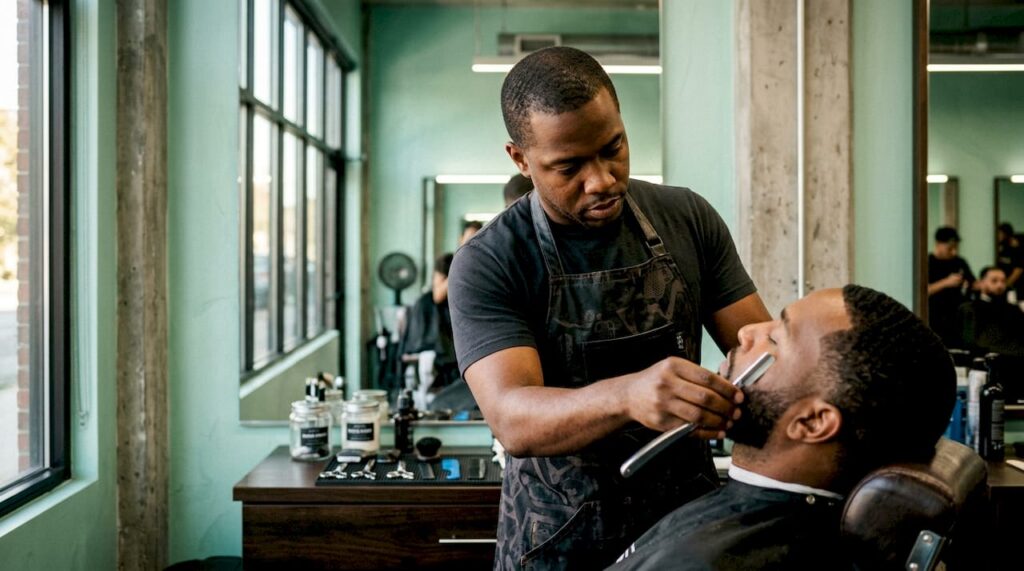
Straight razor shaving requires the highest level of control in the craft. The blade sits at a 30-degree angle against the skin, and any deviation causes irritation or cuts. Beard shaping with a straight razor defines jawlines and cheekbones with a level of accuracy that scissors cannot match. At Phillythebarber, straight razor shaves include a hot towel preparation that softens the beard and opens the pores before the blade ever touches the skin. This preparation step is not optional for skilled work. It is part of the craft.
Pro Tip: The most common amateur mistake in fades is skipping the scissor-over-comb refinement step and relying only on clipper guards. That shortcut creates a visible line instead of a smooth blend. Always finish a fade with scissor-over-comb work at the blend zone.
Key tools that support craftsmanship in haircuts include:
- Straight razors: For shaving and beard line definition with maximum control
- Quality shears: For scissor-over-comb and texture work requiring blade stability
- Cordless clippers: For guard-based fades and bulk removal with consistent power
- Combs (barber and tail): For sectioning, lifting, and guiding cuts at precise angles
- Hot towels: For skin preparation before razor work
How does traditional barbering craftsmanship impact grooming health and client experience?
Traditional craftsmanship treats the grooming session as a health practice, not just a cosmetic service. Traditional barbering follows a four-part sequence: consultation, preparation, execution, and finish, designed to maximize long-term grooming health rather than produce a quick cosmetic result. Each step protects the client’s hair and skin while improving the quality of the cut itself.
The four steps work as follows:
- Consultation: The barber assesses hair type, growth patterns, cowlick placement, and lifestyle needs before picking up a single tool.
- Preparation: Hot towels, pre-shave oils, or conditioning sprays are applied to hydrate the hair and reduce cutting resistance.
- Execution: The cut or shave is performed with full attention to the plan established in the consultation.
- Finish: The barber checks the result from multiple angles, refines edges, and applies finishing products suited to the client’s hair type.
Hot towel treatments hydrate hair, reduce cutting resistance, and minimize micro-injury, which extends the longevity of the cut. That means the client’s hair holds its shape longer between visits. Rushed grooming skips preparation entirely, which increases the chance of razor burn, uneven cuts, and scalp irritation. The difference is not just comfort. It is measurable in how long the result lasts.
Consistent barber-client relationships produce neater, longer-lasting results through tailored understanding of individual hair behavior and lifestyle. A barber who sees the same client every three weeks builds a mental profile of how that person’s hair grows, where it resists blending, and what products work best. That knowledge cannot be replicated in a walk-in-only model where a different person cuts your hair every time.
Pro Tip: Ask your barber to use a hot towel before any razor work, even if it is not offered by default. The preparation step reduces micro-abrasion and leaves skin noticeably smoother after the shave.
In what ways do masters integrate tradition and modern tools in barbering craftsmanship?
Master barbers integrate traditional tools like straight razors with modern clippers and software to create results that neither approach achieves alone. The straight razor defines edges with a sharpness that no electric trimmer can match. Modern cordless clippers provide consistent power and guard precision that speeds up bulk work without sacrificing quality. The skill lies in knowing which tool serves each moment of the cut.
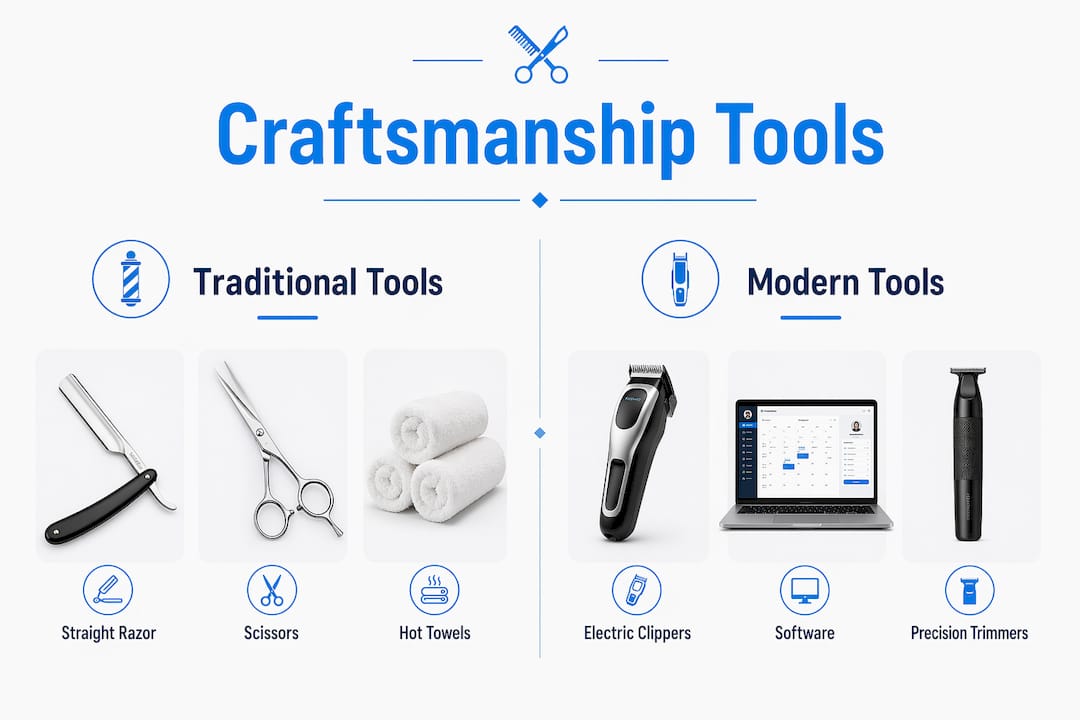
Modern master barbers blend tradition with technology to improve control, precision, and client comfort. This is not a compromise. It is an upgrade. A barber who only uses traditional tools works slower than necessary. A barber who only uses modern tools misses the finishing detail that separates a good cut from a great one. The best work comes from using both with intention.
Barbering is also better understood as visual editing using expert knowledge of facial structure and hair behavior rather than simple upkeep. This reframe matters because it changes how barbers approach each client. A barber who thinks in terms of visual editing considers the client’s face shape, the weight distribution of the hair, and how the cut will look in motion. That level of thinking is what separates a master barber from a technician.
| Feature | Traditional tools | Modern tools |
|---|---|---|
| Edge definition | Straight razor: maximum sharpness | Electric trimmer: consistent but less refined |
| Fade blending | Scissor-over-comb: smooth graduation | Clipper guards: fast, reliable for bulk work |
| Skin preparation | Hot towels: reduces micro-injury | Pre-shave gels: convenient, widely available |
| Precision control | Hand feel guides every movement | Guard settings standardize depth |
| Finishing detail | Manual refinement at blend zones | Foil shavers for clean necklines |
The barber who understands both columns can move fluidly between them. That fluidity is the mark of genuine craftsmanship in haircuts.
What practices distinguish a crafted barbering experience from a generic haircut?
Consistency is the primary factor distinguishing a truly crafted barbering experience from a generic haircut. Consistency requires a diagnostic phase before the cut begins. Master barbers spend 5–10 minutes assessing hair growth patterns, cowlick placement, and skin sensitivity before making a single cut. That assessment is often skipped in faster shops, and the result shows up in uneven fades and lines that do not follow the client’s natural growth direction.
A crafted experience differs from a generic haircut in several specific ways:
- Diagnostic phase: Growth patterns, cowlick placement, and skin sensitivity are assessed before cutting begins.
- Tool maintenance: Sharp blades and clean tools produce cleaner lines and reduce skin drag.
- Technique refinement: The barber adjusts technique based on what the hair is doing, not just what the client asked for.
- Timing: A crafted session takes longer because each step is completed fully, not rushed.
- Outcome focus: The goal is a result that holds its shape for weeks, not just looks good in the chair.
Knowing why barbershops offer personalized service to every client comes down to this diagnostic investment. A barber who skips the assessment phase is guessing. A barber who completes it is working from knowledge. The difference shows up in the mirror three weeks after the cut, when one result still looks sharp and the other has lost its shape.
Pro Tip: After completing a fade, use a hand mirror to check the blend from the back and both sides before the client leaves the chair. Catching an uneven blend in the shop takes 30 seconds to fix. Catching it after the client leaves costs you their trust.
Key takeaways
Craftsmanship in barbering is the combination of diagnostic skill, technical mastery, and consistent preparation that produces results lasting well beyond the appointment.
| Point | Details |
|---|---|
| Craftsmanship is defined by technique | Taper fades, scissor-over-comb, and straight razor work each require years of deliberate practice to master. |
| Preparation protects grooming health | Hot towels and consultation reduce micro-injury and extend the longevity of every cut. |
| Tradition and modern tools work together | Master barbers use straight razors for edge definition and modern clippers for speed, combining both intentionally. |
| Diagnostics drive consistency | A 5–10 minute assessment of growth patterns and skin sensitivity before cutting is what separates crafted results from generic ones. |
| Client relationships improve outcomes | Repeated sessions with the same barber build a knowledge base that makes every subsequent cut more accurate. |
Why craftsmanship is the only thing worth protecting in this trade
I have been behind the chair for over 20 years, and the one thing I have seen kill careers faster than anything else is the decision to speed up at the cost of quality. Barbers who chase volume over craft burn through clients. The ones who invest in technique build a book that fills itself through word of mouth.
The modern grooming industry pushes convenience hard. Online booking, express cuts, and subscription models all have their place. But none of them replace the moment when a client sits down and you actually look at their hair before you touch it. That diagnostic pause is where the real work begins. Most barbers skip it. The ones who do not are the ones clients come back to for years.
What I tell every barber I mentor is this: your tools are replaceable, but your feel is not. The ability to read a fade line by touch, to know when a blend needs one more pass with the scissor-over-comb, to sense when the razor angle needs adjusting before the skin reacts. That feel is built through repetition and attention. No app teaches it. No shortcut produces it. Invest in the skill, and the career takes care of itself.
— Stephen
Phillythebarber: where craftsmanship shows up in every appointment
At Phillythebarber, every service is built around the same principles covered in this guide: a proper consultation, skilled technique, and a finish that holds up over time.
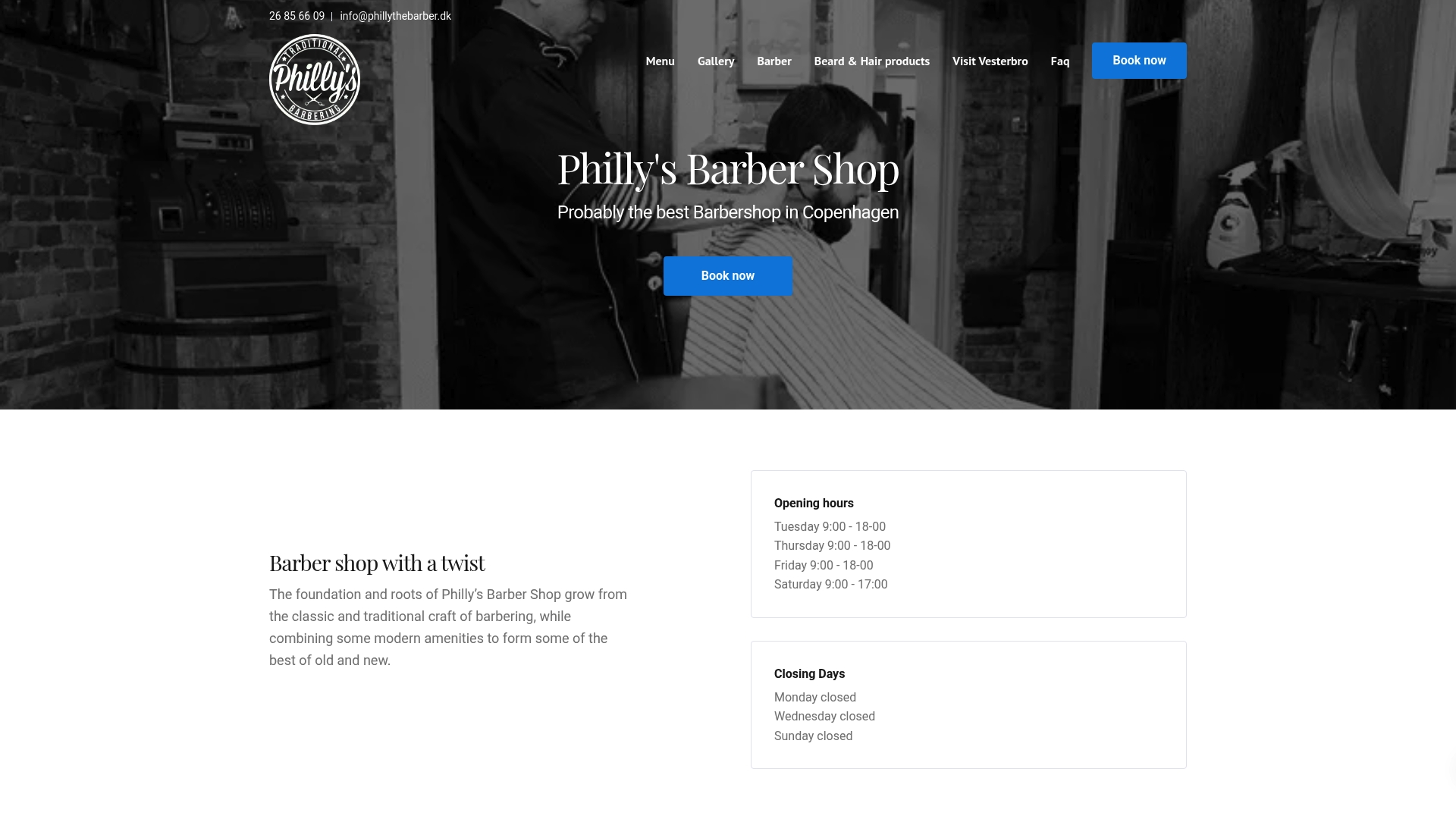
Philly is a certified Master Barber with over 20 years of experience, and every appointment reflects that depth of skill. Whether you are coming in for a taper fade, a beard trim, or a full straight razor shave with hot towel preparation, the session follows the four-step sequence that traditional craftsmanship demands. You can book walk-in barbershop services directly through the site and get access to personalized grooming that goes well beyond a quick cut. Visit Phillythebarber.dk to schedule your next appointment and experience what skilled barbering actually feels like.
FAQ
What is the role of craftsmanship in barbering?
Craftsmanship in barbering is the combination of technical skill, artistic judgment, and consistent preparation that produces personalized, long-lasting grooming results. It distinguishes trained professionals from basic haircut providers.
Which barbering techniques require the most skill?
Taper fades, scissor-over-comb blending, and straight razor shaving require the highest level of skill. Each technique depends on blade control, angle precision, and years of deliberate practice to execute consistently.
How does a diagnostic phase improve a haircut?
A 5–10 minute assessment of hair growth patterns, cowlick placement, and skin sensitivity before cutting allows the barber to tailor the technique to the individual. This step is what produces cuts that hold their shape for weeks.
Why does traditional preparation like hot towels matter?
Hot towel treatments hydrate the hair, reduce cutting resistance, and minimize micro-injury to the skin. The result is a smoother shave and a cut that lasts longer between appointments.
How do master barbers balance tradition and modern tools?
Master barbers use straight razors and scissor-over-comb techniques for precision and finishing detail, while relying on modern cordless clippers for speed and consistency in bulk work. The skill is knowing when to use each tool.