Skin Fade Haircut Explained: Your Complete Style Guide
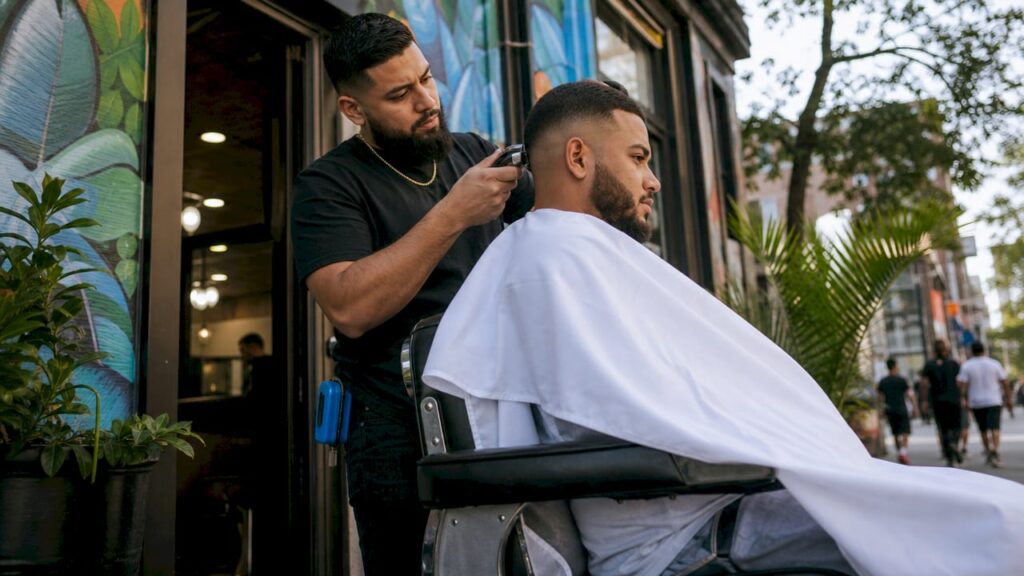
A skin fade haircut is defined as a barbering technique where the hair on the sides and back tapers progressively down to bare skin, creating a sharp gradient with maximum contrast. Also called a bald fade or zero fade, this style is one of the most requested cuts in professional barbershops today. The fade gradient typically spans about 3 vertical inches of scalp, blending from your natural hair length down to nothing. Whether you’re new to fades or looking to refine your next appointment, understanding what a skin fade haircut actually involves will help you walk out of the chair looking exactly how you imagined.
What is a skin fade haircut and how does it work?
A skin fade is a precision blending technique, not a hairstyle in itself. The barber uses clippers with progressively smaller guards, then finishes with unguarded trimmers or a straight razor to bring the hair completely down to skin level. Professional fades achieve their signature “blurry” gradient by using clipper lever adjustments between guard lengths, not just switching guards. That subtle lever technique is what separates a polished, professional result from an amateur attempt.
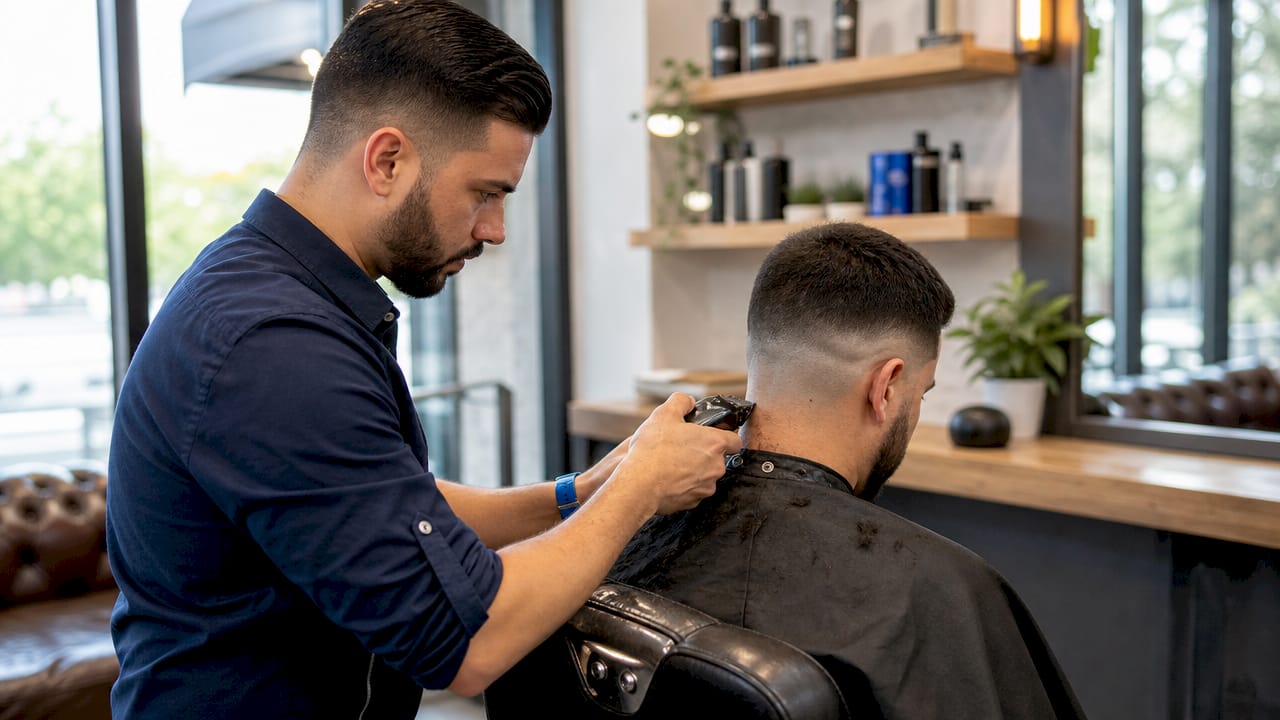
The term “bald fade” and “zero fade” both refer to the same finish: hair that disappears entirely at the bottom. The gradient moves upward from bare skin through increasingly longer lengths until it meets the hair on top. This creates the clean, high-contrast look that makes skin fades so visually striking. The style works as a canvas, meaning the top can be styled in almost any direction, from a textured crop to a pompadour.
What are the different types of skin fade haircuts?
The three main variations are the low skin fade, the mid skin fade, and the high skin fade. Each starts at a different point on the head, and that starting point changes the entire character of the cut.
Low, mid, and high: what each one looks like
A low skin fade starts just above the ear and the neckline. The transition to skin happens close to the bottom of the head, which keeps the look conservative and polished. This is the go-to choice for professional environments or men who want a clean finish without a bold statement.
A mid skin fade starts around the temple area, roughly halfway up the sides. It balances boldness with versatility, making it the most popular choice across different face shapes and lifestyles. The mid fade suits men who want a modern look that still reads as put-together in most settings.
A high skin fade starts near the top of the sides, close to where the hair on top begins. It creates maximum contrast and a very bold, graphic look. This style works well for men with oval or longer face shapes, but can appear aggressive on rounder faces.
| Fade Type | Starting Point | Best For | Visual Impact |
|---|---|---|---|
| Low skin fade | Just above ear/neckline | Professional settings, conservative style | Subtle, clean |
| Mid skin fade | Temple level | Most face shapes, everyday wear | Balanced, modern |
| High skin fade | Near top of sides | Bold statements, oval/long faces | Maximum contrast |
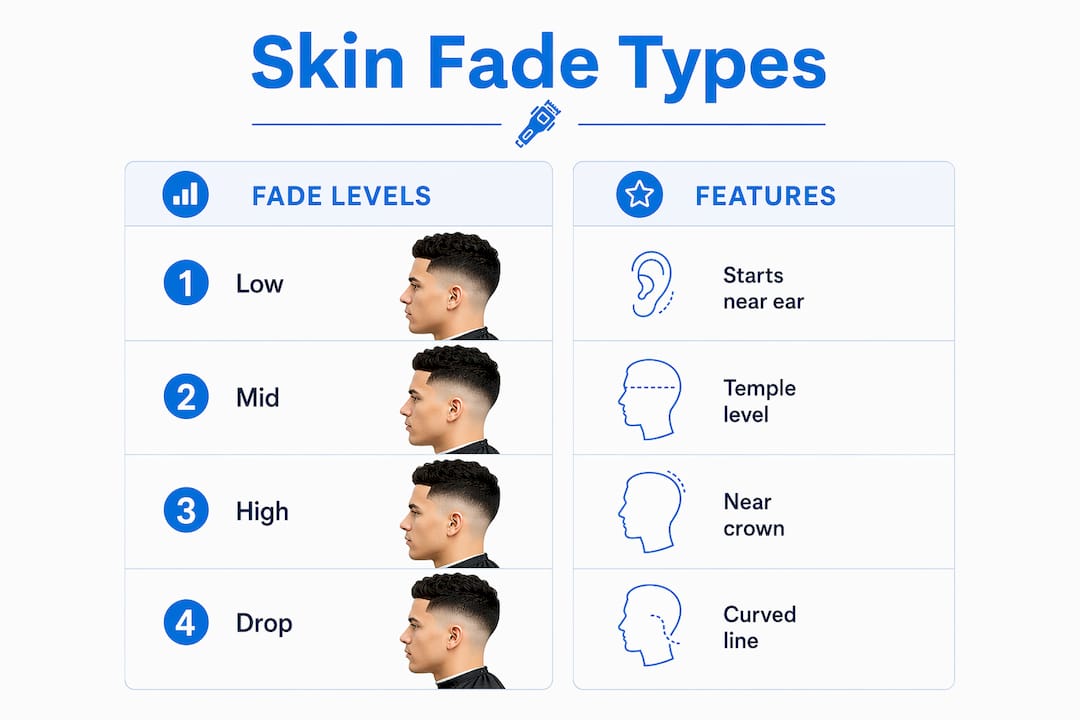
Choosing between them comes down to two factors: your face shape and your daily environment. Low fades suit professional environments; high fades provide maximum contrast but demand more commitment to the look.
Drop fade is a variation worth knowing. The fade line curves downward behind the ear, following the natural contour of the head. It adds a stylish arc to any of the three height options above.
How to communicate your skin fade to your barber
A skin fade is a technique, and clear communication is the only way to get the result you want. Clients must specify “skin” or “zero” finish to confirm they want the hair to go completely bald at the bottom. Without that, a barber may default to a standard taper, which stops short of bare skin.
Here is how to describe your cut clearly before the clippers start:
- State the fade height. Say “low,” “mid,” or “high” skin fade. Point to where you want the skin to start if you’re unsure of the terminology.
- Confirm the finish. Use the words “skin,” “bald,” or “zero” to make sure the barber knows you want the hair to disappear completely.
- Describe the top. Tell your barber how much length you want to keep on top and how you style it at home. This shapes the overall silhouette.
- Mention your hair type. Curly, coarse, or fine hair all behave differently during a fade. Your barber needs to know this to adjust their technique.
- Show a reference photo. A single image removes all ambiguity. Bring one that shows both the fade height and the top styling you want.
One of the most common client misconceptions is confusing a fade with a taper. A taper ends with short hair but not bare skin. A skin fade goes all the way down to zero. Knowing this distinction before you sit in the chair saves you from walking out with the wrong cut.
Pro Tip: Read up on how to prepare for your barber visit before your appointment. Coming in with clean, dry hair and a clear idea of what you want cuts the consultation time in half and gives your barber more time to focus on the actual cut.
What maintenance does a skin fade require?
A skin fade looks its sharpest for 10–14 days after the cut. After that, regrowth starts to blur the gradient and the clean skin line disappears. Standard tapers last longer because they never go down to bare skin, so the regrowth is less noticeable.
To keep your fade looking fresh, follow these guidelines:
- Book every two weeks. A 14-day haircut cycle is the standard recommendation for maintaining a crisp skin fade. Waiting three weeks or longer results in visible regrowth lines.
- Wash your scalp regularly. Exposed skin on the sides collects product buildup and sweat faster than hair-covered areas. Use a clarifying shampoo weekly to keep the scalp clean and bright.
- Exfoliate the faded area. Weekly scalp exfoliation prevents buildup and keeps the skin looking healthy between cuts.
- Moisturize the skin. Bare scalp skin can dry out, especially in cold weather. A light, non-greasy moisturizer keeps the skin from looking flaky or dull.
- Avoid heavy products on the sides. Pomades and waxes applied too close to the faded area can clog pores and dull the clean finish.
Pro Tip: Check out the barber-recommended hair products guide for specific product picks that work with skin fades without causing buildup on exposed scalp.
The biggest maintenance mistake men make is waiting too long between cuts. A skin fade at three weeks looks noticeably different from a skin fade at two weeks. If you want the look, commit to the schedule.
How does a skin fade look on different hair types?
A skin fade works on virtually every hair type, but the visual result and the barber’s technique change significantly depending on your texture and density.
| Hair Type | Fade Appearance | Barber Adjustment | Best Top Style |
|---|---|---|---|
| Straight, fine | Clean, sharp gradient | Minimal blending needed | Slick back, textured fringe |
| Straight, thick | Bold, defined contrast | Extra blending at transition | Pompadour, quiff |
| Wavy | Soft, natural gradient | Clipper-over-comb blending | Textured crop, side part |
| Curly | Voluminous top, crisp sides | Dry cutting, pick blending | Afro top, twist out |
| Coarse/dense | High contrast, dramatic | Slower passes, more guard work | Flat top, high-top fade |
Men with straight, fine hair get a very clean and precise gradient. The transition from skin to hair is easy to see, which makes the fade look sharp but also means any mistakes are obvious. Men with curly or coarse hair get a naturally softer gradient at the transition point, which can actually look more forgiving. The volume on top creates a strong contrast with the bare sides, giving the overall cut a bold, sculptural quality.
Dense hair requires more passes with the clippers and careful guard work to avoid harsh lines. Fine hair blends quickly but can look thin on top if the barber takes off too much length. Wavy hair sits between the two extremes and tends to produce a naturally soft, flattering fade with minimal effort.
The top styling matters as much as the fade itself. A skin fade with a textured crop suits almost every hair type. A high-top or Afro top works best with naturally curly or coarse hair, where the volume creates a deliberate contrast with the bare sides. For straight hair, a slick back or pompadour plays up the clean gradient without fighting the hair’s natural behavior.
Key takeaways
A skin fade is a precision barbering technique that tapers hair completely to bare skin, requiring clear communication with your barber and a consistent two-week maintenance schedule to stay sharp.
| Point | Details |
|---|---|
| Core definition | A skin fade blends hair down to bare skin using clippers and unguarded trimmers. |
| Fade height matters | Low fades are conservative; mid fades are versatile; high fades are bold and graphic. |
| Communicate clearly | Always say “skin” or “zero” finish and specify fade height before the cut starts. |
| Maintenance schedule | Book every two weeks and use a clarifying shampoo weekly to keep exposed scalp clean. |
| Hair type shapes the result | Curly and coarse hair creates a softer gradient; straight and fine hair shows the sharpest contrast. |
What I’ve learned after years of cutting skin fades
The most common mistake I see is men asking for a “fade” without specifying the finish. They sit down, we talk, and halfway through the cut it becomes clear they wanted a taper, not a skin fade. Those two words mean very different things in the chair. Always say “skin fade” or “bald fade” out loud, and point to where you want the skin to start.
The second thing I’d tell any man considering this cut: your face shape matters more than you think. A high skin fade on a round face can make the head look wider at the top and narrower at the jaw, which works against you. A low or mid skin fade on the same face creates a more balanced silhouette. If you’re unsure, ask your barber to recommend a height before committing.
Maintenance is where most men underestimate the cut. A skin fade at two weeks looks intentional. At three weeks, it starts to look like you forgot to book your appointment. If your schedule doesn’t allow for regular visits, a low skin fade or a standard taper might serve you better. There’s no shame in choosing a cut that fits your life. The best haircut is the one you can actually maintain.
Finally, don’t be afraid to experiment within reason. Skin fades are one of the most adaptable cuts in barbering. The top can go in almost any direction, from a classic side part to a textured crop to a full pompadour. The fade itself is just the foundation. What you build on top is where your personality comes through.
— Stephen
Phillythebarber’s approach to skin fade haircuts
At Phillythebarber in Copenhagen, skin fades are one of the most requested services, and every cut starts with a proper consultation. Philly is a certified Master Barber with over 20 years of experience, and that depth of skill shows in how cleanly the gradient blends from skin to hair.
Whether you know exactly what you want or you’re still figuring out which fade height suits your face, the walk-in barbershop services at Phillythebarber are built around personalized attention. No rushed cuts, no guesswork. You get a barber who listens, advises, and delivers. Booking is easy online, and the shop welcomes both first-time clients and regulars looking to keep their fade sharp. If you want to understand what personalized barbershop service actually looks like in practice, this is the place to find out.
FAQ
What is a skin fade haircut, exactly?
A skin fade haircut is a barbering technique where the hair on the sides and back tapers down to bare skin using unguarded clippers or a straight razor. The gradient typically spans about 3 vertical inches and creates a high-contrast, clean finish.
What is the difference between a skin fade and a taper?
A skin fade goes completely down to bare skin at the bottom, while a taper ends with very short hair but never reaches skin level. Skin fades create a sharper, higher-contrast look than standard tapers.
What is a mid-skin fade haircut?
A mid-skin fade starts at the temple level, roughly halfway up the sides of the head. It balances boldness with versatility and suits most face shapes and professional settings.
How often do you need to maintain a skin fade?
A skin fade looks its sharpest for 10–14 days and requires a professional touch-up every two weeks to stay crisp. Waiting longer causes visible regrowth lines that blur the gradient.
Does a skin fade work on curly hair?
Yes. Curly and coarse hair produces a naturally softer gradient at the transition point, which can look very flattering. The volume on top creates strong contrast with the bare sides, giving the cut a bold, sculptural quality.