Fade Haircut Style Options: Your Complete 2026 Guide

A fade haircut is defined as a blending technique that gradually shortens hair from a longer top section down to the skin or a very short length at the sides and back. Fade haircut style options range from the subtle low fade to the dramatic skin fade, giving men of all ages a way to shape their silhouette and express their personality. The right fade depends on three things: your face shape, your hair texture, and how much maintenance you are willing to commit to. At Phillythebarber, we have spent over 20 years helping men in Copenhagen find the fade that fits their life, not just their hair.
What are the main fade haircut style options?
Fade haircuts divide into four primary height categories, and each one creates a different visual effect. Understanding where the fade starts on your head is the single most important decision you will make at the barber chair.
The low fade starts just above the sideburns and neckline. It offers a clean, groomed look without high contrast drama, which makes it the go-to choice for corporate or conservative environments. The transition is subtle, so most of your hair stays visible and the style reads as polished rather than bold.
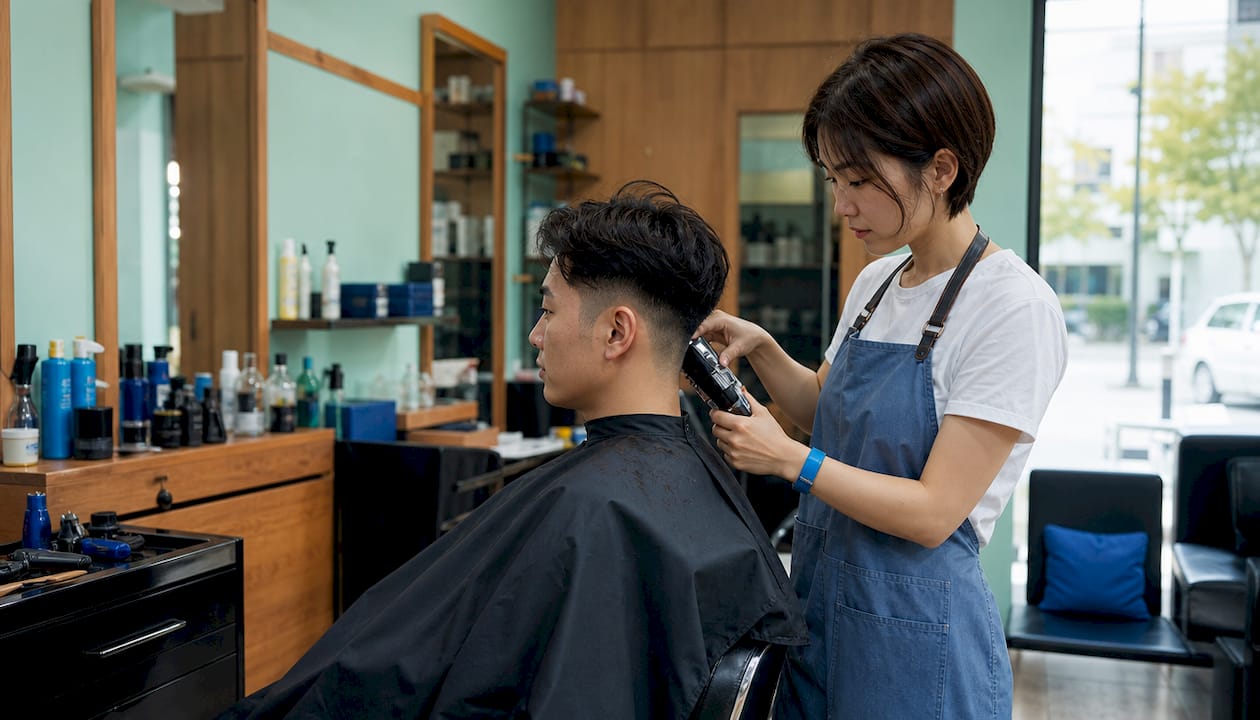
The mid fade begins about 2 inches above the ear along the temple line. It is the most versatile option and works well for almost any face shape. The mid fade slims round or square faces by shortening hair at the parietal ridge, creating a chiseled effect without going extreme.
The high fade starts near the crown and forehead corners, producing an inverted triangle silhouette. It is usually paired with a skin fade for dramatic contrast and works best with voluminous tops like pompadours or quiffs. If you want a bold, high-energy look, the high fade delivers it.
Beyond height, you also choose between a skin fade (also called a bald fade), which takes the sides down to bare skin, and a shadow fade, which leaves a slight shadow of stubble. Artistic variants like the drop fade, burst fade, and temple fade add curved or shaped lines for extra personality.
| Fade type | Starting height | Contrast level | Upkeep frequency | Best setting |
|---|---|---|---|---|
| Low fade | Above sideburns | Low | Every 3–4 weeks | Corporate, conservative |
| Mid fade | 2 inches above ear | Medium | Every 2–3 weeks | Everyday, versatile |
| High fade | Near crown | High | Every 1–2 weeks | Bold, fashion-forward |
| Skin fade | Any height | Very high | Every 7–10 days | Statement, athletic |
| Taper fade | Neckline only | Very low | Every 3–4 weeks | Classic, traditional |
| Drop fade | Curved, behind ear | Medium | Every 2–3 weeks | Creative, modern |
Pro Tip: Choose fade intensity based on how much time you can give to upkeep. A skin fade looks sharp on day one but demands frequent touch-ups. A low taper fade stays clean for weeks with minimal effort.
How to choose the best fade for your face shape
Fade height choice is a decision shaped directly by your face shape. The goal is always balance: add height where you need length, add width where you need fullness.
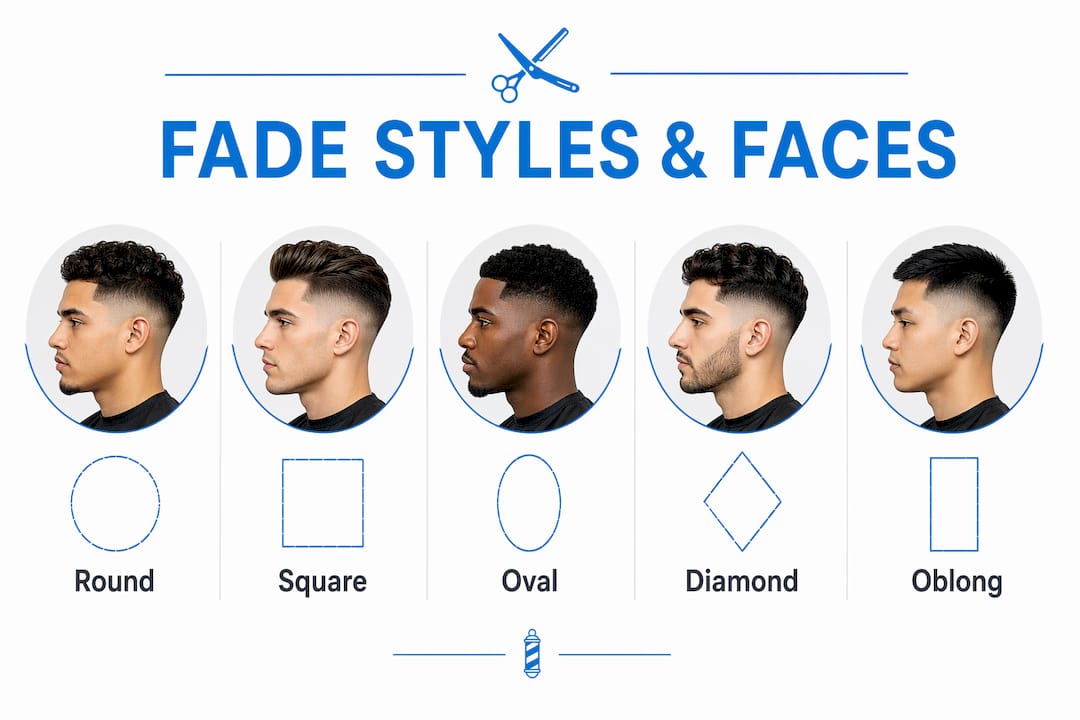
Round faces benefit most from high skin fades paired with volume on top. The vertical elongation created by height at the crown and tight sides makes a round face read as longer and leaner. Avoid low fades on round faces, as they widen the silhouette further.
Square faces carry strong jawlines, which is an asset. A mid fade softens the corners without erasing that structure. Pair it with a textured crop or a side part to keep the look clean and proportional.
Oval faces are the most flexible. Nearly every fade height works, so you can choose based on lifestyle and personal preference rather than corrective styling. A mid or high fade with a classic pompadour is a reliable choice.
Diamond and heart faces share a narrow chin and wider forehead or cheekbones. A low taper fade preserves width at the sides, which balances the narrower lower face. Avoid high fades, which amplify the width at the top.
Oblong faces need width, not height. A low taper fade keeps hair fuller at the sides, which shortens the appearance of a long face. Pairing it with a textured top rather than a tall style reinforces that balance.
| Face shape | Recommended fade | Avoid | Styling pairing |
|---|---|---|---|
| Round | High skin fade | Low fade | Pompadour, quiff |
| Square | Mid fade | Very high fade | Textured crop, side part |
| Oval | Any height | Nothing specific | Pompadour, classic taper |
| Diamond | Low taper fade | High fade | Textured fringe |
| Heart | Low fade | High fade | Textured crop |
| Oblong | Low taper fade | Tall styles | Side part, textured top |
Pro Tip: Bring a photo of yourself from the front and side when you visit Phillythebarber. Your barber can assess your face shape in person and adjust the fade line to suit your specific proportions, not just a general category.
How does hair type affect your fade options?
Fade styles are not one-size-fits-all. Hair texture and density change how a fade blends, how it holds its shape, and which products keep it looking fresh.
Straight hair shows fade lines with the most clarity. The transition from short to long reads crisply, which makes skin fades and high fades especially striking on straight hair. Lightweight pomades or waxes work well to define the top without weighing it down.
Wavy hair adds natural texture that softens fade lines slightly. This works in your favor for mid and low fades, where a gentle blend looks intentional rather than imprecise. Sea salt sprays or light creams enhance the wave pattern and keep the top looking lived-in and natural.
Curly and coily hair requires a barber skilled in working with textured hair. The fade blending technique must account for the way curls spring up after cutting, which affects the perceived fade height. Products like curl creams and light oils define the top and prevent dryness at the faded sides.
Thick hair holds fade shapes well but can look bulky if the transition is not blended carefully at the parietal ridge. Fine hair fades smoothly but may show scalp more than expected at higher fade heights. Discuss density with your barber before committing to a skin fade if your hair is fine.
Recommended styling products and tools by hair type:
- Straight hair: Lightweight pomade, fine-tooth comb, boar bristle brush
- Wavy hair: Sea salt spray, wide-tooth comb, diffuser attachment
- Curly hair: Curl cream, pick comb, light oil (argan or jojoba)
- Coily hair: Moisturizing butter, wide-tooth pick, satin pillowcase for overnight care
- Thick hair: Medium-hold clay or paste, vent brush
- Fine hair: Volumizing mousse, soft-bristle brush, avoid heavy waxes
How to prepare for and maintain your fade haircut
Getting a great fade starts before you sit in the chair. Preparation and clear communication make the difference between a good cut and a great one.
Visual photo references from multiple angles communicate your desired fade far more effectively than technical jargon. Collect two or three images that show the fade height, the top length, and the overall shape you want. Bring photos from the front and the side, not just a single front-facing shot.
At the appointment, tell your barber your face shape concerns, your hair texture, and how often you plan to return for touch-ups. A skilled barber adjusts the fade transition at the parietal ridge to control volume and create slimming or widening effects. That adjustment is what separates a personalized fade from a generic one.
Daily styling for a fade is straightforward. Apply your chosen product to damp hair, work it through the top section, and use a comb or brush to shape the style. The faded sides need no product. Keep the skin or shadow fade area clean by washing daily with a gentle shampoo.
Maintenance scheduling matters most with skin fades. Neck and sideburn cleanups every 7–10 days keep a skin fade looking sharp. The top hair stays manageable for 3–4 weeks before a full cut is needed. Low and taper fades are more forgiving, typically needing a full visit every 3–4 weeks.
Follow this numbered care routine to keep your fade crisp:
- Wash hair daily or every other day with a sulfate-free shampoo.
- Apply a lightweight conditioner to the top section only.
- Towel dry gently and apply your styling product to damp hair.
- Shape the top with a comb or brush before the product sets.
- Book a neck and sideburn cleanup every 7–10 days for skin fades.
- Schedule a full cut every 2–4 weeks depending on fade height.
- Avoid touching the fade line throughout the day to prevent frizz or disruption.
Pro Tip: Between barbershop visits, use a small amount of edge control gel along your hairline to keep the fade line looking defined. It takes 30 seconds and adds days of freshness to your look.
Key Takeaways
The best fade haircut is the one matched to your face shape, hair texture, and maintenance schedule, not the one that looks best on someone else.
| Point | Details |
|---|---|
| Fade height defines the look | Low fades read as conservative; high and skin fades create bold, high-contrast styles. |
| Face shape guides the choice | Round faces need high fades for length; oblong faces need low fades for width. |
| Hair texture changes the result | Curly and coily hair requires adjusted blending; straight hair shows fade lines most sharply. |
| Maintenance varies by fade type | Skin fades need cleanup every 7–10 days; low and taper fades last 3–4 weeks. |
| Communication is the key step | Photo references from multiple angles get better results than technical descriptions alone. |
What 20 years behind the chair taught me about fades
Most men walk in asking for “a fade” without realizing how many decisions that phrase actually contains. After two decades at the chair, I can tell you that the men who leave happiest are the ones who came in with a clear picture, literally, of what they wanted.
The biggest mistake I see is choosing a fade based on what looks good on someone else’s Instagram. A high skin fade on a man with an oblong face will make him look taller in a way that feels off, not sharp. The personalized consultation is not a formality. It is where the real work happens.
Fade trends in 2026 lean toward textured tops paired with mid fades, which is a combination that works across face shapes and hair types. The drop fade is gaining ground because it follows the natural curve of the head and looks intentional without requiring extreme contrast. I like this direction because it rewards craftsmanship over shock value.
My honest advice: start with a mid or low fade on your first visit to a new barber. It gives you a baseline to work from and lets you assess the barber’s blending skill before committing to something more dramatic. Once you trust the hands doing the work, you can push the style further. Knowing how to describe a haircut clearly is a skill worth developing. It will serve you at every barbershop you ever walk into.
— Stephen
Precision fades and grooming at Phillythebarber
At Phillythebarber in Copenhagen, every fade starts with a consultation. Philly, a certified Master Barber with over 20 years of experience, takes the time to assess your face shape, hair texture, and lifestyle before a single clipper touches your head.
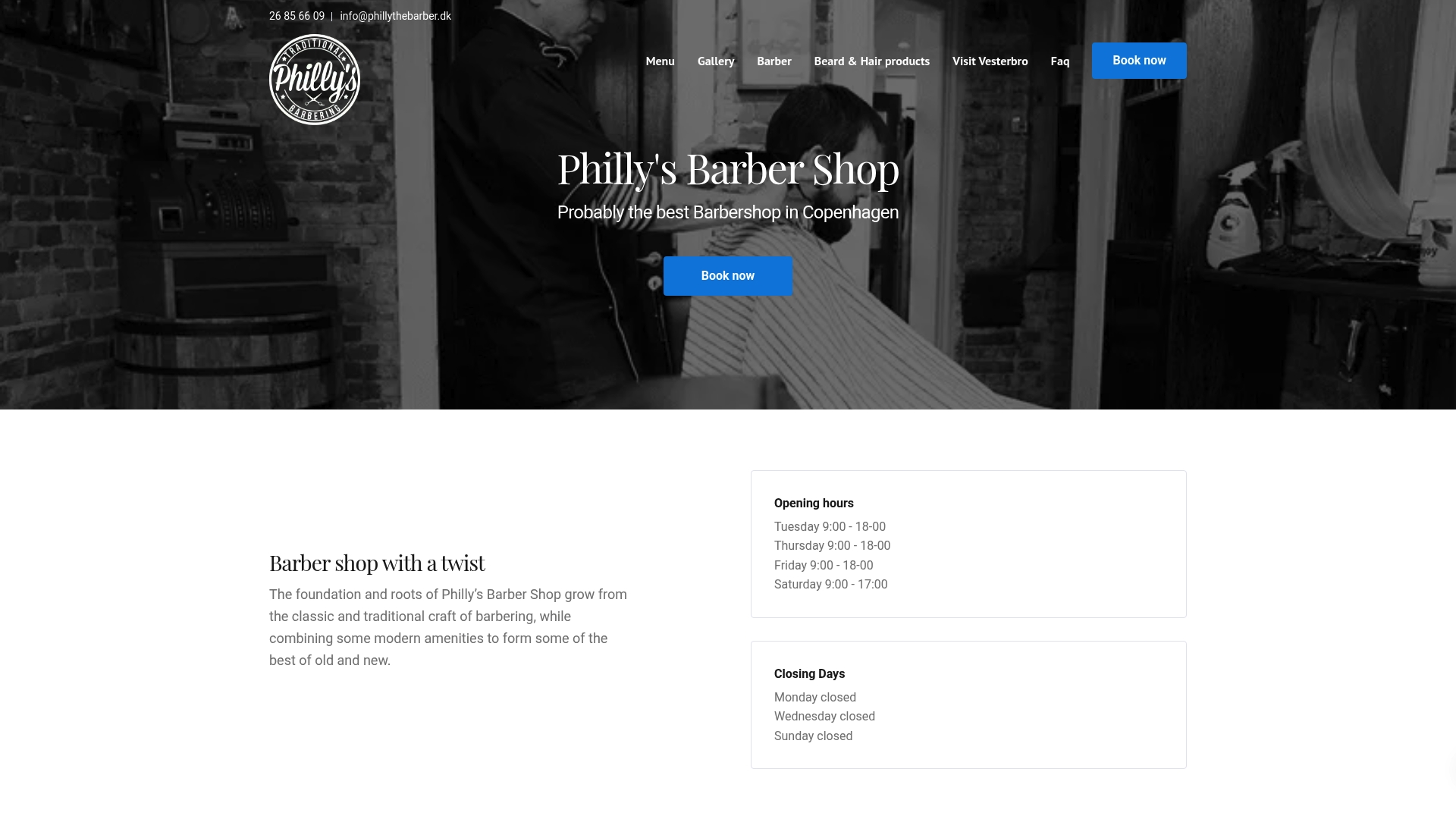
Whether you want a clean low fade for the office or a bold skin fade for the weekend, the shop delivers precision cuts built around your specific needs. Complementing your fade with a well-groomed beard pulls the whole look together. The beard trim process at Phillythebarber is handled with the same attention to detail as the cut itself, using straight razor finishing and personalized shaping to frame your face perfectly. Book your appointment online and walk out looking exactly how you pictured it.
FAQ
What is a fade haircut?
A fade haircut is a blending technique that gradually transitions hair from a longer length on top to a very short or skin-level length at the sides and back. The fade height, low, mid, or high, determines where that transition begins on the head.
Which fade haircut works best for round faces?
Round faces benefit most from a high skin fade paired with volume on top, as the added height creates vertical elongation and makes the face appear leaner. Avoid low fades, which widen the silhouette.
How often do you need to maintain a skin fade?
A skin fade requires neck and sideburn cleanups every 7–10 days to stay sharp, while the top section typically needs a full cut every 3–4 weeks.
What is the difference between a taper fade and a skin fade?
A taper fade shortens hair gradually toward the neckline while leaving some hair visible throughout. A skin fade takes the sides all the way down to bare skin, creating a higher-contrast, bolder look.
How do I tell my barber exactly what fade I want?
Bring photo references from the front and side rather than relying on technical terms. Clear images showing fade height and top length communicate your desired result far more effectively than descriptions alone.