How to Describe a Haircut to Your Barber
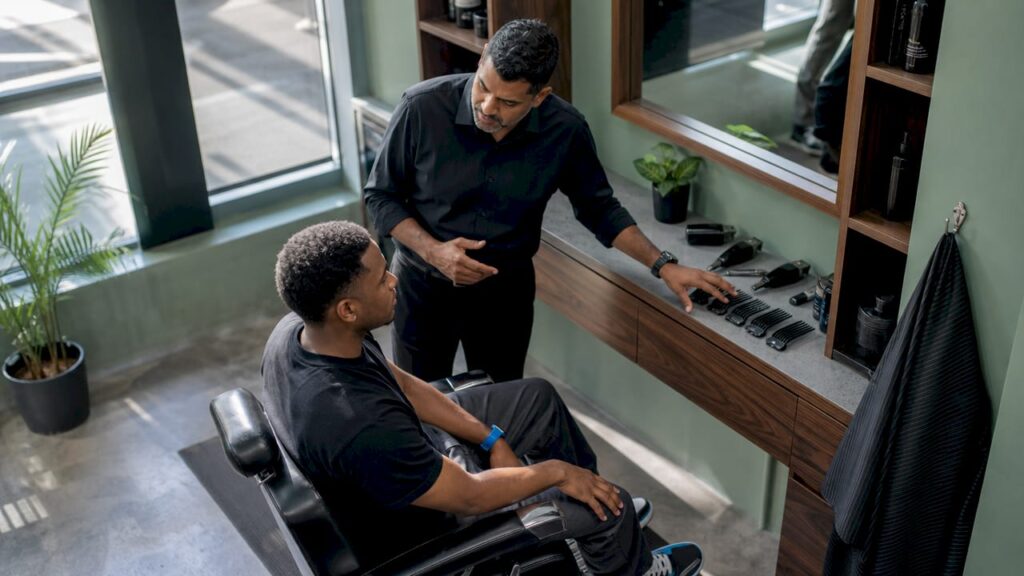
Describing your haircut to your barber is the process of clearly communicating your desired length, style, and maintenance needs using industry-standard terms and specific measurements. Most men walk into the chair with a vague idea and walk out disappointed. The fix is simpler than you think. Learning a handful of technical terms, clipper guard numbers, and fade types gives you the shared vocabulary that turns a guesswork appointment into a precise, collaborative session. This guide gives you exactly that, step by step.
What key terms do you need before you describe your haircut to your barber?
Most clients lack the shared vocabulary needed to communicate clearly with their barber. That gap causes the most common haircut frustrations. The good news is that a short list of terms covers the vast majority of men’s cuts.
Clipper guard numbers and what they mean
Clipper guard numbers are the foundation of precise haircut communication. Guard #1 leaves about 0.5 inches of hair, while higher numbers like #4 produce fuller, longer looks. Specifying “2 inches on top” alongside a guard number removes almost all ambiguity from the conversation.
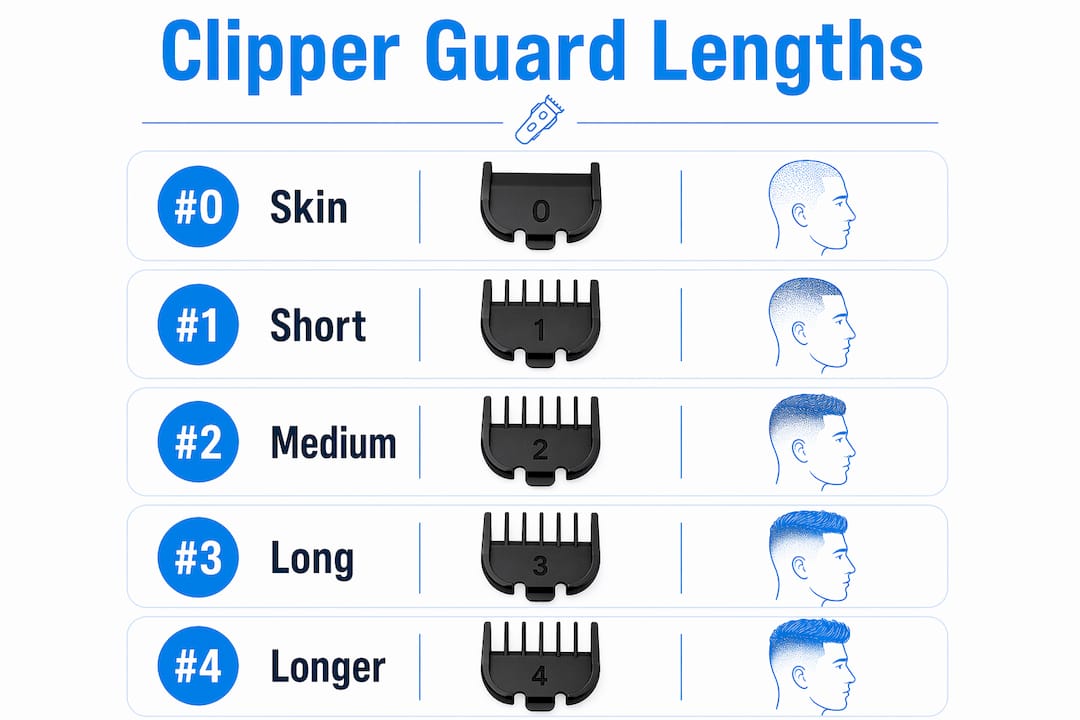
| Guard Number | Approximate Length | Common Use |
|---|---|---|
| #0 | Skin close | Bald fade, edge work |
| #1 | 1/8 inch | Very short sides |
| #2 | 1/4 inch | Short sides, tight taper |
| #3 | 3/8 inch | Medium taper, blended sides |
| #4 | 1/2 inch | Fuller sides, soft fade |
| #6 | 3/4 inch | Longer sides, minimal taper |
| #8 | 1 inch | Minimal length removal |
You can find Wahl clipper guard sizes explained in detail if you want to study the numbers before your appointment.
Core style terms every man should know
- Taper: Hair gradually shortens from the top down to the neck and ears. It is the most classic men’s cut.
- Fade: A taper taken all the way down to the skin. Subtypes include low fade (fades near the ear), mid fade (fades at the temple), and high fade (fades above the temple).
- Bald fade: The fade blends completely to bare skin with no visible line.
- Undercut: The sides and back are cut very short or shaved, while the top stays long.
- Taper vs. fade: A taper keeps some hair at the sides; a fade removes it entirely.
- Neckline: Squared (a straight horizontal line), rounded (follows the natural hairline), or tapered (gradually fades into the neck).
- Texture: Refers to how much weight is removed from the hair. “Textured” means the barber uses point cutting or razor work to add movement and reduce bulk.
Pro Tip: Bring a photo of your neckline preference. Men consistently underestimate how much the neckline shape changes the overall look of a cut.
How do you explain length, fade, and texture preferences clearly?
Clear haircut communication means treating the top, sides, and back as three separate zones. Each zone gets its own length instruction. This approach eliminates the single biggest source of miscommunication in the barber chair.
-
State the length on top first. Use inches or centimeters alongside a guard number. Say “2 inches on top” rather than “a little long.” If you want texture or layers, add “point cut the ends for movement” or “take out some weight.”
-
Specify the sides with a guard number. “Fade the sides with a #2 on the bottom, blending up to a #4” tells your barber exactly what gradient to create. Pair the guard number with a fade height: low, mid, or high.
-
Describe the fade transition. A skin fade blends to bare skin. A drop fade follows the curve of the head behind the ear. A burst fade radiates around the ear. Naming the subtype removes guesswork entirely.
-
Address texture and weight. If your hair is thick, say “take out some weight but keep the length.” If you want a natural, lived-in look, ask for “soft texture with point cutting.” If you want a clean, structured look, ask for “blunt ends with no texturizing.”
-
Define the neckline. Choose squared, rounded, or tapered and say it out loud. Many barbers default to squared unless told otherwise.
-
State what you do not want. Expressing clear dislikes like “no harsh lines” or “don’t go shorter than 2 inches on top” sets firm boundaries. This step is as important as describing what you do want.
Pro Tip: Practice your description out loud before you walk in. A 30-second mental rehearsal of “top length, side guard number, fade type, neckline” covers 90% of what your barber needs to hear.
Reviewing a men’s precision grooming guide before your visit can also sharpen your vocabulary fast.
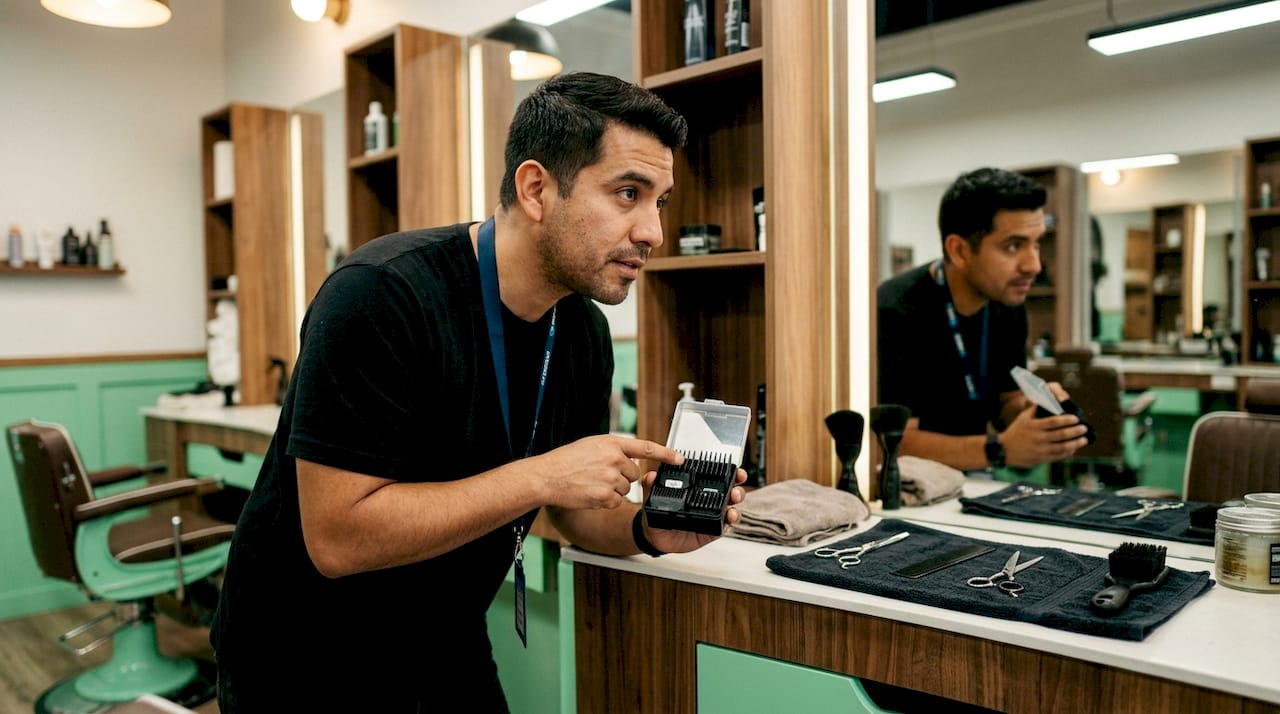
Why does sharing your daily hair routine matter?
Your daily routine directly shapes the haircut your barber should give you. Sharing that you spend 15 minutes styling tells your barber to design a cut that works with your actual habits, not an idealized version of them. A cut that requires 30 minutes of blow-drying will frustrate a man who air-dries and leaves the house in five minutes.
Tell your barber these four things before the scissors come out:
- How much time you spend styling each morning. Five minutes means low-maintenance. Twenty minutes means you are open to a more structured cut.
- What products you use. Pomade, clay, wax, and sea salt spray each interact differently with hair length and texture. A barber who knows you use matte clay will cut differently than one who thinks you use nothing.
- How often you plan to get a haircut. If you come in every three weeks, a tight fade works. If you come in every eight weeks, a softer taper grows out more gracefully.
- Any tricky hair features. Mentioning cowlicks or a receding hairline upfront lets your barber adapt the technique before the cut begins, not after.
This information shapes the architecture of the entire cut. Barbers who know your lifestyle build a haircut that works for you every morning, not just the day you leave the shop. Learning why personalized service matters gives you a clearer picture of how much this conversation changes the outcome.
How do photos and live feedback improve your haircut results?
Photos are the fastest way to close the gap between what you imagine and what your barber understands. The 3-photo rule is a professional communication technique that removes ambiguity and aligns expectations visually. It works like this:
- Photo 1: Your dream style. Show the cut you want at its best. This sets the overall direction.
- Photo 2: A texture match. Find a photo of someone with your natural hair type, whether straight, wavy, curly, or coarse. Photos must match your natural hair texture to set realistic expectations. A photo of a man with straight hair means nothing if your hair is thick and wavy.
- Photo 3: Your “no-go.” Show a style you actively dislike. This tells your barber exactly where the boundaries are.
When you show a photo, do not just hand over your phone. Explain what you like about it and what you would change. “I love the length on top but want the sides tighter” gives your barber a starting point and a direction.
“In-chair dialogue like ‘can we leave a bit more length here?’ is a professional and expected part of the process. Clients who speak up during the cut consistently get better results than those who stay silent and hope for the best.”
Asking questions mid-cut is not rude. It is professional. Check in when the barber moves from one zone to another. A quick “does that length look right to you?” builds trust and catches problems before they become permanent.
Key Takeaways
Clear haircut communication requires specific language, visual references, and active dialogue before and during the appointment.
| Point | Details |
|---|---|
| Use clipper guard numbers | Pair guard numbers with inch measurements to specify exact lengths on top and sides. |
| Name your fade type | Choose low, mid, high, bald, drop, or burst fade to remove all guesswork from the gradient. |
| Apply the 3-photo rule | Bring a dream style photo, a texture match photo, and a no-go photo to every appointment. |
| Share your daily routine | Tell your barber your styling time, products, and visit frequency so the cut fits your real life. |
| Speak up during the cut | Ask questions and request adjustments mid-appointment. It is expected and leads to better results. |
What 20 years behind the chair taught me about client communication
Most men treat the barber chair like a dentist’s chair. They sit down, close their eyes, and hope the professional figures it out. That approach almost never produces the result they wanted.
After more than two decades of cutting hair, the clients who leave happiest are the ones who come in prepared. They know their guard number. They have a photo. They tell me about the cowlick on the left side of their crown before I find it myself. That preparation does not limit my creativity. It gives me a clear target to work toward.
Clients who communicate clearly allow barbers to confidently offer advice and better tailor the cut. That is the real payoff. When you speak the language, I can stop guessing and start collaborating. The best haircuts I have ever given came from the conversations where the client and I were genuinely working together.
Learning barber language is a small investment with a big return. You spend 30 minutes in the chair every few weeks. Spending five minutes learning the difference between a taper and a fade pays dividends every single visit. Start with the preparation guide for barber visits and you will walk in ready to get exactly what you want.
— Stephen
Get the haircut you actually want at Phillythebarber
At Phillythebarber, every appointment starts with a proper consultation. Philly is a certified Master Barber with over 20 years of experience, and he takes the time to understand your style, your routine, and your goals before a single clipper touches your hair.
Whether you want a tight bald fade, a classic taper, or a textured crop, Phillythebarber builds the cut around your life, not a template. The shop also offers full grooming services including beard trims and straight razor shaves, so you can walk out looking sharp from every angle. If you are ready to experience what a real consultation feels like, book your visit and come in prepared.
FAQ
What is the best way to describe a haircut to your barber?
Use clipper guard numbers, specify lengths in inches, name your fade type, and bring at least one reference photo. This combination gives your barber a complete picture before the cut begins.
What does a fade vs. a taper mean?
A taper gradually shortens the hair toward the neck and ears while keeping some hair visible. A fade takes the taper all the way down to the skin, creating a seamless blend from hair to bare skin.
How do I use the 3-photo rule?
Bring three photos: one showing your ideal style, one showing hair with a texture similar to yours, and one showing a style you dislike. Explain what you like and dislike about each photo so your barber has clear direction.
Should I speak up if something looks wrong during the haircut?
Yes. In-chair feedback is a normal and expected part of the process. Asking for adjustments mid-cut is professional, not impolite, and leads to consistently better results.
What personal details should I share with my barber before the cut?
Tell your barber how long you spend styling each morning, which products you use, how often you plan to visit, and any tricky hair features like cowlicks or a receding hairline. These details shape the entire design of the cut.
Recommended
- Professional Haircut vs Barbershop Cut: Men’s 2026 Guide
- Men’s Haircut in Vesterbro: The Ultimate Guide to Precision Grooming in 2026 – Philly’s Barber Shop
- How to Prepare for a Barber Visit: Men’s Guide
- Men’s Haircut Copenhagen: The Ultimate Guide to Precision Grooming in 2026 – Philly’s Barber Shop