Shave Irritation Prevention Tips for Sensitive Skin
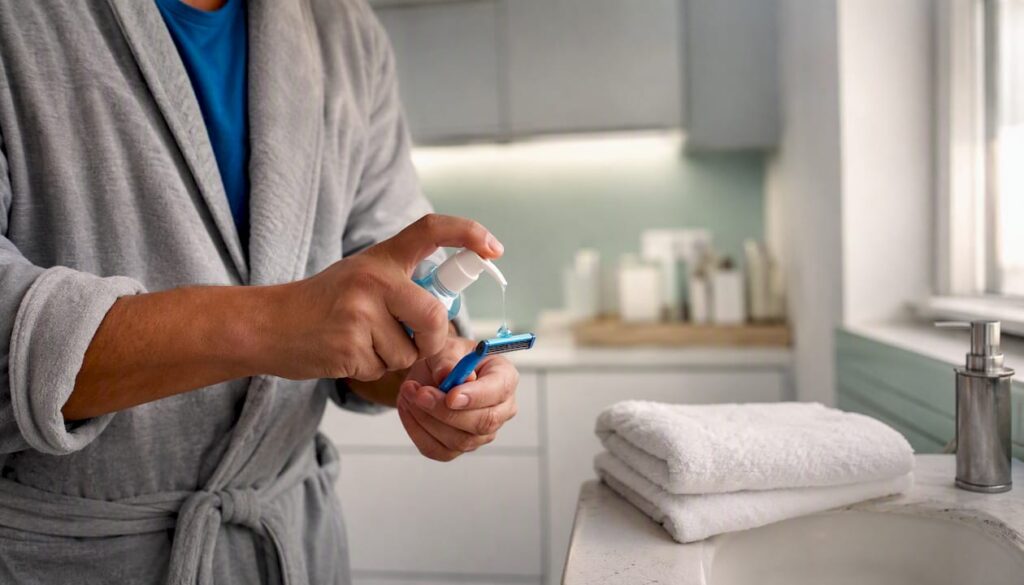
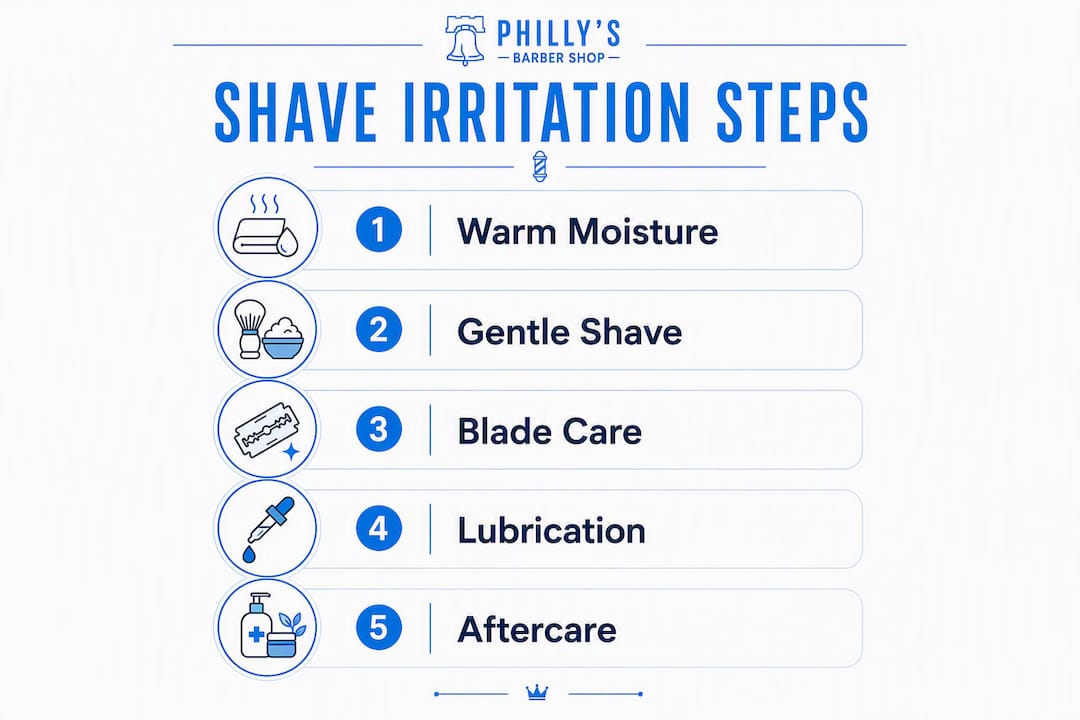
The fastest way to stop shave irritation is to prepare your skin and hair with warm moisture, use a sharp clean blade with a light-pressure technique, then follow up with a fragrance-free, barrier-repairing aftercare routine. That single sequence handles the majority of razor burn cases before they start. Here’s what to do today:
- Shower or apply a warm towel for a short time before picking up a razor
- Apply a moisturizing shaving cream or gel, never dry-shave
- Shave in the direction of hair growth on the first pass
- Replace or clean your blade every 5–7 shaves
- Pat dry and apply a fragrance-free soothing balm immediately after
That 5–7 shave rule is the single most overlooked step. A dull blade drags instead of cuts, and dragging is what causes most of the redness and bumps you’re trying to avoid.
Table of Contents
- Why does shaving cause irritation in the first place?
- What should you do before you touch a blade?
- How do you shave with minimal irritation?
- Which products actually help prevent irritation?
- What should you do immediately after shaving?
- How long does razor burn last, and when should you stop shaving?
- When should you see a dermatologist?
- What do barbers do differently to prevent irritation?
- Key Takeaways
- A barber’s honest take on razor burn
- Sources and further reading
Why does shaving cause irritation in the first place?
Most shaving irritation comes from a handful of fixable mechanical problems, not from sensitive skin being a permanent condition. According to the Cleveland Clinic, razor burn is caused by friction, dry shaving, shaving too fast, old or dull razors, and shaving against the direction of hair growth. Each of those causes has a direct fix.
Dull blades tug at the hair instead of slicing cleanly through it, creating friction that strips the top layer of skin. That friction is what produces the burning sensation and redness you feel within minutes of finishing a shave.
Shaving against the grain forces the blade to cut hair below the skin surface. The hair then curls back and re-enters the skin as it grows, producing the inflamed, raised bumps known as ingrown hairs. This is especially common on the neck, where hair growth direction changes unpredictably.
Inadequate lubrication leaves the blade dragging directly against skin rather than gliding over a protective layer of cream or gel. Soap alone doesn’t provide enough slip and can actually strip the skin’s natural oils, leaving it more vulnerable to friction.
Clogged blades trap dead skin cells, bacteria, and shaving cream residue between the cartridge blades. That buildup reduces cutting efficiency and introduces bacteria directly to freshly opened follicles. The American Academy of Dermatology recommends rinsing the blade thoroughly after every stroke for exactly this reason.
For people who are very prone to razor bumps, growing the hair out or switching to trimming can remove the cause entirely rather than just managing symptoms.
What should you do before you touch a blade?
A solid pre-shave routine cuts irritation risk more than any single product you can buy. The sequence matters.
- Warm and wet the skin. Shave immediately after a shower or apply a warm, damp towel to the area for 2–3 minutes. Warm moisture causes the hair shaft to swell, which lowers cutting resistance and dramatically reduces tugging. This one step alone resolves recurring tug-related irritation for many people.
- Exfoliate gently. Use a mild exfoliating scrub or a soft washcloth two to three times per week to clear dead skin cells from around the follicles. Dead skin buildup is a direct cause of ingrown hairs. For sensitive skin, avoid harsh physical scrubs on the day of the shave itself.
- Apply a hydrating shaving cream or gel. Work it into the skin with your fingertips or a shaving brush in circular motions. Cleveland Clinic guidance recommends applying shaving cream or gel to softened, wet skin to create a protective layer between the blade and your face.
- Inspect your blade. Check for rust, visible dullness, or residue. If you’ve used it more than 5–7 times, swap it out before you start.
Pro Tip: If you don’t have time for a full shower, soak a clean washcloth in hot water, wring it out, and press it against your face for two minutes. It’s the same principle barbers use with a hot towel, and it makes a measurable difference in how the blade glides.
How do you shave with minimal irritation?
Technique accounts for more razor burn than most people realize. Braun’s grooming guidance notes that excessive downward pressure is one of the most frequent causes of razor rash. Modern blades are sharp enough to cut with almost no pressure at all.
Start with the grain. Map the direction your hair grows before the first pass, especially on the neck where growth often runs in multiple directions. Shave in short strokes that follow that direction. This is non-negotiable for the first pass.

If you need a closer result, a second pass across the grain (perpendicular, not against) is acceptable for most skin types. Shaving directly against the grain on a second pass significantly increases the risk of ingrown hairs and should be avoided if you’re prone to bumps.
Rinse the blade under running water after every two or three strokes. Never press harder to compensate for a blade that feels like it’s dragging. That drag is the blade telling you it needs to be replaced.
Blade and tool maintenance schedule
| Tool | Replace or Clean | Why |
|---|---|---|
| Disposable cartridge razor | Every 5–7 shaves | Dull edges tug and cause friction |
| Safety razor blade | Every 5–7 shaves | Same cutting-edge degradation applies |
| Electric shaver foil/head | Clean every 5–7 shaves | Residue buildup reduces efficiency |
| Shaving brush | Rinse and air-dry after each use | Prevents bacterial growth |
After shaving, shake excess water from the razor and store it upright or in open air. Leaving a blade sitting in a pool of water accelerates rust and bacterial growth on the cutting edge.
Pro Tip: Write the date on a small piece of tape and stick it to your razor handle when you start a new blade. You’ll never lose track of how many shaves you’ve done.
Which products actually help prevent irritation?
The right product choices make a real difference, and the wrong ones can undo everything a good technique achieves. For shaving tips for sensitive skin, the product rule is simple: fewer ingredients, gentler formulations.
Ingredients to look for
- Aloe vera: Calms inflammation and provides a cooling barrier immediately after shaving
- Allantoin: Promotes skin cell renewal and reduces redness; common in quality post-shave balms
- Glycerin: Draws moisture into the skin and helps maintain the barrier during and after shaving
- Ceramides: Reinforce the skin’s natural barrier, which shaving temporarily disrupts
- Niacinamide: Reduces redness and supports barrier repair over time
A tallow-based shaving cream can be an excellent option for sensitive skin, as tallow closely mimics the skin’s natural lipid profile and provides rich lubrication without synthetic additives.
Ingredients to avoid
- Alcohol denat. (denatured alcohol): Strips the skin barrier and stings on freshly shaved skin; Cleveland Clinic advises against alcohol-based aftershaves for sensitive or irritated skin
- Synthetic fragrances: A leading cause of contact dermatitis on freshly shaved skin
- High concentrations of menthol or essential oils: These can feel soothing initially but irritate compromised skin barriers
For sensitive skin, simpler routines consistently outperform complex ones. A non-comedogenic cleanser, a fragrance-free shaving cream, and a plain fragrance-free moisturizer will serve you better than layering multiple active-ingredient products. You can browse barber-recommended grooming products for curated options that work well for sensitive skin types.
What should you do immediately after shaving?
Post-shave care is where most people cut corners, and it’s where early razor burn either gets resolved or gets worse.
- Rinse with cool or lukewarm water. Hot water keeps pores open and increases sensitivity. Cool water helps close the follicles and reduces immediate redness.
- Pat dry, never rub. A rough towel dragged across freshly shaved skin adds friction to an already-stressed surface.
- Apply a fragrance-free emollient or aloe vera gel within two minutes of drying. This is the window when the skin barrier is most receptive to moisture.
- Use a cold compress if you notice redness or burning. A clean cloth soaked in cold water and held against the skin for a few minutes reduces inflammation quickly.
- Skip alcohol-based aftershave splashes. They sting for a reason: they’re disrupting the skin barrier. Opt for a non-alcoholic balm with aloe, chamomile, or allantoin instead.
- Avoid picking at bumps or ingrown hairs. Picking introduces bacteria and turns a minor irritation into a potential infection.
- Don’t re-shave an irritated area. If a patch is red or burning, leave it alone.
How long does razor burn last, and when should you stop shaving?
Mild razor burn typically resolves within a few hours to two days. The redness fades, the stinging stops, and the skin returns to normal without any intervention beyond basic aftercare. Ingrown hairs take longer, often three to seven days, and some may need gentle manual release with a clean needle if they don’t resolve on their own.
The rule for pausing is straightforward. Avoid shaving the irritated area for several days until the redness is gone and there’s no broken or open skin. Shaving over compromised skin prolongs recovery and increases infection risk.
Signs that you’re ready to shave again:
- No visible redness or swelling in the area
- No open skin, scabs, or active bumps
- The skin feels smooth and comfortable to the touch
While you wait, keep the area moisturized with a fragrance-free barrier cream. Hydrated skin heals faster, and a healthy barrier is more resistant to irritation on the next shave.
When should you see a dermatologist?
Most razor burn clears up on its own. But some symptoms signal something more serious that needs clinical attention.
See a dermatologist if you notice:
- Spreading redness that extends beyond the shaved area
- Warmth, swelling, or pus around hair follicles (signs of folliculitis or infection)
- Fever accompanying skin symptoms
- Recurring inflamed bumps that don’t improve despite correct technique and blade care
- Severe pain that’s disproportionate to the shave
A board-certified dermatologist can prescribe topical antibiotics for infected follicles, low-potency steroid creams for persistent inflammation, or perform professional extraction of deeply embedded ingrown hairs. These are not situations to manage with over-the-counter products alone.
Before your appointment, document the following:
- Photos of the affected area taken over several days
- A timeline of when symptoms started and how they’ve changed
- A list of every product you’ve used (shaving cream, aftershave, moisturizer)
- Your shaving frequency and technique
That information helps the dermatologist identify whether the cause is technique, product sensitivity, or an underlying skin condition like pseudofolliculitis barbae.
This article provides general information, not medical advice. Consult a board-certified dermatologist for persistent or severe skin symptoms.
What do barbers do differently to prevent irritation?
The gap between a comfortable professional shave and a rough home shave usually comes down to two things: preparation time and pressure control.
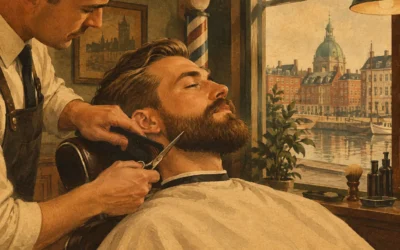
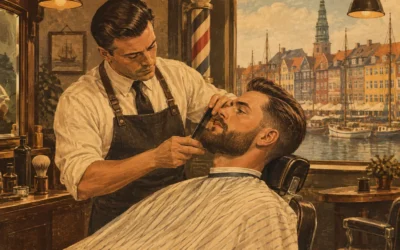
At Phillythebarber, a hot towel is applied for a full two minutes before any blade touches the skin. That’s not a luxury step. It’s a functional one. The heat and moisture soften the hair shaft enough that the blade meets almost no resistance, which means the barber can use a genuinely light touch throughout the shave.
Pressure is the biggest “user error” in home shaving. Most people press harder when the blade feels like it’s dragging, when the correct response is to stop and replace the blade. A straight razor or single-blade approach is often better for sensitive skin than a multi-blade cartridge, because each additional blade in a cartridge multiplies the number of times the skin surface is contacted per stroke.
Pro Tip: Before you shave, spend 30 seconds mapping your beard growth with your fingertips. The neck almost always grows in a different direction than the cheeks. Knowing that before you start means you won’t accidentally shave against the grain on the first pass.
A few more technique adjustments that make a real difference at home:
- Use your non-dominant hand to gently pull the skin taut in the direction you’re shaving. This flattens the surface and reduces the chance of the blade catching on a fold of skin.
- On the neck, shave downward first. The grain almost always runs downward there, and going up on the first pass is one of the most common causes of neck bumps.
- Trim longer beard hair with scissors or a trimmer before using a razor. Running a blade over long hair creates unnecessary drag and increases the number of passes needed.
Key Takeaways
Preventing shave irritation comes down to five consistent habits: soften the hair with warm moisture, lubricate well, use a sharp blade with light pressure, soothe with a fragrance-free balm, and pause shaving when irritation appears.
| Point | Details |
|---|---|
| Warm moisture before shaving | Apply warm water or a hot towel for 2–3 minutes to soften hair and reduce tugging. |
| Replace blades every 5–7 shaves | Dull blades drag and cause friction; this single habit prevents most razor burn. |
| Shave with the grain first | Follow hair growth direction on the first pass to avoid ingrown hairs and follicle trauma. |
| Use fragrance-free aftercare | Apply aloe, allantoin, or ceramide-based balm immediately after shaving to repair the barrier. |
| Pause and see a dermatologist | Avoid re-shaving irritated skin for several days; seek medical care if pus, fever, or spreading redness appears. |
A barber’s honest take on razor burn
Most razor burn is preventable, and most of it comes from rushing. After more than 20 years behind the chair, I’ve seen the same pattern repeatedly: someone skips the warm-up, uses a blade that’s three weeks old, and then wonders why their neck looks like a rash map.
The dermatologist-backed steps in this article aren’t complicated. They’re just consistent. Warm the skin, lubricate it properly, use a sharp blade with almost no pressure, and treat the skin gently afterward. That routine works whether you’re shaving at home or sitting in my chair.
If you’ve tried all of this and still struggle with irritation, a professional shave is worth considering. The straight razor shave experience at Philly’s is specifically designed for men who want a close, comfortable result without the trauma of repeated home shaving. Sometimes the best shave irritation prevention tip is knowing when to let a professional handle it.
Sources and further reading
The clinical guidance in this article draws from the following authoritative sources:
- American Academy of Dermatology: 6 Razor Bump Prevention Tips from Dermatologists — Primary source for blade replacement frequency, warm-water preparation, and shaving direction guidance.
- Cleveland Clinic: Razor Burn Causes and Treatment — Clinical overview of razor burn causes, treatment options, and ingredient guidance for aftercare.
- Cleveland Clinic Health: How to Shave — Step-by-step shaving guidance including pre-shave prep, product selection, and sensitive-skin recommendations.
- PMC / National Library of Medicine: Skin Barrier and Shaving — Peer-reviewed research on skin barrier function relevant to post-shave care and barrier-repair ingredients.
For readers who want a professional solution to persistent irritation, Phillythebarber offers beard grooming services and straight-razor shaves in Copenhagen. If you’re ready to book or want to explore your options, the grooming services guide is a good starting point.