Why Traditional Barbering Techniques Endure: Craft and Ritual
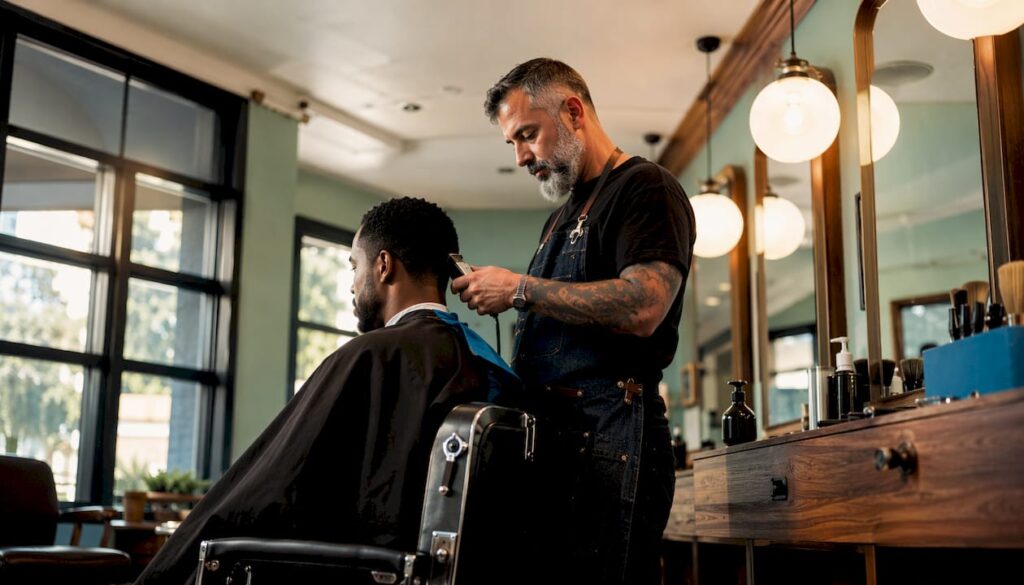
Traditional barbering techniques endure because they deliver skill-based precision, ritualized service, and relationship-driven value that no quick salon visit can replicate. That’s the short answer. Here’s what the rest of this article unpacks:
- Precision and technique: Classic methods like scissor-over-comb and straight-razor shaving produce results tied directly to a barber’s hands-on skill, not a product or a machine setting.
- Ritual and community: The barbershop experience, from hot towels to unhurried conversation, functions as a deliberate moment of care that clients return to for reasons beyond the haircut itself.
- Adaptability with modern tools: Traditional methods haven’t stayed frozen in time. They’ve absorbed electric clippers, ergonomic shears, and digital booking without losing what makes them worth seeking out.
Read on for the history behind these techniques, a walkthrough of the core services and tools, the real reasons classic barbering keeps growing in demand, and a practical guide to evaluating a barber’s skill before you book.
Table of Contents
- How did traditional barbering evolve over the centuries?
- What are the core traditional barbering techniques?
- What tools define traditional barbering?
- Why do traditional barbering techniques keep drawing clients back?
- How do modern tools and practices work alongside traditional methods?
- How do barbers learn traditional techniques today?
- Why is the barbershop more than just a place to get a haircut?
- What does the research say about why traditional barbering persists?
- Key Takeaways
- Why this craft still matters to me
- Useful sources and further reading
How did traditional barbering evolve over the centuries?
The story of barbering is longer than most people realize, and understanding it explains a lot about why the craft still matters today.
- Ancient origins (3000 BCE and earlier). Barbers in Ancient Egypt and Rome held respected social status. They used sharpened flint and bronze blades to shave and cut hair, often performing these services in public spaces where grooming was a communal ritual.
- Medieval barber-surgeons (roughly 1100–1700s). For centuries, barbers performed minor surgery, tooth extractions, and bloodletting alongside haircuts. The red-and-white barber pole traces directly to this era, representing blood and bandages. Barbers were regulated by guilds, and their training was formalized long before modern licensing existed.
- The 19th-century golden age. The classic American barbershop took shape between roughly 1880 and 1940. Straight-razor shaving, hot-towel service, and the social barbershop atmosphere became fixtures of daily life for men across every income level. Barbers were community figures, not just service providers.
- Mid-to-late 20th century decline. The rise of home safety razors, disposable blades, and chain salons pulled clients away from traditional shops. Many neighborhood barbershops closed. The craft’s apprenticeship culture weakened as formal school programs became the primary training route.
- The 21st-century renaissance. Starting around the early 2000s and accelerating through the 2010s, the traditional barbershop began a clear comeback in the U.S. Craft grooming, beard culture, and a consumer shift toward personalized grooming experiences drove demand back toward skilled, relationship-based barbers.
The tools and rituals that survived each of these transitions did so because they solve real, practical problems: precision shaping, skin hygiene, and the kind of deliberate care that a two-minute electric razor pass simply cannot provide.
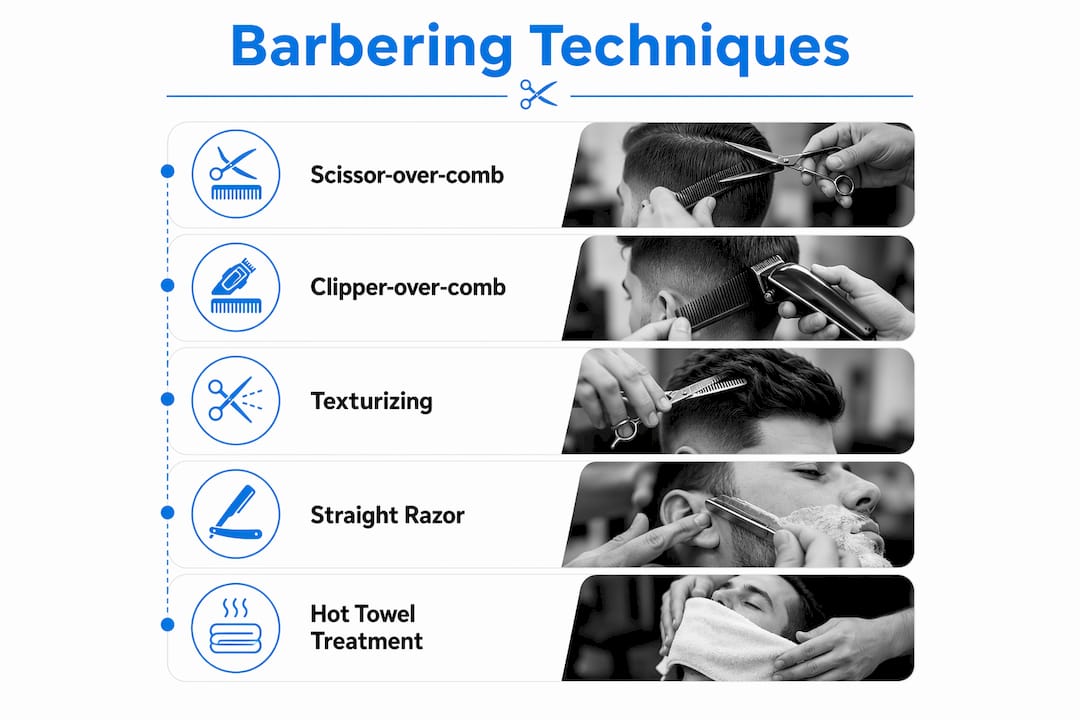
What are the core traditional barbering techniques?
Classic barbering is built on a handful of foundational methods. Each one has a specific purpose, and knowing what they are helps you ask for exactly what you want.
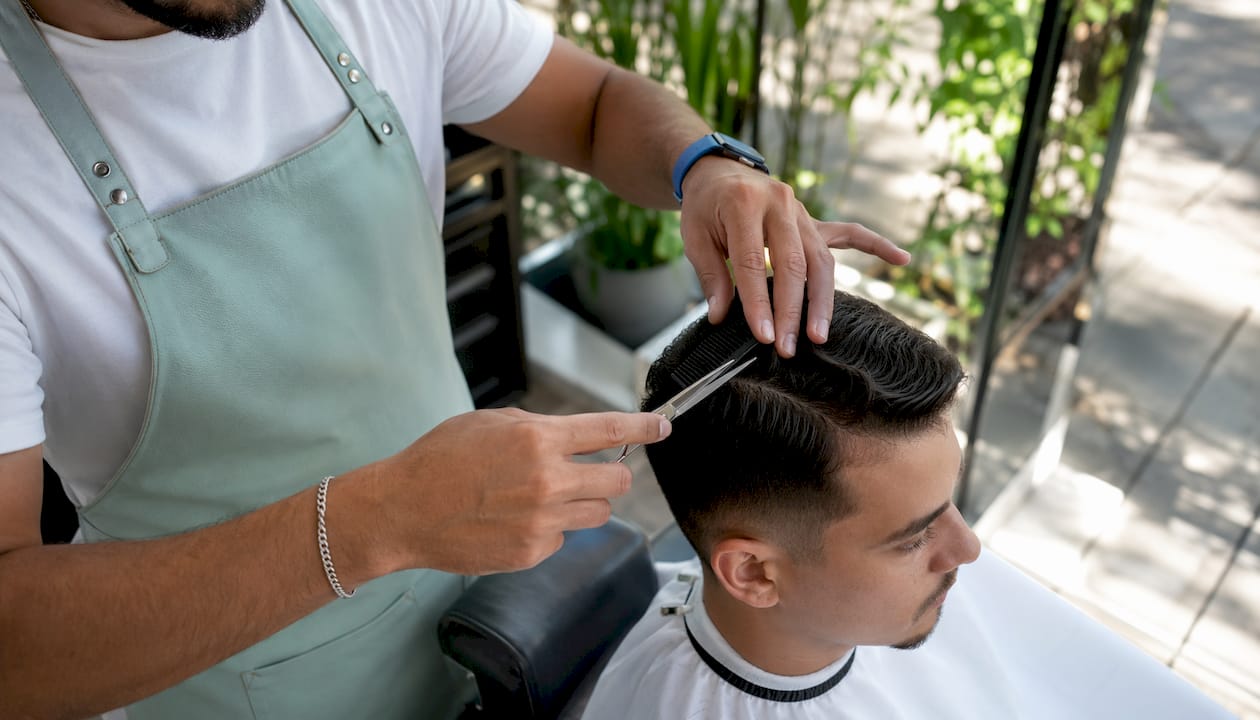
Scissor-over-comb
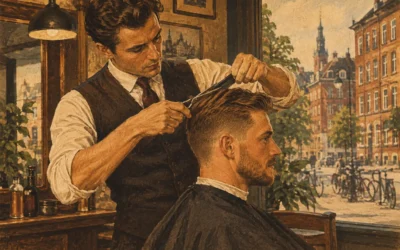
The barber holds a comb against the hair and cuts along the comb’s spine with shears. This technique produces a smooth, graduated blend without hard lines. It’s the go-to method for tapering the sides and back on medium to thick hair, and it gives a barber far more control over texture and weight than clippers alone. Expect it to add 10–15 minutes to a cut, but the finish is noticeably cleaner.
Clipper-over-comb and blending
Similar in concept to scissor-over-comb, but the barber substitutes clippers for shears. This is faster and works well for tight fades and tapers. Skilled barbers use both methods in the same cut: clippers for bulk removal, scissors for the final blend. Classic barbering techniques like clipper blending are foundational skills that support both classic and contemporary styles.
Texturizing
Using thinning shears or point-cutting with straight scissors, a barber removes bulk without reducing length. This is especially valuable for thick, coarse, or curly hair that tends to puff outward rather than fall naturally. The result is a shape that holds longer between cuts.
Straight-razor shaving and lineups
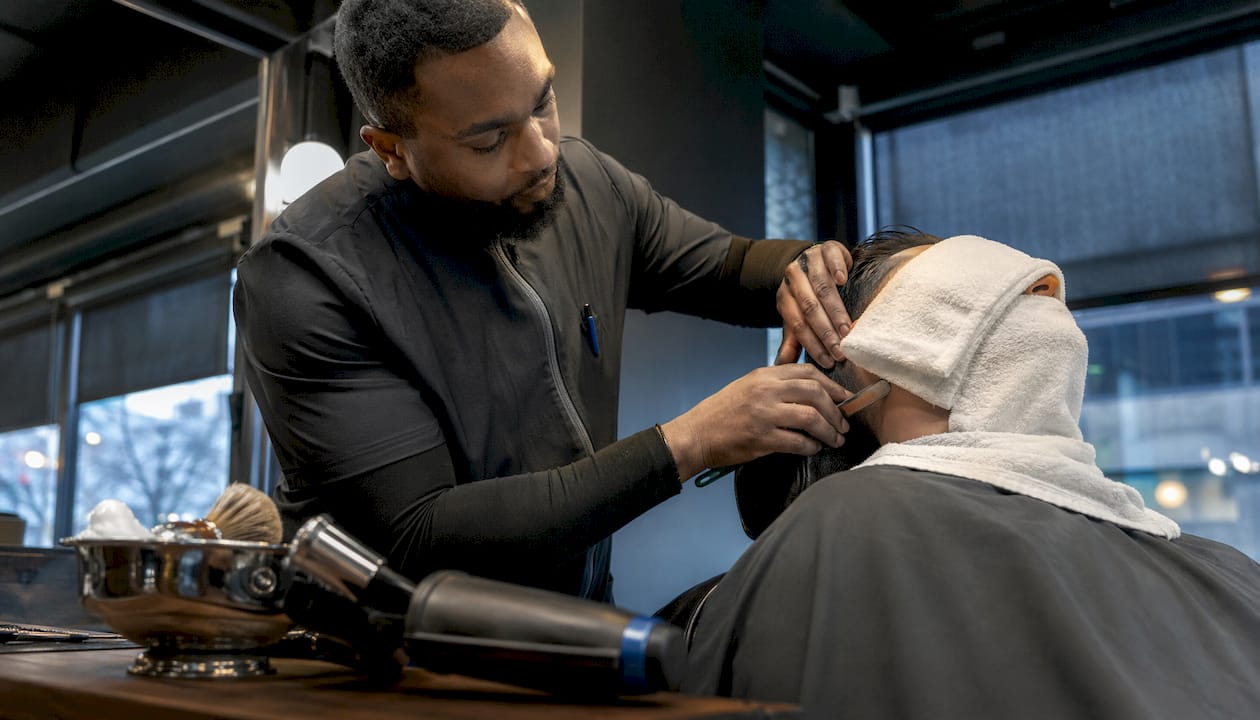
The straight razor is the signature tool of traditional barbering. A skilled barber uses it for full-face shaves, neck cleanup, and crisp edge lineups along the hairline and beard. Straight-razor shaving dates back centuries and remains the gold standard for a close, precise shave because the blade angle and pressure are entirely in the barber’s control. A full shave typically takes a substantial amount of time when done properly.
Hot-towel treatments
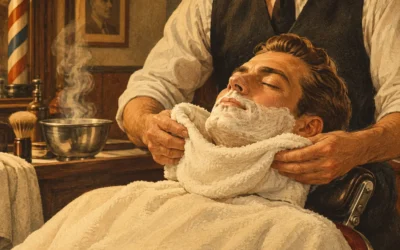
A hot towel applied before a shave opens the pores, softens stubble, and relaxes the skin. The hot towel and straight-razor sequence is both a technical method and a client experience: open pores allow the blade to pass closer to the skin, producing a shave that lasts noticeably longer than a home razor pass.
Beard sculpting and detailing
Shaping a beard requires reading the client’s face shape, natural growth direction, and density. A barber uses a combination of shears, clippers, and a straight razor to define the neckline, cheek line, and mustache. This is not the same as a quick beard trim. It’s a structural service. For a detailed breakdown of what this involves, the beard trim process is worth reviewing before you book.
Pro Tip: When describing what you want, name the technique rather than just a length. Saying “scissor-over-comb blend on the sides with a straight-razor cleanup on the neck” gives your barber a precise brief. If you’re unsure how to phrase it, this guide on how to describe a haircut walks you through it step by step.
What tools define traditional barbering?
The tools a barber reaches for tell you a lot about their training and standards. Here’s what each one does and why it matters.
| Tool | Primary Function | Why It Matters |
|---|---|---|
| Straight razor | Full-face shaving, lineups, edge detailing | Delivers the closest possible shave; requires honing and stropping skill |
| Safety razor | Close shaving with disposable blade cartridge | Safer for high-volume work; still requires technique for clean results |
| Barber shears | Scissor cuts, texturizing, blending | Precision cutting across all hair types; quality shears hold an edge longer |
| Clippers | Bulk removal, fades, tapers | Speed and consistency; guard attachments control length |
| Clipper guards/combs | Length control with clippers | Standardize cut length; allow repeatable results |
| Shaving brush and mug | Lather application for shaves | Lifts hair, distributes heat, creates a cushion layer for the blade |
| Neck brush | Cleanup after cutting | Removes loose hair without irritating the skin |
| Barber chair | Client positioning and comfort | Proper recline and height control are functional, not decorative |
The straight razor deserves special attention. Honing and stropping are not mere rituals. They calibrate the blade’s edge to the specific demands of hair and skin, and they serve as an ongoing tactile quality check. A barber who maintains their straight razor properly is demonstrating a standard of care that carries through everything else they do.
Pro Tip: Before a straight-razor shave or any close work, ask your barber directly: “How do you sanitize your blades between clients?” A professional will answer without hesitation. Autoclaving, barbicide solution, or single-use disposable blades are all acceptable answers. Vague responses are a red flag.
Why do traditional barbering techniques keep drawing clients back?
The reasons are concrete, not nostalgic. Here’s what actually drives the demand.
- Skill-based precision. Scissor-over-comb, straight-razor shaving, and clipper blending remain benchmarks of the craft because they are skill-based rather than product-based. The result depends on the barber’s hands, judgment, and reading of your specific hair texture and face shape. No product can substitute for that.
- Customization that compounds over time. A barber who sees you regularly learns your growth patterns, your fade height preferences, and how your hair behaves in different seasons. Classic barbershops emphasize continuity: the same barber builds a picture of your hair over months and years, producing consistent outcomes and eliminating the re-explanation that comes with every new stylist.
- Results that last longer. A proper scissor blend or straight-razor shave holds its shape longer than a rushed clipper pass. The technique itself extends the time between visits, which has real economic value even when the service costs more upfront.
- Reduced product dependence. When a cut is shaped correctly at the chair, it falls naturally without heavy product. Clients who switch from chain salons to skilled traditional barbers often find they use less product to maintain the same look.
- Consumer preference has shifted. Men increasingly value quality, personalized service and experience over speed and convenience, and that shift is driving the resurgence of traditional barbershops across the U.S.
When is it worth paying more for a traditional barber? When you want a result that holds, a relationship that builds, and a service that actually feels like something. A fast salon cut solves a problem. A traditional barbershop visit is a different category of experience.
How do modern tools and practices work alongside traditional methods?
Tradition and technology aren’t in conflict at a well-run barbershop. They work together, each covering what the other can’t.
| Traditional Step | Modern Supplement | What Changes |
|---|---|---|
| Straight-razor shaping | Disposable blade inserts for sanitation | Safety improves; technique stays the same |
| Scissor-over-comb blending | Ergonomically designed shears | Less hand fatigue; precision is unchanged |
| Hand stropping | Professional honing services | Blade calibration is more consistent |
| Walk-in scheduling | Digital booking systems | Wait times drop; the service itself is identical |
| Verbal style consultation | Hair modeling apps | Client can visualize styles before committing |
| Manual clipper work | Cordless, adjustable-speed clippers | Speed increases without sacrificing control |
A practical example: a client books online, arrives for a classic hot-towel shave and scissor cut, and receives aftercare product recommendations via a follow-up message. The booking and aftercare are digital. The shave and cut are entirely traditional. Industry educators are clear on this point: foundational techniques remain central while electric clippers and new products act as complements, not replacements.
Electric clippers are a good example of a tool that accelerated the craft without replacing its core. Used alongside scissor-over-comb, clippers handle bulk removal quickly, freeing the barber to spend more time on the blend and finish where skill actually shows. The evolution of barbering tools reflects this pattern consistently: new instruments add speed and convenience, but classic grain-reading and mapping skills remain what separates a great cut from a passable one.
How do barbers learn traditional techniques today?
The path to becoming a skilled traditional barber in the U.S. runs through several routes, and the best barbers typically combine more than one.
- Barber school programs. State-licensed barber colleges teach foundational techniques including straight-razor shaving, scissor work, and clipper blending as part of a structured curriculum. Programs typically run 1,000–1,500 hours depending on state requirements. Licensing and hour requirements vary by state, so check your state’s cosmetology or barbering board for the exact threshold where you plan to work or train.
- Apprenticeship. Some states allow aspiring barbers to complete their training hours under a licensed master barber rather than in a school setting. Apprenticeships are particularly valuable for learning traditional techniques because the student works directly with an experienced practitioner on real clients from day one.
- In-shop mentoring. After licensing, many barbers continue learning through informal mentorship inside a shop. A senior barber passes on technique nuances, straight-razor maintenance habits, and client communication skills that no curriculum fully covers.
- Continuing professional education and competitions. Trade shows, barber competitions, and manufacturer-led workshops keep working barbers current on both classic and emerging techniques. Competitions in particular push precision: a barber who competes regularly has refined their scissor-over-comb and fade work to a measurable standard.
Pro Tip: When evaluating a barber, ask to see their portfolio or Instagram feed before booking. Look for consistency across different hair types, not just one signature style. A barber who can show clean scissor blends on curly hair, tight fades on coarse hair, and crisp straight-razor lineups on different face shapes has genuinely broad skill.
A client-facing checklist for evaluating skill:
- Consistent results across multiple clients and hair types (check their portfolio)
- Willingness to explain the technique they plan to use before starting
- Evidence of straight-razor maintenance: a strop hanging at the station is a good sign
- Clean, organized tools: sanitized combs, sharp shears, no rust on blades
- Questions about your preferences before picking up a tool
Why is the barbershop more than just a place to get a haircut?
The social function of the barbershop is inseparable from why traditional techniques stay in demand. When the shop itself is worth visiting, clients seek out the services that belong there.
- Conversation and community. Barbershops have always been places where talk flows freely. Sports, politics, local news, personal advice: the chair is a space where men speak candidly in a way that doesn’t happen in most other service environments.
- Multi-generational ritual. Father-and-son visits to the same barber are a genuine tradition in many families. The barbershop becomes a shared reference point across generations, and the barber becomes a familiar figure in a client’s life over years or decades.
- Mentorship and networking. Particularly in urban communities, the barbershop has historically served as an informal mentorship space. Older clients pass on advice to younger ones. Business connections get made. The shop functions as a neighborhood institution in a way that a chain salon never does.
- Mental decompression. The unhurried pace of a traditional service is deliberate. A hot-towel shave takes time. That time is part of the value.
That community function is what separates a traditional barbershop from a chain salon at a structural level. Chain salons optimize for throughput. Traditional shops optimize for the relationship. The resurgence of barbershop culture in the U.S. is directly tied to this distinction: clients who want a transactional haircut have plenty of options. Clients who want a barber go somewhere specific and stay loyal.
What does the research say about why traditional barbering persists?
The evidence points in a consistent direction across practitioner observations and industry analysis.
- Relationship-based value is the differentiator. Traditional barbering succeeds because it’s relationship-based: a barber who sees the same clients over time builds trust and tailored expertise that chain salons with high turnover can’t match. That continuity compounds: the longer the relationship, the better the results.
- Ritual services are a genuine wellness driver. Clients increasingly seek the therapeutic aspects of ritualized services. Hot-towel shaves and careful straight-razor work function as a moment of calm and deliberate care, and that function is becoming more valued, not less, as daily life gets faster.
- The blend of tradition and modern tools is the industry’s direction. Barber educators argue the future is blending tradition and innovation: modern instruments add speed and convenience, but classic mapping and grain-reading skills remain what separates high-quality results from adequate ones.
- Consumer preferences are shifting toward quality. The return to traditional barbering is partly a market correction: men who spent years getting fast, impersonal cuts are choosing to pay more for a service that actually fits their face, hair, and preferences.
One actionable step you can take right now: before booking any barber for a straight-razor shave or close work, ask specifically about their straight-razor maintenance routine. A barber who strops before every shave and hones regularly is demonstrating a standard of precision that will show up in the result.
Key Takeaways
Traditional barbering techniques endure because they deliver skill-based precision, ritualized care, and relationship-driven consistency that modern shortcuts cannot replicate.
| Point | Details |
|---|---|
| Skill drives quality | Techniques like scissor-over-comb and straight-razor shaving depend on the barber’s hands, not a product or setting. |
| Continuity compounds results | A barber who knows your growth patterns and preferences produces better outcomes over time. |
| Ritual has real value | Hot-towel treatments and unhurried service provide therapeutic decompression clients return for. |
| Modern tools complement, not replace | Electric clippers and digital booking add speed and convenience without changing what makes the craft work. |
| Evaluate before you book | Check a barber’s portfolio, ask about straight-razor maintenance, and look for consistency across hair types. |
Why this craft still matters to me
Twenty years at the chair teaches you things no curriculum covers. You learn that a great haircut isn’t just about the length or the fade height. It’s about reading the person in front of you: their hair’s behavior, their face’s geometry, and what they actually need versus what they think they want. Traditional techniques give you the tools to act on that reading. A straight razor in a skilled hand can do things a disposable cartridge never will. Scissor-over-comb on the right hair type produces a blend that holds for weeks, not days.
What I’ve seen over two decades is that clients who find a barber they trust don’t leave. They come back because the result is consistent, the experience is worth the time, and the relationship makes every visit easier than the last. That’s not sentiment. It’s the practical reality of what a regular client relationship actually produces. If you haven’t experienced a proper traditional service, I’d encourage you to book one and pay attention to the difference.
Useful sources and further reading
These sources informed the research behind this article and are worth exploring if you want to go deeper on any of the topics covered.
- Classic vs. Modern: Comparing Traditional and Contemporary Barbering Techniques — Associated Barber College: A thorough comparison of scissor cuts, straight-razor shaving, and modern clipper work from a licensed barber college. Useful for understanding how training programs approach the tradition-versus-innovation question.
- The Evolution of Barbering Tools — Associated Barber College: Covers how clippers, razors, and shears have changed over time and why foundational skills remain central despite new instruments.
- Traditional Barbering Techniques for Modern Times — Lus Barbershop: Practitioner perspective on how classic methods coexist with modern tools, including detail on straight-razor maintenance and the hot-towel shave sequence.
- The Timeless Appeal of Classic Barbering — Salt City Barbershop: Explores the continuity argument: why long-term client-barber relationships produce better results and why traditional shops are making a comeback.
- Classic Barber Community Culture — Gentz Studio Jackson: Focuses on the barbershop as a community hub and third space, with observations on the therapeutic and social value of ritualized services.
- Why the Old School Barbershop Experience Is Making a Comeback — LA Wire: Market-facing analysis of the consumer shift toward quality and personalized grooming experiences driving the traditional barbershop resurgence in the U.S.
- Classic Barbering: Tradition Meets Modern Style — Classic Barber Company: Practitioner perspective on how classic techniques like scissor-over-comb and clipper blending support both traditional and contemporary styles.
- Why the Classic Barbershop Shave and Cut Never Goes Out of Style — Styling Mart: Industry commentary on why skill-based techniques remain the benchmark for precision grooming regardless of trends.
- The Role of Craftsmanship in Barbering — Phillythebarber: Phillythebarber’s own deep dive into what craft means in a modern barbershop context, with practical guidance for clients seeking premium services.
- How to Prepare for a Barber Visit: Men’s Guide — Phillythebarber: A practical pre-visit checklist covering how to communicate what you want, what to expect from a traditional service, and how to get the most from your appointment.