Best Skin Fade Variations Compared: Find Your Right Fade
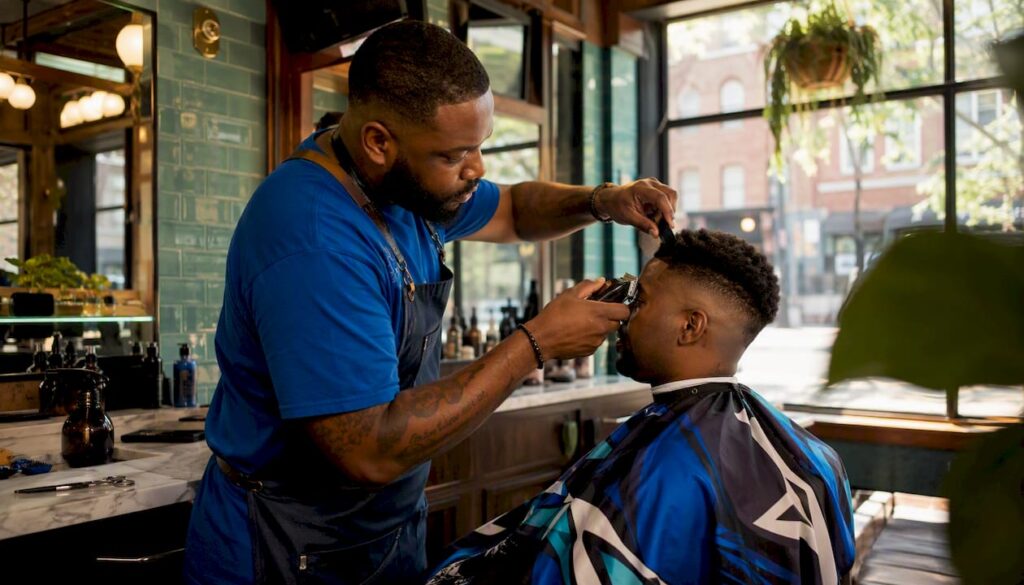
The mid skin fade is the most versatile choice for most men. If you want one short recommendation, start there. It balances contrast and maintenance better than any other variation, works across nearly every face shape, and pairs with everything from a textured crop to a pompadour. But it is not the only strong option, and for some men, a different fade will serve them far better.
Here is the shortlist of the best skin fade variations to consider first:
- Mid skin fade — the “Goldilocks” option. Starts at temple level, delivers noticeable contrast without going full bold. Best for oval, round, and heart-shaped faces with most hair types.
- Low skin fade — subtle and workplace-appropriate. Keeps more hair on the sides while still reaching bare skin at the perimeter. Best for oblong/rectangular faces, conservative environments, and men with fine or thinning hair.
- High skin fade — maximum contrast, maximum statement. Skin exposure extends well above the temples. Best for round and square faces with thick, dense hair and a bold lifestyle.
- Drop fade — follows the skull’s natural curve behind the ear. Best for men with curly or coily hair, prominent occipital bones, or anyone who wants a more organic, artistic silhouette.
- Temple/temporal fade — the most minimal option. Only the temple and sideburn area fades to skin. Best for first-timers or strictly conservative workplaces.
Pro Tip: High-contrast fades grow out fast. A mid skin fade generally requires regular touch-ups to maintain a clean appearance. Before you choose a style, check your calendar. If you can not commit to that cadence, a low fade or shadow fade is a smarter pick. When you sit down, try this: “I want a mid skin fade starting at the temple, blended to skin at the bottom, scissor-textured on top, leave about two inches of length.”
Table of Contents
- What is a skin fade, and how does it differ from a taper?
- Skin fade variations compared: which one fits you?
- How do you choose the right skin fade for your face, hair, and lifestyle?
- Barber pro tips and a practical maintenance plan
- How to style the most common skin fade pairings at home
- Where did the skin fade come from?
- How fade techniques differ by region and barbering tradition
- Key Takeaways
- A barber’s honest take on which fade actually works
- Sources and further reading
- Precision skin fades at Phillythebarber, Copenhagen
What is a skin fade, and how does it differ from a taper?
A skin fade, also called a bald fade, blends hair progressively shorter until it reaches bare scalp. The finish is zero, meaning no guard, no stubble, just skin. A shadow fade leaves a very short guard (typically a #0.5 or #1) so the lowest point still shows a faint “shadow” of hair rather than bare skin. That distinction matters for men with sensitive skin or those who prefer a softer perimeter.
A taper is different in a more fundamental way. It shortens hair gradually at the sideburns and neckline but never reaches the skin. The shortest point on a taper is typically a #2 guard (6mm), and the effect is subtle and classic. A fade, by contrast, continues blending all the way to zero and wraps around the entire sides and back. Tapers read as conservative and timeless; skin fades read as modern and bold.
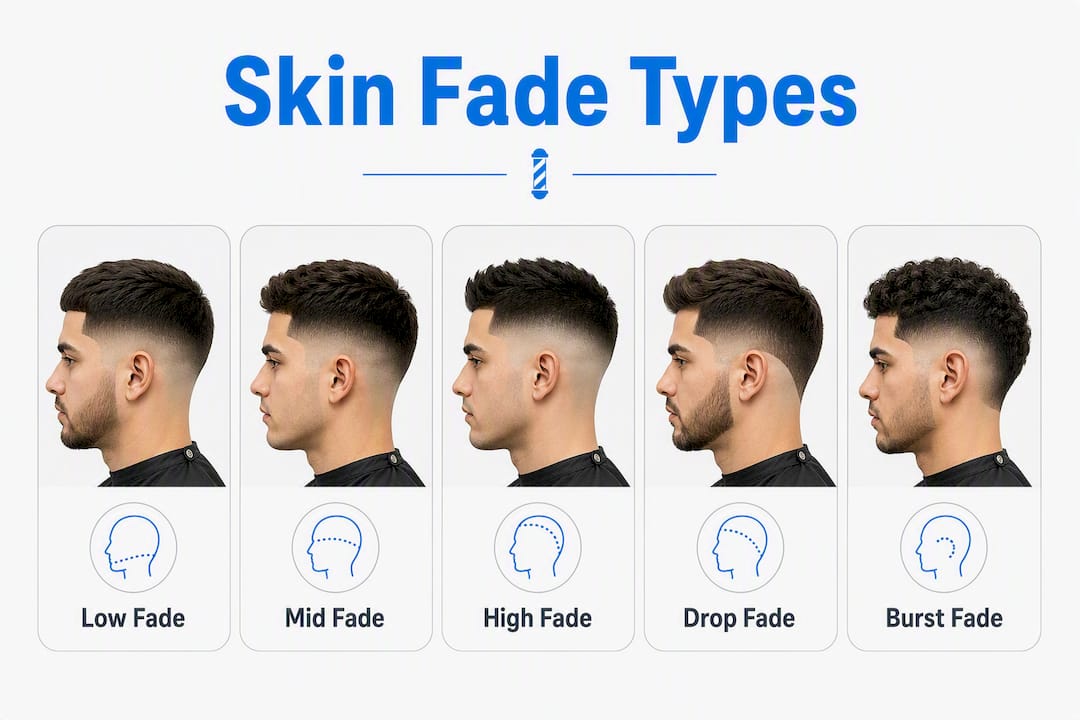
Fade height is how barbers describe where the blend begins, not how short the bottom goes. You can have a low skin fade that still exposes bare skin at the neckline while preserving a conservative silhouette overall. The three standard heights are:
- Low — the blend starts just above the ear and along the neckline. The skin exposure zone covers only the lower third of the sides and back.
- Mid — the blend starts at the temple, roughly halfway up the sides. Skin exposure covers the lower half.
- High — the blend starts above the temples, sometimes reaching the parietal ridge (the widest point of the skull). Skin exposure covers the majority of the sides and back.
To describe each to your barber: “low skin fade starting just above the ear,” “mid skin fade starting at the temple,” or “high skin fade starting above the temple, close to the crown.” Add “razor finish to skin” if you want the sharpest possible perimeter, or “shadow finish with a half-guard at the bottom” if you prefer something softer.
Skin fade variations compared: which one fits you?
Every man’s best fade depends on four things: face shape, hair type, lifestyle, and how often he can realistically get back to the barber. Here is how the main skin fade variations stack up.
Low skin fade
The low skin fade is the most conservative of the three heights. The blend starts just above the ear, keeping most of the side hair intact while still reaching bare skin at the very bottom. It reads as polished and professional without announcing itself. Men in finance, law, or any environment with a traditional dress code tend to land here. Oblong and rectangular faces benefit most because the low starting point preserves side width and avoids elongating the face further.
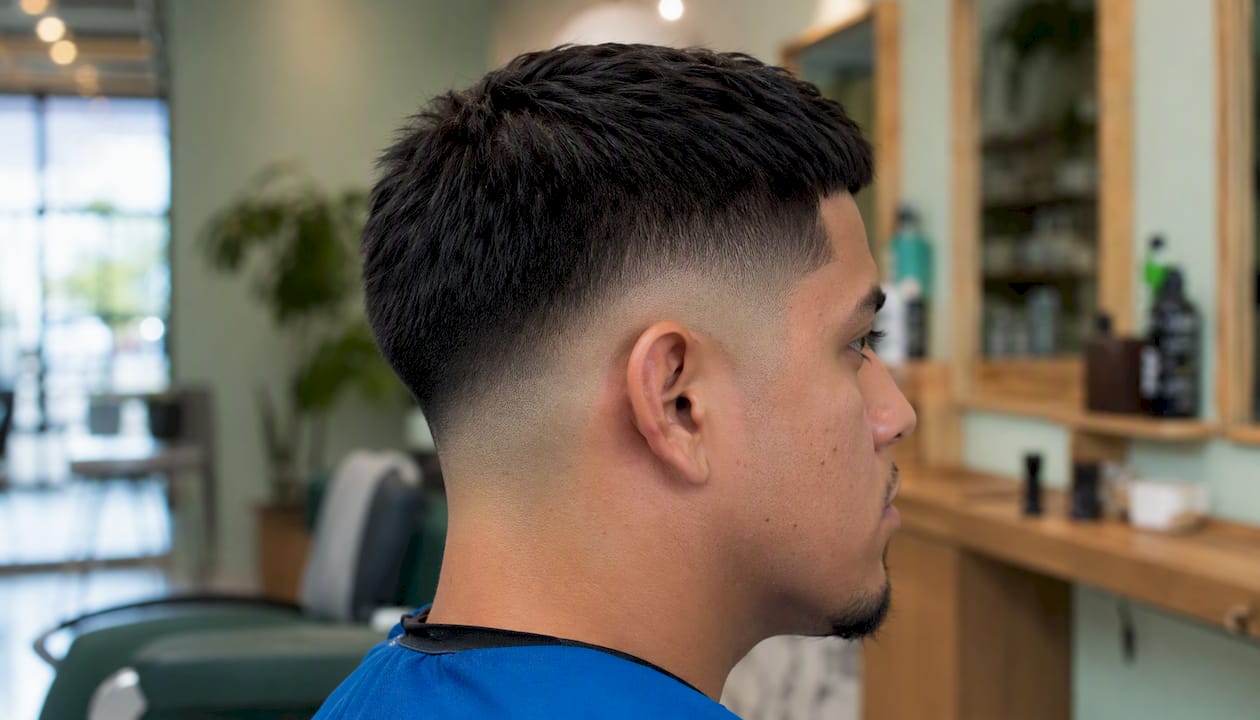
Barber phrasing: “Low skin fade, starting just above the ear, razor finish to skin at the bottom, blend up naturally.”
Mid skin fade
The most requested fade variation in American barbershops. The blend starts at temple level, giving you clear contrast between the shaved sides and the hair on top without the full boldness of a high fade. Oval, round, and heart-shaped faces all work well here. It pairs with almost any top style, which is why barbers consistently recommend it as the default starting point for men who are unsure.

Barber phrasing: “Mid skin fade starting at the temple, blended to skin, scissor texture on top, leave two inches.”
High skin fade
Bold and intentional. Skin exposure extends well above the temples, sometimes to the parietal ridge, creating the maximum contrast between bare sides and hair on top. Round and square faces benefit most because the high starting point adds vertical height and angular definition. The trade-off is maintenance: a high skin fade needs a touch-up every two weeks or less to stay sharp.
Barber phrasing: “High skin fade, starting above the temple near the crown, razor finish, leave volume on top.”
Drop fade
Instead of running in a straight horizontal line, the drop fade curves downward behind the ear and across the back of the head. This follows the skull’s natural curve, which produces a cleaner, more organic blend. It works exceptionally well on men with prominent occipital bones and is particularly popular with curly and coily hair types. Drop and burst fades are advanced variants — name them explicitly when booking and expect a barber with strong technical skill.
Barber phrasing: “Mid skin fade with a drop behind the ear, curved line, not a straight horizontal.”
Burst fade
The burst fade radiates outward from the ear in a semicircular pattern, like a sunburst. It pairs naturally with mohawks, mullets, and South of France cuts. The effect draws attention to the ear area and creates a distinctive side profile. Like the drop fade, it requires a skilled barber and should be named specifically when booking.
Temple (temporal) fade
The most minimal skin fade option. Only the temple area and sideburns are faded to skin; the rest of the sides stay at a uniform short length. It cleans up the hairline without committing to a full perimeter fade. This is the right call for first-timers or men in strictly conservative environments who still want a crisp, modern edge.
Barber phrasing: “Temple fade only, skin at the temples and sideburns, leave the rest of the sides.”
Skin taper fade
A skin taper fade maintains visible graduation through the mid and upper sections before reaching skin at the very bottom. It is the middle ground between a full skin fade and a classic taper, offering sharper neckline and jawline definition without the full boldness. It works especially well for oblong and long faces because it retains side width.
Pro Tip: A low skin fade is one of the best-kept secrets for men in conservative workplaces who still want a modern finish. The fade reaches bare skin at the perimeter, so the crispness is there, but the starting point is low enough that it reads as professional from across the room.
| Variation | Best face shapes | Fade height | Maintenance | Top pairings | Visual contrast |
|---|---|---|---|---|---|
| Low skin fade | Oblong, rectangular, square | Just above ear | Every 4–6 weeks | Textured crop, side part, comb-over | Moderate |
| Mid skin fade | Oval, round, heart | Temple level | Every 3–4 weeks | Quiff, pompadour, textured crop | High |
| High skin fade | Round, square | Above temple/crown | Every 2–3 weeks | Pompadour, mohawk, flat top | Maximum |
| Drop fade | All, especially curly/coily | Curved behind ear | Every 3–4 weeks | Textured top, mohawk, mullet | High |
| Burst fade | All, especially textured | Around ear | Every 3–4 weeks | Mohawk, South of France | High |
| Temple fade | All | Temples/sideburns only | Every 4–6 weeks | Any short style | Low–moderate |
| Skin taper fade | Oblong, long, oval | Graduated, low | Every 4–6 weeks | Classic styles, crew cut | Medium–high |
What to show your barber: Bring a front photo, a side photo, and a back photo of the style you want. Annotate or describe the fade start point, the finish (skin or shadow), and the top length. A clear photo and specific phrasing together eliminate guesswork and get you the result you came for.
How do you choose the right skin fade for your face, hair, and lifestyle?
Start with your face shape, then layer in hair type and lifestyle. This three-step framework keeps the decision simple.
Step 1: Match fade height to face shape.
- Round face: go mid or high to add vertical height and angular definition. Avoid low fades, which add width.
- Oval face: any height works. The mid fade is the safest starting point.
- Square face: low to mid softens the jawline; high sharpens it further. Choose based on your goal.
- Oblong/long face: stick with low fades or skin tapers. High fades elongate the face further.
- Heart-shaped face: mid fade with medium length on top. Avoid excessive height, which emphasizes forehead width.
Step 2: Factor in hair type.
Fine or thinning hair benefits from a shadow fade or soft taper rather than a full skin finish, because a shadow fade reduces visible scalp contrast and looks more intentional as it grows. Curly and coily hair pairs naturally with skin fades, especially drop and burst variants, because the curl pattern creates a soft, gradual boundary at the transition zone. Thick, straight hair handles any height well.
Step 3: Be honest about maintenance.
A high skin fade that is three weeks grown out looks noticeably soft. If your schedule is unpredictable, a low fade or shadow finish will hold its shape longer and still look intentional between visits. Match your fade choice to your calendar, not just your style preference.
What to tell your barber — sample phrasing blocks:
- Mid skin fade: “Mid skin fade starting at the temple, blended to skin, razor finish at the bottom, scissor texture on top, leave about two inches.”
- Low skin fade for a conservative setting: “Low skin fade, starting just above the ear, skin finish at the neckline, natural blend up, keep the sides fuller.”
- Shadow finish instead of full skin: “Mid fade, but leave a half-guard at the bottom instead of going all the way to skin. Shadow finish.”
- Drop fade with curly top: “Mid skin fade with a drop behind the ear, curved line, leave the curls on top natural, about two to three inches.”
Red flags to avoid at the chair: Saying “just do whatever looks good” without giving a length reference almost guarantees a result you did not picture. Avoid “short on the sides” without specifying a guard number or fade height. Never skip the top-length conversation, because the top style determines how aggressive the fade needs to be to keep proportions balanced. For more on how to describe a haircut precisely, the right vocabulary makes a real difference.
Barber pro tips and a practical maintenance plan
Maintenance is the hidden cost of a skin fade. Small amounts of growth reduce contrast dramatically, and the higher the fade, the faster it shows. Here is how the cadence breaks down by variation.
Skin fades need a touch-up every 2–3 weeks to stay sharp. High skin fades can require a visit every 2–3 weeks. Low fades and tapers allow for longer intervals between touch-ups, typically every 4–6 weeks. The reasoning is simple: a high fade exposes more skin, so even a few millimeters of regrowth softens the contrast visibly. A low fade has less exposed skin and a more gradual blend, so the same amount of growth reads as less dramatic.
| Fade type | Recommended touch-up | What to ask for at touch-up |
|---|---|---|
| High skin fade | Every 2–3 weeks | “Clean up the fade, same height, razor finish at the bottom” |
| Mid skin fade | Every 3–4 weeks | “Refresh the fade, starting at the temple, blend to skin” |
| Low skin fade | Every 4–6 weeks | “Tighten the fade, keep the starting point low, clean up the neckline” |
| Temple/shadow fade | Every 4–6 weeks | “Clean up the temples and sideburns, shadow finish” |
| Skin taper fade | Every 4–6 weeks | “Refresh the graduation, skin at the edges, keep the sides fuller” |
At-home upkeep between visits: Keep the neckline clean with a trimmer or a careful razor pass if you are comfortable with it. A straight razor finish gives the sharpest perimeter but increases sensitivity risk, so leave that to your barber unless you have experience. Use a light beard oil or skin moisturizer on the faded areas to prevent dryness and razor irritation. Avoid heavy products on the sides, which can clog pores where the skin is exposed.
Pro Tip: A standing appointment every 3–4 weeks is the single most effective scheduling habit for men with mid or high skin fades. At Phillythebarber, Philly recommends booking your next visit before you leave the chair. That one habit keeps the fade consistently sharp without the scramble of last-minute booking.
How to style the most common skin fade pairings at home
The fade is the foundation. The top style is what people actually see first. Here is how to keep the most popular pairings looking sharp between visits.
Textured crop
Apply a small amount of matte paste (about the size of a pea) to slightly damp hair. Work it through with your fingers, pushing the hair forward and slightly to one side. Pinch and twist small sections for texture. Let it air dry or use a low-heat diffuser. The goal is a lived-in, slightly messy finish, not a slick or structured one.
Quiff and pompadour
Start with a light-hold mousse or volumizing cream on towel-dried hair. Blow-dry upward and back using a round brush or your fingers, building volume at the front. Once the shape is set, apply a medium-hold pomade or wax to the surface only, not worked all the way through. This locks the shape without weighing it down. For a classic pompadour, keep the sides tight and the front high; for a modern quiff, let the front fall slightly forward with texture.
High and tight / buzz cut
These need almost no product. A light skin moisturizer on the faded sides is all most men need. If the top is slightly longer, a tiny amount of matte clay keeps it from looking flat.
Styling by hair texture
Curly hair: skip heavy creams that weigh down the curl. A light curl-defining cream or salt spray on damp hair, then hands off while it dries, gives the best result. Straight hair: a light pomade or wax gives definition without stiffness. Coily hair: a leave-in conditioner on the top section keeps the coils defined and prevents dryness at the faded perimeter.
Beard and sideburn blending: When you wear a skin fade with a beard, the fade line and the beard line need to connect cleanly. Ask your barber to blend the fade into the beard at the sideburn, so there is no hard ledge where the fade ends and the beard begins. A well-executed beard trim keeps that transition looking intentional. At home, use a trimmer to maintain the beard’s upper edge and keep it aligned with where the fade ends. For men who use hair care products between visits, a light beard oil on the sideburn area also prevents the skin from drying out where the fade meets facial hair.
Where did the skin fade come from?
The skin fade has deep roots in Black American barbershop culture, where it developed as both a technical craft and a cultural expression. Barbers in communities across the American South and Northeast were executing precise bald fades decades before the style crossed into mainstream men’s grooming. The technique required exceptional skill with clippers and trimmers, and the barbershop itself was a space where that skill was celebrated and passed down.
Through the 1980s and 1990s, the skin fade became closely associated with hip-hop culture and urban style. Artists, athletes, and entertainers wore high-contrast fades that were photographed and replicated widely. By the 2000s, the style had moved well beyond its origins and was appearing in mainstream barbershops across the country. The rise of social media in the 2010s accelerated the spread further, with barbers sharing their work on Instagram and building global followings around precision fade techniques.
Today, the skin fade is one of the most requested haircuts in American barbershops across every demographic. The technical vocabulary, the guard progressions, and the style pairings that barbers use today trace directly back to that tradition of craft and community.
How fade techniques differ by region and barbering tradition
American barbershops, particularly those rooted in Black barbering traditions, tend to emphasize maximum precision at the perimeter. The zero-gap blade, the razor finish, and the sharp lineup (edge-up) are standard. The transition zone is often tight and deliberate, with a clear visual break between the faded sides and the top.
Caribbean and West African barbering traditions, which have significant influence in cities like New York, Miami, and Houston, often favor the drop fade and burst fade. These variations accommodate a wider range of skull shapes and curl patterns, and the curved fade line is considered a mark of technical mastery rather than a shortcut.
European barbering traditions, particularly in the UK and Scandinavia, have developed a strong scissor-over-comb culture alongside clipper fades. A scissor fade offers a softer, more artisan transition and works well for longer side lengths and tailored looks. It avoids the rigid lines of clipper-only work and suits men who want a premium, organic blend. At Phillythebarber in Copenhagen, this blend of American precision and European scissor craft is part of what makes the approach distinctive.
Latin American barbering, with major influence from Puerto Rican and Dominican barbers in the United States, brought the temple fade and the hard part into mainstream American barbershop culture. The lineup and the temple fade are now standard offerings in shops across the country, but their refinement came largely from that tradition.
Key Takeaways
The mid skin fade is the most versatile starting point for most men, but the right fade depends on face shape, hair type, and how often you can realistically get back to the barber.
| Point | Details |
|---|---|
| Mid fade is the default | Starts at temple level, suits most face shapes, and needs a touch-up every 3–4 weeks. |
| Match height to face shape | High fades for round/square faces; low fades for oblong/long faces; mid for oval and heart. |
| Maintenance drives the choice | High skin fades need a visit every 2–3 weeks; low fades and tapers can stretch to 4–6 weeks. |
| Name the variant explicitly | Drop, burst, and temple fades require specific phrasing at booking and a skilled barber. |
| Phillythebarber for precision fades | Book at Phillythebarber for expert consultation, exact fade execution, and standing appointment scheduling. |
Pro Tip: Book your next appointment before you leave the chair. Standing appointments every 2–3 weeks keep mid and high skin fades consistently sharp. When you arrive, bring a front and side photo and use the phrasing blocks in this guide so your barber knows exactly where to start and how short to go.
A barber’s honest take on which fade actually works
The mid skin fade dominates for a reason. When a client sits down and is not sure what he wants, nine times out of ten the mid fade is where we land, and nine times out of ten he leaves happy. It is not the most dramatic option, but it is the most consistently flattering one. The contrast is there, the shape is clean, and it works whether he is heading to a job interview or a weekend out.
What surprises clients most is regrowth speed. Men often think a fresh fade will hold for a month. It does not. A high skin fade starts to soften noticeably within two or three weeks. A mid fade looks its best in the first three to four weeks. That is not a flaw in the cut; it is just the nature of the technique. The solution is a standing appointment, not a different style.
The other thing that catches people off guard is how much the top length changes the perceived fade. A mid fade with two inches of textured hair on top reads as modern and relaxed. The same mid fade with a tight buzz on top reads as military-sharp. The fade height did not change, but the overall look is completely different. That is why the conversation about top length matters as much as the conversation about fade height.
At Phillythebarber, every fade appointment starts with a consultation. Philly brings over 20 years of master barber experience to every chair, and the goal is always the same: the right fade for your face, your hair, and your life, executed with precision.
Sources and further reading
The claims and recommendations in this guide draw from the following authoritative sources:
- Fade Haircut Guide | Low, Mid, High & Skin Fades Explained
- Skin Fade vs Taper vs Taper Fade: Differences & Types
- Skin Fade Haircut: The Complete Guide to Getting It Right
- 50+ Best Skin Fade Haircuts for Men: Type, Styles Guide
- Taper Fade vs. Skin Fade vs. Mid Fade | Kinsman NYC
- Types of Fade Haircuts: Full Guide
- Taper Fade Haircuts: Best Styles, Types & Face Shape Guide
Internal Phillythebarber resources for deeper reading and booking:
- Skin Fade Haircut Explained: Your Complete Style Guide — practical phrasing and finish options
- The Ultimate Skin Fade Copenhagen Checklist — appointment prep and what to bring
- How to Prepare for a Barber Visit — step-by-step booking guide
- Barber-Recommended Men’s Hair Products — product types and application tips
Precision skin fades at Phillythebarber, Copenhagen
Sharp fades require a barber who understands both the technique and the person in the chair. At Phillythebarber in Vesterbro, Copenhagen, Philly brings over 20 years of master barber experience to every appointment, from a clean low skin fade for a professional setting to a high-contrast drop fade for a bold weekend look.
Every visit starts with a consultation. You describe what you want, Philly confirms the fade height, finish, and top length, and the cut is executed with precision clippers, trimmers, and straight razor work where the style calls for it. The shop also carries a curated selection of grooming products, so you leave with everything you need to maintain the look at home. For men with beards, the full-service grooming experience includes beard blending so the fade and the facial hair connect cleanly.
Ready to book? Visit Phillythebarber’s grooming guide for Vesterbro and schedule your next appointment online.