Lineup Haircut Explained: What It Means and How to Ask
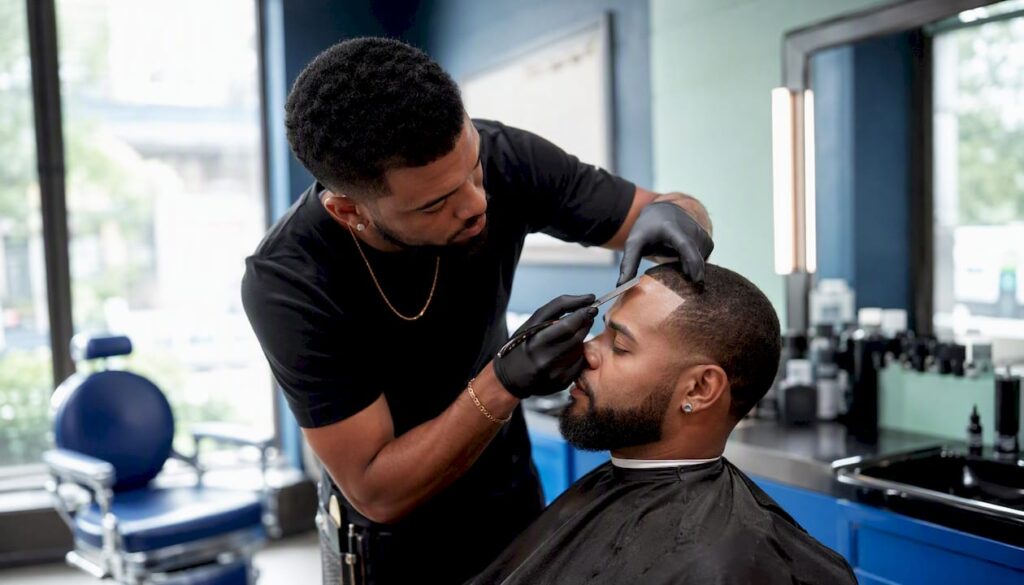
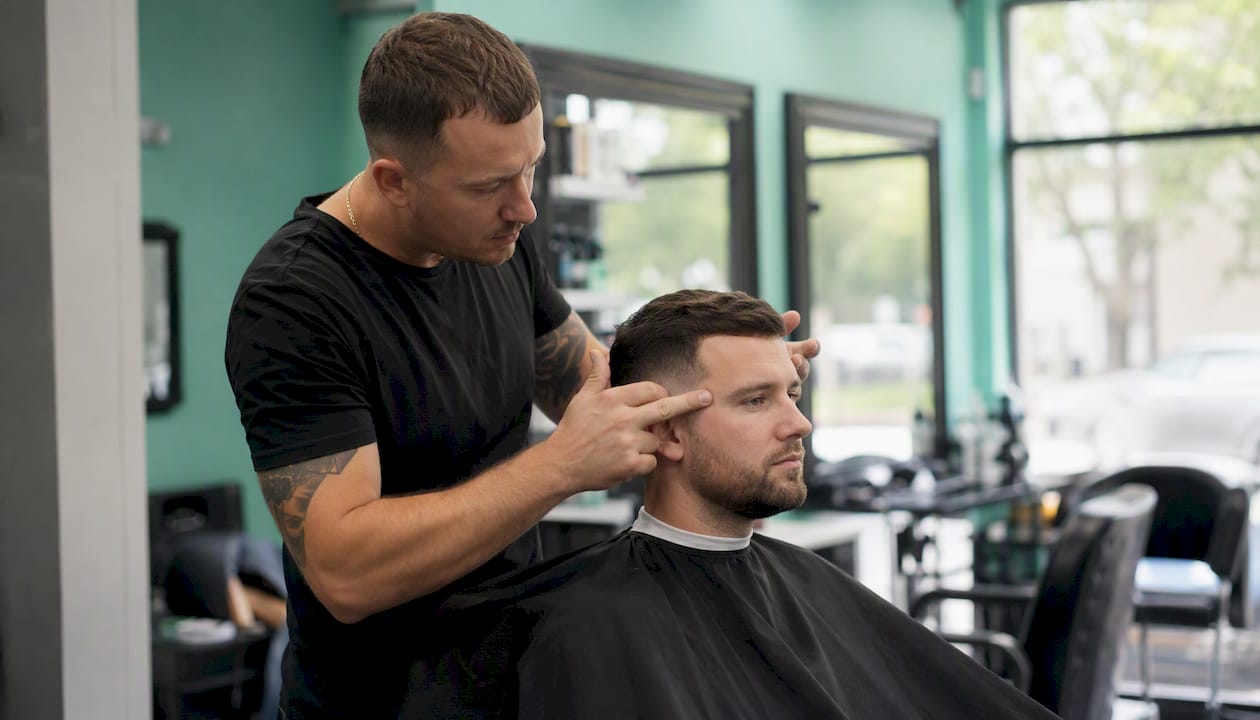
A lineup haircut, also called a shape-up or edge-up, is a precision barbering technique that redefines the hairline, temples, sideburns, and neckline into sharp, geometric edges. It does not change the length or shape of the hair on top. Think of it as the frame around a painting: the lineup is the finishing move that makes any haircut, whether a fade, undercut, high-top, or curly cut, read as intentional and polished rather than grown-out and unfinished.
Other names you’ll hear: lineup, shape-up, edge-up, lining. Same technique, same result.
Key Takeaways
A lineup (shape-up or edge-up) is a precision edge-defining technique covering the frontal hairline, temples, and sideburns, and it works as a finishing touch for nearly every men’s haircut style.
| Point | Details |
|---|---|
| What a lineup is | A precision trim of the hairline, temples, sideburns, and neckline into sharp, geometric edges. |
| Lineup vs. fade vs. taper | A lineup defines edges only; a fade blends lengths; a taper adjusts side/back progression. |
| Touch-up frequency | Every 1–2 weeks for a very sharp edge; every 3–4 weeks for a low-maintenance profile. |
| How to ask your barber | Say “lineup,” “shape-up,” or “edge-up” and bring front and three-quarter photos to show the angle you want. |
| Phillythebarber | Offers precision lineup appointments with straight-razor finish and face-shape consultation in Copenhagen’s Vesterbro. |
Table of Contents
- What does a lineup haircut mean, technically?
- How is a lineup different from a fade or a taper?
- Which hairstyles pair best with a lineup?
- How do barbers actually create a lineup?
- Exactly what to say when you ask for a lineup
- How often should you touch up a lineup?
- Why a professional barber makes the difference for a lineup
- The part of a lineup most people underestimate
- Sources
What does a lineup haircut mean, technically?
A lineup redraws the natural hairline into a sharp, defined edge using clippers and often a straight razor. The work happens across three specific zones:
- Frontal hairline: The barber squares off the forehead edge, replacing the soft, irregular natural hairline with a clean horizontal or slightly curved line.
- Temple corners: The points where the hairline meets the sides of the head. A barber typically creates a defined 90-degree angle here for maximum crispness.
- Sideburns and neckline: The sides are tapered down to a sharp edge, and the neckline is squared or rounded depending on your preference.
The tools that make this possible: a T-outliner or detail trimmer for the initial edge definition, standard clippers for bulk removal near the hairline, a straight razor and shaving cream for the final crisp finish, and a comb and neck duster for cleanup. The technique focuses entirely on edge definition, not on cutting length from the top.
Quick visual cues of a good lineup:
- Crisp, symmetrical front edge with no stray hairs
- Matching temple corner angles on both sides
- Clean sideburn lines that blend naturally into the face
- A neckline that looks intentional, not just “trimmed”
When you bring a photo to your barber, aim for four angles: front (to show the hairline), three-quarter view (to show the temple corner), side profile (sideburn length), and back (neckline shape). Each angle communicates something different, and having all four removes guesswork.
Pro Tip: Ask your barber to check temple symmetry before finishing. Uneven temple angles are the most common lineup flaw, and they’re easy to catch early but harder to fix once the razor has been used.
How is a lineup different from a fade or a taper?
This is where most people get confused, and the distinction matters when you’re sitting in the chair.
A lineup is a finishing technique, not a full haircut. It targets only the perimeter edges. A full haircut changes the length and shape across the entire head. You can walk in for a lineup only, which takes roughly 15–20 minutes, or you can get a full cut that includes a lineup as the final step.
A fade is a blending technique. The barber graduates the hair length from very short (or bald) at the sides and back up to longer hair on top, with no visible line between lengths. A fade can absolutely include a lineup as a finishing touch, but the lineup is not the fade itself. They serve different purposes: the fade blends, the lineup defines.
A taper affects the length progression on the sides and back, similar to a fade but less dramatic. The hair shortens gradually toward the neckline. Again, a taper can be finished with a lineup, but the two are separate techniques.
Short example scenarios:
- Quick touch-up visit: You had a full cut three weeks ago and the edges have grown out. You book a lineup-only appointment. The barber resharpens the hairline, temples, and neckline. Done in 15–20 minutes.
- Full appointment: New cut, bald fade on the sides, lineup to finish. The fade does the blending work; the lineup closes the look with sharp edges.
Is a lineup considered a fade? No. A lineup defines edges; a fade blends lengths. Many fades are finished with a lineup, but they are distinct techniques. The lineup haircut is a commonly requested standalone service, particularly in Black barbershop culture where edge definition has long been a mark of craft.
Which hairstyles pair best with a lineup?
Almost any men’s haircut benefits from a lineup, but some pairings are especially strong. Here’s what works and why:
- Bald, mid, or high fade with lineup: The sharpest combination. The fade removes length gradually; the lineup gives the front and temples a defined frame. The contrast between the faded sides and the crisp edge is what makes this look so clean.
- Undercut with lineup: The undercut keeps length on top and shaves the sides short. A lineup at the temples and forehead makes the transition from top to sides look deliberate rather than abrupt.
- High-top with lineup: The lineup is non-negotiable here. Without it, the high-top’s flat top looks unfinished. The edge at the forehead and temples anchors the whole shape.
- Curly top with lineup: Natural texture on top can look unruly without a defined perimeter. A lineup gives curly hair a structured frame that reads as styled, not just grown out.
- Pompadour with lineup: The pompadour sweeps back from the forehead, so the frontal hairline is highly visible. A sharp lineup at the forehead and temples makes the pompadour look intentional from every angle.
- Flat top or box fade with lineup: The geometric shape of a flat top demands a geometric edge. A lineup is structurally required for this style to work.
Face shape guidance, briefly:
- Round face: A lineup with a high fade adds height and creates the illusion of length. Avoid very wide temple corners that emphasize width.
- Oval face: Most lineup styles work. You have flexibility.
- Square face: A softer temple corner (slightly rounded rather than 90 degrees) balances a strong jawline.
- Long face: Keep the frontal hairline lower and avoid adding too much height on top. A mid-fade with lineup works well.
The lineup’s roots run deep in Black barbershop culture, where edge definition has historically been a sign of craft, community, and personal pride. Acknowledging that history matters when you understand why barbers treat lineup skill as a serious technical discipline.
How do barbers actually create a lineup?
Here’s the step-by-step sequence a trained barber follows:
- Consultation and marking: The barber discusses your preferred hairline position and marks the intended edge with a comb or finger before touching clippers to skin.
- Coarse hairline clipping: Standard clippers remove bulk near the hairline and establish a rough edge.
- T-outliner work: The detail trimmer (T-outliner) defines the precise edge along the forehead, temple corners, and sideburns. This is where the geometric shape takes form.
- Straight razor finish: The barber applies a light pre-shave oil or shaving cream along the hairline, then uses a straight razor to achieve the crispest possible edge. This step is what separates a professional lineup from a DIY trim.
- Cleanup and aftercare: The barber dusts away clippings, applies a post-shave balm or moisturizer to soothe the skin, and checks symmetry one final time.
The standard toolkit: clippers, T-outliner or detail trimmer, trimmer guards, straight razor, shaving cream or pre-shave oil, comb, and neck duster.
Pro Tip: Barbers maintain skin tension by stretching the skin taut with one hand while lining with the other. This prevents the razor from dragging, which is the main cause of post-lineup irritation. If you’re attempting any at-home touch-up, this technique matters more than the tool you use.
A lineup-only appointment runs roughly 15–20 minutes. A full haircut with a lineup adds 20–40 minutes depending on the style.
Exactly what to say when you ask for a lineup
Clear communication is the difference between walking out satisfied and walking out with a hairline that’s been moved a centimeter too high. Here’s how to get it right:
Ready-to-use phrasing:
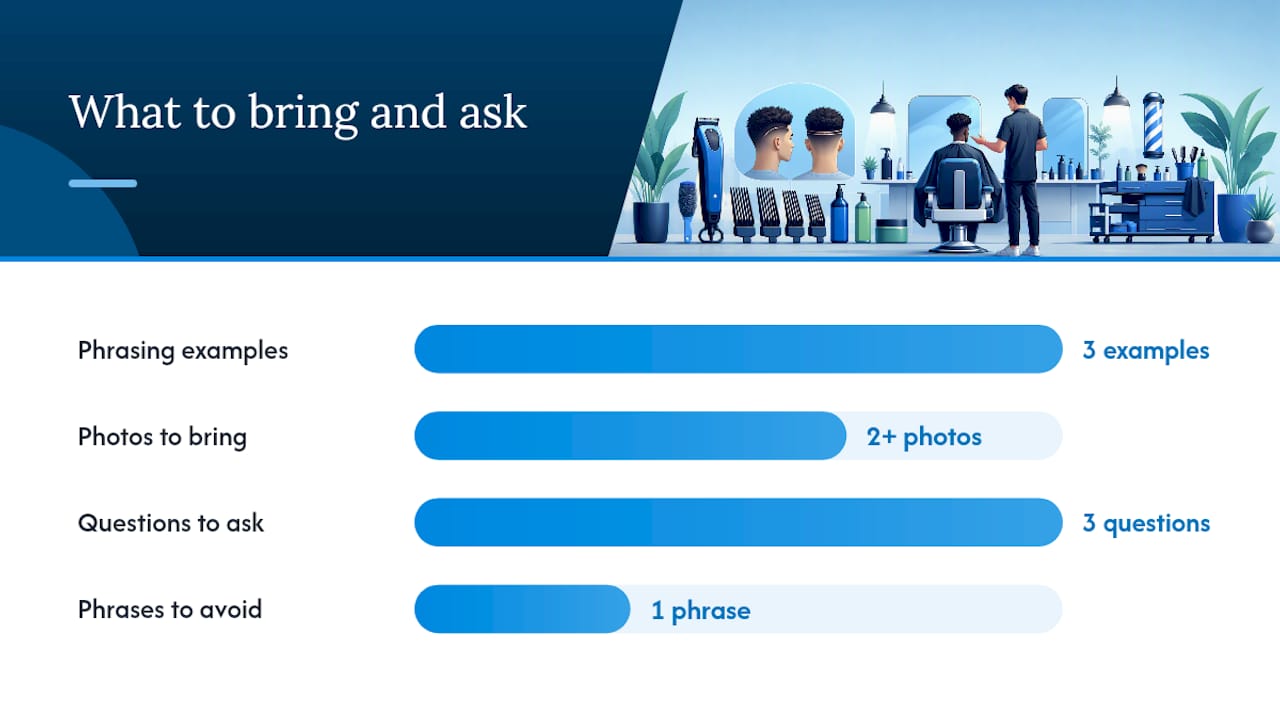
- “I’d like a lineup on the forehead, temples, and sideburns. Keep the top as is.”
- “Can you shape up my edges? I want the front squared off and the temple corners defined.”
- “Just a shape-up today, no length off the top.”
Photo advice: Bring at least two photos: one front-facing to show the hairline shape you want, and one three-quarter view to show the temple corner angle. If you have a photo of your own hair from a previous good cut, that’s the most useful reference. You can circle the hairline or point to the temple corner to clarify exactly what you mean. A clear description and reference photos remove almost all ambiguity before the clippers come out.
Questions to ask before the barber starts:
- “Do you recommend moving my natural hairline, or working with it?”
- “How sharp do you make the temple corners?”
- “Are you finishing with a straight razor?”
What to avoid: Don’t say only “clean it up” if you want a defined geometric edge. “Clean up” often means a light trim, not a full lineup. Use the words lineup, shape-up, or edge-up specifically.
A note on Copenhagen etiquette: In Denmark, tipping is not as standard as in the US, but a small tip of 10–15 DKK for a well-executed service is genuinely appreciated and becoming more common in Copenhagen’s barbershop scene. Booking in advance is expected at most quality shops, and arriving a few minutes early for a precision service like a lineup gives the barber time to consult properly before starting.
How often should you touch up a lineup?
A lineup looks its sharpest immediately after the appointment. Hair grows roughly 1.25 cm per month on average, which means the edge starts softening within a week for most people.
At-home upkeep options:
- A detail trimmer can handle light regrowth along the hairline between professional visits. It won’t replicate the straight-razor finish, but it keeps the edge from looking completely grown out.
- Post-shave balm applied after any at-home trimming reduces irritation and keeps the skin around the hairline healthy.
- A light-hold styling paste or pomade can help keep short hairs near the hairline lying flat between touch-ups.
The honest limitation of DIY touch-ups: you can maintain a rough edge, but the precision of a straight-razor finish and the symmetry check a trained eye provides are genuinely hard to replicate at home. Common mistakes in self-trimming, like uneven temple angles or a hairline that creeps too high over time, are exactly the kind of errors barbers regularly fix. For the full range of product categories that support at-home maintenance, the barber-recommended product guide covers detail trimmers, aftershave balms, and styling products available in Copenhagen.
Why a professional barber makes the difference for a lineup
A lineup looks simple. It isn’t. The margin for error is measured in millimeters, and a hairline that’s been moved too high or cut unevenly is slow to grow back.
At Phillythebarber in Copenhagen’s Vesterbro neighborhood, Philly brings over 20 years of experience as a certified Master Barber to every lineup appointment. That experience shows up in specific ways:
- Consultation first: Before any clipper touches your hairline, Philly discusses your natural hairline position, face shape, and how sharp you want the finish. Moving a hairline is a permanent decision for the next few weeks.
- Measured shaping: The frontal edge and temple corners are set with precision, checked for symmetry before the razor comes out.
- Straight-razor finish: Every lineup at the shop is finished with a straight razor for the crispest possible edge, followed by a post-lineup moisturizer to protect the skin.
- Blade hygiene: Fresh blades for every client. This isn’t optional at a quality shop; it’s a baseline standard.
When it comes to adjusting your natural hairline versus working with it, the honest answer is: it depends on your face shape and how much maintenance you want. Pushing the hairline back creates a sharper look but requires more frequent touch-ups. Philly’s approach is to advise based on what actually flatters your face, not what looks most dramatic in the chair.
For a broader look at what separates a barbershop cut from a standard salon visit, the professional haircut vs. barbershop cut guide covers the technical differences in detail. Copenhagen’s grooming scene has grown considerably, and the men’s haircut guide for Copenhagen gives a full picture of what to expect when booking a precision service locally.
The part of a lineup most people underestimate
Here’s something I’ve seen over 20 years behind the chair: clients often focus on the haircut itself, the fade, the length, the style, and treat the lineup as an afterthought. That’s backwards. A strong lineup can make a simple haircut look sharp and intentional. A poor lineup can make a technically excellent fade look unfinished. The edge is what people actually see first.
The other thing worth saying: your natural hairline is irregular. Almost everyone’s is. A lineup doesn’t just tidy it up; it redraws it. That’s a meaningful change, and it’s why the consultation before a lineup matters as much as the technique during it. If a barber picks up the clippers without asking where you want the line, that’s a signal worth paying attention to.
Bring photos. Use the words shape-up or edge-up if lineup doesn’t land. And find a barber who checks symmetry before finishing, not after.
Philly’s Barber Shop: precision lineups in Copenhagen’s Vesterbro
Sharp edges deserve a sharp barber. At Phillythebarber, every lineup appointment includes a face-shape consultation, precise T-outliner shaping, and a straight-razor finish that you won’t get from a quick trim at a chain salon. Philly’s 20+ years as a certified Master Barber means the temple corners are measured, the symmetry is checked, and the aftercare is covered before you leave the chair.
The shop also carries a curated selection of grooming products, including detail trimmers, post-shave balms, and styling pastes, available for purchase in-shop so you can maintain your edges between visits. Booking is straightforward and recommended in advance for precision services. Visit the Phillythebarber grooming and products page to browse services, check availability, and book your next lineup appointment in Vesterbro.
Sources
- LINEUP
- Line Up Haircuts: 9 Sharp Styles (2026)
- The Lineup Haircut: What It Is and Who Should Get One