Precision Haircut Techniques: What They Are and Why They Work
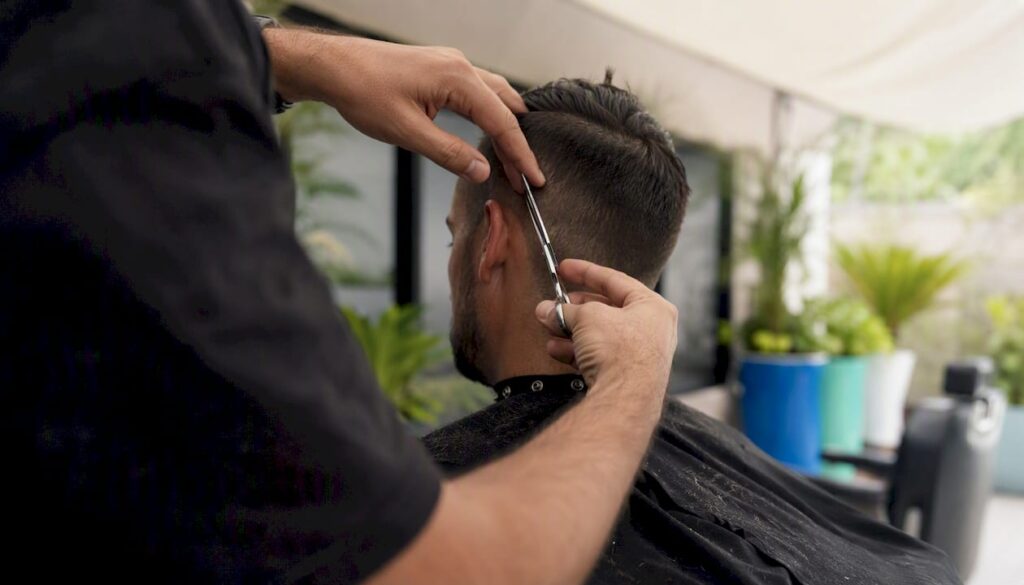
A precision haircut is a method-driven approach to cutting hair where every section, angle, and line is planned before a single snip is made. Think of it as hair architecture: the stylist maps the head, sets a strict perimeter, and builds shape section by section so the result holds its form for weeks, not days. The industry term you’ll hear professionals use is “precision cutting,” and it’s the standard behind styles like the blunt bob, structured layers, and the defined fringe.
Three things set it apart immediately:
- Shape retention: The cut is engineered to grow out predictably, so you’re not fighting your hair two weeks in.
- Cleaner finish: Crisp perimeter lines and consistent weight distribution give the style a polished, intentional look.
- Less daily effort: When the architecture is right, the hair falls where it’s supposed to with minimal styling.
Key Takeaways
A precision haircut is an architecture-first method built on strict sectioning, consistent tension, and a perimeter-first workflow that produces shape holding for weeks rather than days.
Table of Contents
- What makes a precision cut different from a regular haircut?
- Tools and core techniques that produce precision results
- What a precision cut looks like in practice
- Benefits of precision cutting and who gets the most value
- How to ask your stylist for a precision cut
- Maintenance, styling, and what to budget
- Philly’s step-by-step workflow at the chair
- Common myths about precision haircuts
- Why precision matters to me as a barber
- Philly’s Barber Shop delivers precision cuts with real chair time
- Sources
What makes a precision cut different from a regular haircut?
The difference isn’t just skill level. It’s intent and method. A precision haircut is built perimeter-first, meaning the stylist establishes the outer boundary of the shape before working inward. A regular trim often starts wherever the length looks long and works outward from there. That’s a fundamental difference in workflow.
Here’s what you’ll notice in a precision appointment that you won’t always see in a standard trim:
- Methodical sectioning: Hair is divided into defined panels before cutting begins, not grabbed in loose handfuls.
- Consistent elevation and angles: Each section is held at the same angle relative to the head, so weight builds evenly.
- Controlled tension: The stylist applies even pressure on every pass. Uneven pulling makes a line look perfect wet and jagged dry.
- Dry motion-check: Before you leave the chair, the stylist lets the hair fall naturally and checks the perimeter for any inconsistencies.
| Feature | Precision cut | Regular trim |
|---|---|---|
| Preparation | Head mapped, growth patterns read | Length assessed visually |
| Sectioning | Small, defined panels throughout | Loose sections or none |
| Finish | Dry motion-check before client leaves | Cut finished wet |
| Grow-out | Predictable, shape holds for weeks | Shape breaks down quickly |
When a stylist describes their method, listen for phrases like “perimeter-first,” “layering to a line,” or “dry check.” Those are the signals that you’re getting a precision approach rather than a quick tidy-up.
Tools and core techniques that produce precision results
Precision cutting relies on a specific toolkit, and each piece has a defined role. Using the wrong tool or a poorly maintained one undermines the geometry the stylist is trying to build.
Common tools and their purpose:
- Convex-blade scissors: The sharp, smooth edge of a convex blade cuts cleanly without pushing the hair, which is critical for accurate lines.
- Sectioning clips: Hold panels flat and out of the way so the working section stays isolated.
- Fine-tooth cutting comb: Controls tension and elevation precisely; a wide-tooth comb introduces too much play.
- Tail comb: Used for clean partings and sectioning lines.
- Razors: Generally avoided in precision work because they texturize the ends, which disrupts a clean perimeter line.
Point cutting is one of the most useful finishing techniques in precision work. It removes small vertical wedges from the ends of the hair, softening a blunt line without losing the weight or shape underneath. The technique concentrates work in the last 5–10 mm of the scissor tips, which is why tip quality and alignment matter more here than blade length. Point cutting is most effective on dry hair, where you can see exactly how much softening you’re creating.
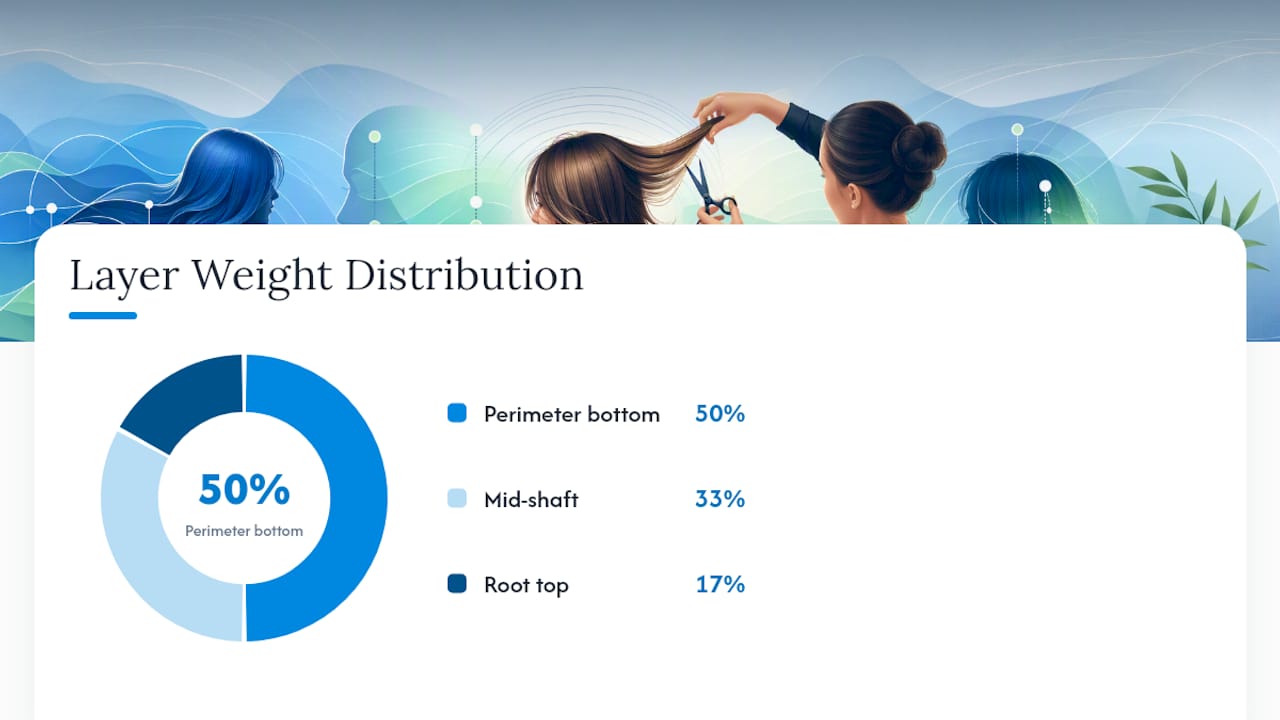
The 3:2:1 rule is a practical guide for distributing weight across a cut. In simple terms: three parts length at the perimeter, two parts mid-shaft, one part at the root. Applied to a layered precision cut, this means the longest, heaviest sections sit at the bottom, creating a strong foundation line, while the layers above get progressively lighter. The result is movement that doesn’t collapse the shape.
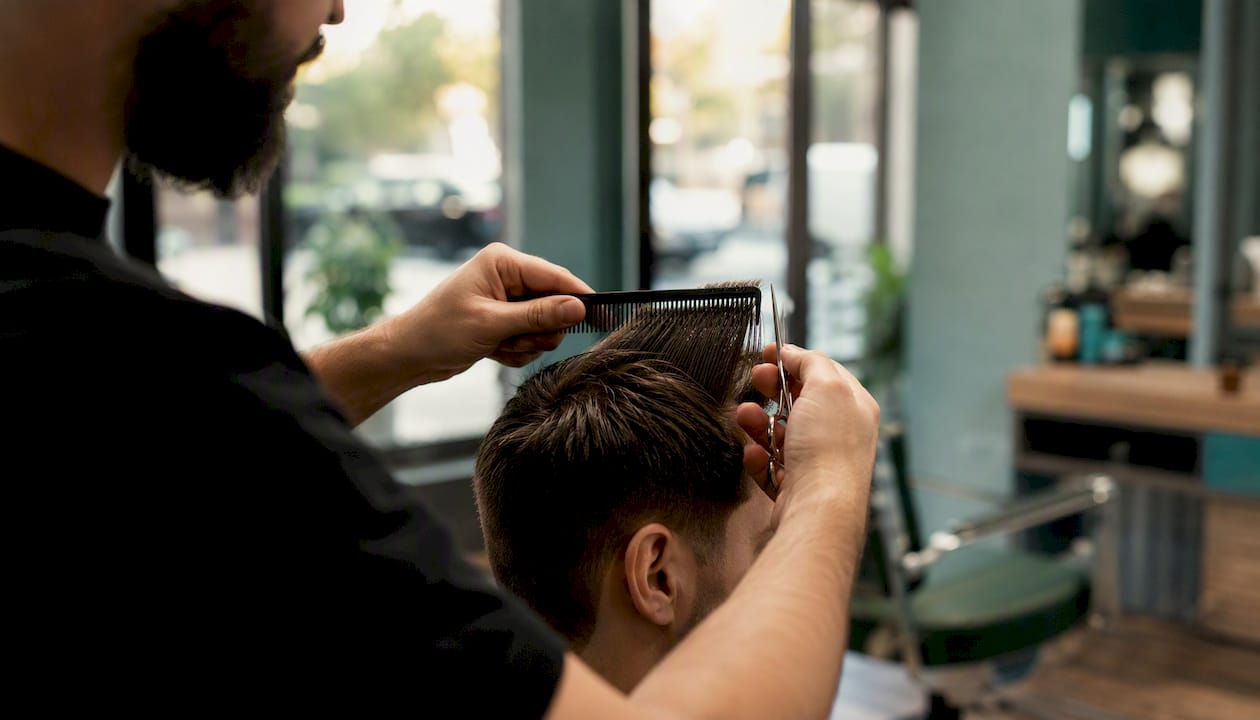
Other key techniques include elevation (how high you hold the section away from the head, which controls weight removal) and over-direction (pulling sections toward a guide to create graduation). Precision cutting relies on geometry and structural foundations, and these techniques are the geometry.
Pro Tip: Keep your scissor tips sharp. A dull tip drags and folds the hair instead of cutting it cleanly, which ruins point cutting entirely. If your scissors can’t snip a single strand held in the air, they need sharpening. Quality Japanese hair cutting scissors maintain tip integrity far longer than budget alternatives.
What a precision cut looks like in practice
Precision cuts have a visual signature: clean perimeters, consistent lines, and a shape that looks intentional from every angle. Here are the styles where you’ll see it most clearly.
- Blunt bob: The most recognizable precision style. A single, unbroken weight line sits at the perimeter, and every strand falls to the same point. No graduation, no feathering.
- Precision wedge: A stacked back with a defined perimeter line, heavier at the nape and lighter through the crown. The geometry is visible even from a distance.
- Structured layers: Layers cut to a guide line rather than free-hand. Each layer has a defined length relationship to the one below it, so the shape holds as it grows.
- Defined fringe: A fringe cut with consistent elevation and a clean horizontal or curved line. The perimeter is the point.
Texture and density change the visual result, but not the method. Fine hair benefits from blunt precision cuts because the clean perimeter creates the illusion of thickness. Thick hair may need point cutting at the ends to prevent the perimeter from looking too heavy. Curly and coily textures require the stylist to account for shrinkage, cutting longer than the target length and checking the shape dry.
Benefits of precision cutting and who gets the most value
The practical case for precision cutting comes down to time and consistency. When executed properly, a precision cut can hold its shape for 6–12 weeks depending on style and hair type, compared to a standard trim that often loses its shape within a few weeks.
Direct benefits:
- Predictable grow-out: The shape was designed to grow out gracefully, so you’re not scrambling for an appointment the moment it gets long.
- Stronger perimeter integrity: The outer line stays clean longer because it was set with intention, not approximated.
- Tailored framing: A good precision cut accounts for your face shape, bone structure, and growth patterns, so it flatters rather than just fits.
- Less daily styling time: When the weight is distributed correctly, the hair falls into place with minimal effort.
Who benefits most:
- Clients with defined styles they want to maintain (bobs, structured layers, clean fades with a precise line)
- Anyone who wants their hair to look good between appointments without heavy styling
- Clients with strong growth patterns or cowlicks that need to be worked with, not against
Where it’s a less natural fit:
- Clients who change their style frequently and want maximum flexibility
- Anyone who never styles at home and prefers a wash-and-go approach with no defined shape
- Very short buzz cuts where perimeter architecture is less relevant
The higher price you’ll often see for precision cuts reflects chair time and specialist skill, not a premium label. A precision appointment takes longer because the method requires it.
How to ask your stylist for a precision cut
Walking in and saying “I want a precision cut” is a start, but the consultation is where the real work happens. Reading growth patterns, cowlicks, and head shape is how a stylist builds a cut to your actual head rather than a photo. Here’s how to make that conversation productive.
Sample phrases that communicate what you want:
- “I want a cut that holds its shape as it grows out, not just on the day.”
- “I’d like a clean perimeter line, and I want the layers to fall to a guide rather than free-hand.”
- “Can you check it dry before I leave so we can see how it actually falls?”
- “I spend about five minutes styling in the morning. I want the cut to work with that.”
What to avoid saying:
- “Just clean it up” (gives the stylist no structural brief)
- “Do whatever you think” (without context about your lifestyle or styling habits)
What a precision appointment typically covers:
- Consultation: stylist reads the head, checks growth patterns and cowlicks, discusses lifestyle
- Perimeter set: the outer boundary of the shape is established first
- Sectioning and layering: interior sections are cut to the perimeter guide
- Dry motion-check: hair is released and checked for balance and line integrity
- Adjustments: any inconsistencies are corrected before you leave
Appointment checklist:
- Bring 2–3 reference photos showing the shape you want, not just the color or texture
- Know how many minutes you actually spend styling each day (be honest)
- Mention any strong growth patterns, cowlicks, or areas that always cause trouble
- Allow extra time: precision appointments run longer than a standard trim
Pro Tip: Bring photos of your hair on a bad day, not just a good one. Showing your stylist what goes wrong helps them engineer the cut to prevent it. That’s the kind of information that makes a precision cut work for your actual life, not just the salon chair.
Also worth reading before your visit: the barber visit preparation guide covers exactly what to bring and what to discuss at the consultation.
Maintenance, styling, and what to budget
A precision cut earns its keep between appointments, but only if you maintain it correctly.
Hold timelines and retrim rhythm:
Many precision styles for women hold well for 5–8 weeks before the shape starts to soften noticeably. For men, a 3–4 week retrim rhythm is the standard recommendation from most practitioners to keep the perimeter sharp. Complex structural styles may need attention closer to the 4–6 week mark regardless of gender.
At-home tool checklist:
- Blow-dryer with a concentrator nozzle (directs airflow along the perimeter)
- Round brush for volume and direction control
- Paddle brush for smoothing and finishing
- Quality scissors for minor fringe trims between appointments
Product guidance:
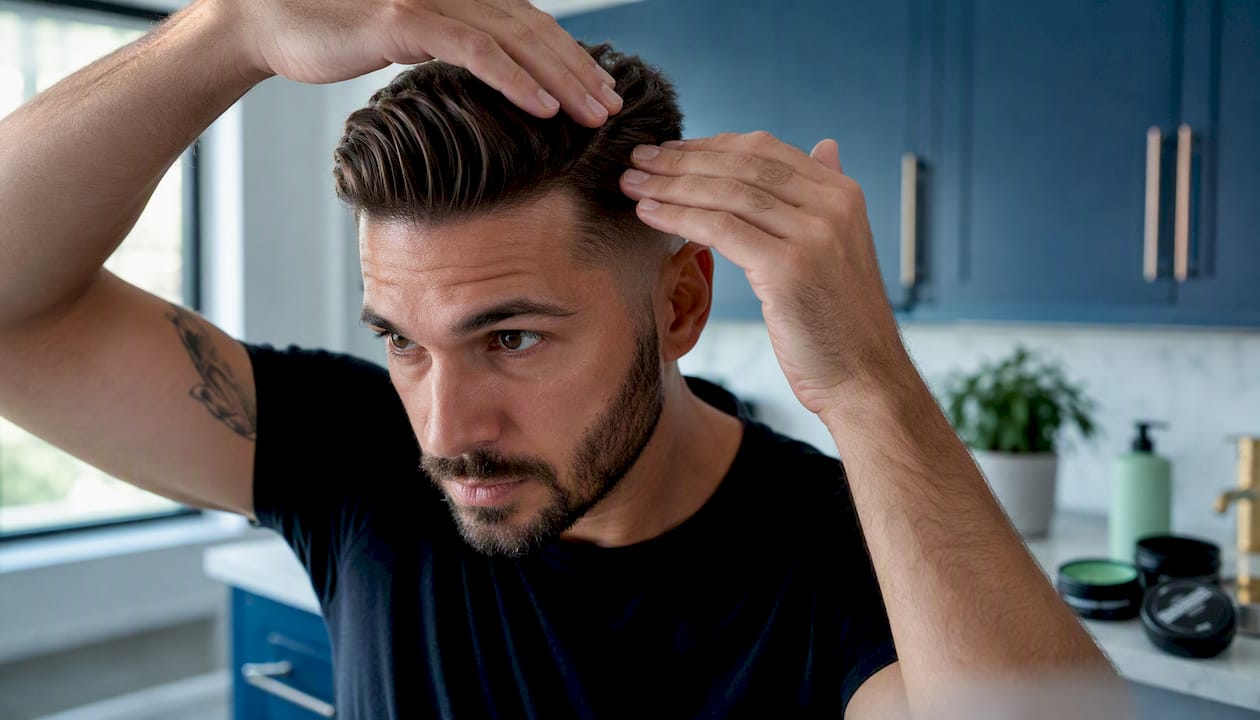
- Use lightweight serums or creams to define the perimeter without weighing it down
- Avoid heavy waxes or clays on styles with clean lines; they disrupt the fall
- A light-hold spray can lock the shape after blow-drying without stiffness
Precision cuts typically cost more than a quick trim at a chain salon. That reflects the additional chair time, the planning involved, and the specialist skill required to execute the geometry correctly. Treating it as a one-time investment in a shape that holds is a more accurate frame than comparing it to a standard price-per-minute trim.
For product and tool recommendations, the grooming products selection at Phillythebarber covers the types of tools and care products that support a precision cut between appointments.
Philly’s step-by-step workflow at the chair
Philly is a certified Master Barber with over 20 years of experience, and his approach to precision cutting follows a consistent, repeatable workflow. Precision haircutting is an architecture-first discipline: the plan comes before the scissors.
Philly’s chairside workflow:
- Read the head: Check growth direction, cowlick position, occipital bone placement, and parietal ridge. The cut has to be built to the 3D skull, not a flat photo.
- Set the perimeter: Establish the outer boundary of the shape before any interior work begins. This is the foundation everything else references.
- Work in small sections: Partings of roughly ¼ inch keep tension consistent and prevent lines from drifting. Larger sections introduce too much variability.
- Maintain consistent tension: Apply the same pressure on every pass. Tension drift is the most common reason a line looks clean wet and uneven dry.
- Layer to the line: Interior sections are cut to the perimeter guide, not free-hand. Every layer has a defined relationship to the one below.
- Dry motion-check: Release the hair and let it fall naturally. Check the perimeter, the weight distribution, and the balance from every angle before the client leaves the chair.
Pro Tip: Watch what happens as the hair dries during the cut. If a section starts to pull up more than expected, your tension was too high on that pass. Catching it mid-cut is far easier than correcting it after the shape is set.
What Philly checks before finishing:
- Perimeter line is consistent from both sides
- Weight sits where it was planned, not where gravity pulled it
- No tension-induced steps or ridges visible in the dry fall
- The client can replicate the result at home with their normal routine
This level of procedural discipline is what separates a precision appointment from a rushed trim. You can read more about Philly’s approach to precision grooming in Copenhagen and what the full service experience looks like.
Common myths about precision haircuts
A few persistent misconceptions keep people from asking for precision work when it would genuinely suit them.
-
Myth: Precision cuts are too rigid and inflexible.
Correction: Precision is about method, not outcome. Point cutting and varied elevation can produce soft, lived-in results. The method is disciplined; the finish doesn’t have to be severe. -
Myth: Precision cuts only work on straight hair.
Correction: The technique adapts to every texture. Curly and coily hair requires accounting for shrinkage, but the sectioning and perimeter-first logic applies equally well. -
Myth: You need to style heavily to maintain a precision cut.
Correction: A well-executed precision cut is designed to reduce styling effort, not increase it. The architecture does the work. -
Myth: Precision cuts are only for women.
Correction: Structured fades, defined crop cuts, and clean perimeter lines in men’s cuts are all precision work. The difference between a professional haircut and a barbershop cut often comes down to exactly this kind of methodical approach. -
Myth: “Too perfect” means it won’t look natural.
Correction: A precision cut that’s built to your growth patterns and lifestyle looks natural because it works with your hair, not against it.
For a broader look at what goes wrong when precision principles are skipped, the common haircut mistakes guide is worth a read.
Why precision matters to me as a barber
Precision isn’t a style preference for me. It’s a professional standard. After 20 years behind the chair, I’ve seen what happens when a cut is rushed: the shape breaks down in two weeks, the client comes back frustrated, and the fix takes twice as long as doing it right the first time.
What I value about precision work is that it’s honest. You can’t fake the dry motion-check. Either the line holds or it doesn’t. Either the weight sits where it was planned or it drifts. That accountability is what keeps me methodical on every cut, whether it’s a blunt bob or a structured men’s crop.
If you’re unsure whether a precision cut is right for your hair, come in for a consultation. Bring your reference photos, tell me how much time you actually spend styling, and we’ll figure out what architecture works for your head. The result should look good on day 14, not just when you walk out the door.
Philly’s Barber Shop delivers precision cuts with real chair time
Getting a precision haircut means more than booking any appointment. It means sitting with a barber who reads your head before picking up the scissors, sets a perimeter with intention, and checks the result dry before you leave. That’s the standard at Phillythebarber.
Philly’s services include precision haircuts, grooming consultations, motion-check finishing, and follow-up maintenance trims — all delivered with good nail salon customer service qualities to ensure top client experience. With 20+ years of experience and a commitment to the kind of chair time precision work actually requires, the shop is built for clients who want a cut that holds. Pricing reflects the skill and time involved, not a quick pass with the clippers.
Ready to get a cut that works for your hair and your schedule? Prepare for your visit and book your consultation at Phillythebarber. For a full grooming session, explore the complete grooming experience to see what else is on offer.
Sources
- Precision Haircutting Is Architecture, Not Trimming – Free Salon Education
- What Is a Precision Haircut? 30-Year Master Stylist Explains
- Point Cutting Guide | ShearGenius
- The Art of the Precision Haircut: How it Differs from Regular Cuts