What Is a Contrast Fade Technique? A Barber’s Guide
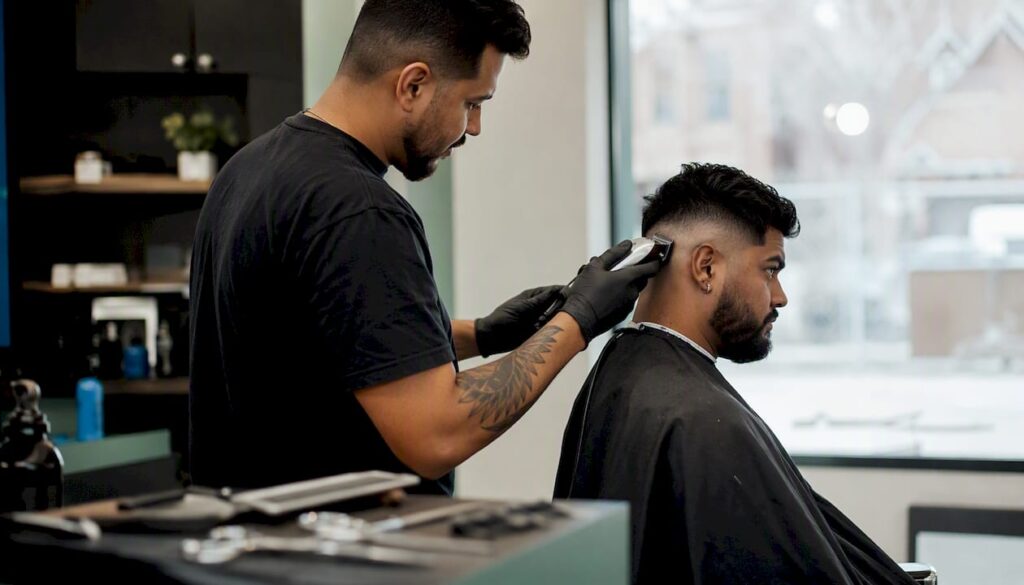
A contrast fade is a barbering technique that creates a deliberate, high-contrast gradient from skin or very-short sides into longer hair on top. Unlike a soft blend that eases gently between lengths, a contrast fade makes that transition sharp and intentional. As Master Barber Philly explains, and as resources like GQ and Cursa confirm, the visual drama comes from controlling three zones: the base (shortest area), the transition band, and the weight area above. Men who want a modern, structured look with real edge choose this cut. It reads clean in photos, flatters most head shapes, and signals that you sat in a skilled barber’s chair.
Table of Contents
- How a contrast fade differs from a regular blend
- Which contrast fade style suits you?
- How barbers actually build a contrast fade
- What to say when you sit down
- Time, cost, and how often to rebook
- Your in-chair checklist before you leave
- Key Takeaways
- Why the transition zone is everything
- Book your contrast fade at Philly’s Barber Shop
- Useful sources
How a contrast fade differs from a regular blend
A soft or regular fade blends gradually, often starting at a #1 or #2 guard, so the transition is wide and gentle. A contrast fade compresses that transition into a tighter vertical band and starts lower, often at skin or a #0.5, which makes the jump in length far more visible.
According to Cursa’s fade fundamentals guide, contrast is the visual difference between the base and the weight zone. Starting at skin reads as higher contrast than starting at a #1 guard, even when the fade height is identical. Compression matters too: fitting the transition into a shorter vertical space produces a sharper, more modern look, but it demands smaller length jumps and more precision from the barber.
Quick comparison:
- Contrast fade: — skin or #0.5 base, tight transition zone, bold visual jump, requires more frequent touch-ups
Pro Tip: Ask your barber to check the blend under natural light before you leave the chair. Shop lighting can hide uneven transitions that become obvious the moment you step outside.
Which contrast fade style suits you?
Low, mid, high, and skin fades are defined by where the shortest area begins on the side and back. Each creates a different visual effect and carries a different maintenance window.
- Low contrast fade: — starts just above the ear and natural hairline. Subtle but still sharp. Works well on oval and round faces, and on men who want a cleaner look without committing to frequent rebooks.
- Skin fade: — the base goes to bare skin, producing the sharpest contrast possible. Works on all textures but shows regrowth fastest.
For a deeper look at matching fade height to your face shape and hair texture, the fade haircut style options guide at Phillythebarber covers each pairing in detail.
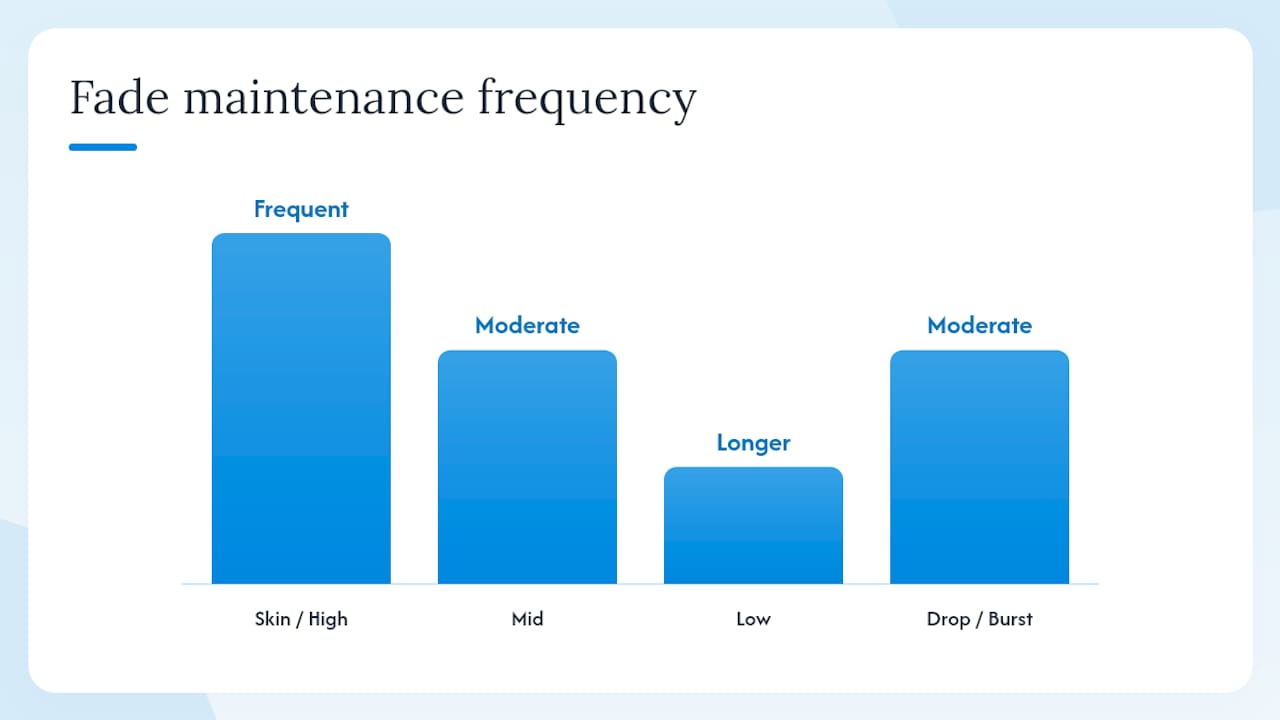
| Fade type | Maintenance window |
|---|---|
| Skin / High | Frequent touch-ups needed |
| Mid | Moderate maintenance frequency |
| Low | Longer intervals between touch-ups |
| Drop / Burst | Moderate maintenance frequency |
How barbers actually build a contrast fade
Precise transition-zone control is the core technical move. Everything else, the guard work, the trimmer pass, the razor finish, serves that one goal.
A proper sequence, as outlined in Eddie’s skin fade breakdown, runs like this:
- Cut and style the top first to establish the weight line.
- Set the fade height by marking where the base will begin.
- Work clipper guards long-to-short across the side and back, removing bulk in passes.
- Blend the transition zone with smaller guard jumps, using clipper-over-comb for tight areas.
- Switch to a trimmer for the final quarter-inch above the skin.
- Zero-gap the trimmer or use a foil shaver to bring the base to true skin.
- Outline the hairline and neckline with a straight razor for the cleanest possible edge.
- Check the full blend from the front, both sides, and the back.
Tools and when each is used:
- Clipper with guards (#0.5–#3): bulk removal and initial blending
- Clipper-over-comb: tight areas and curved sections
- Trimmer (zero-gapped): final skin approach
- Foil shaver: brightest skin values at the base
- Straight razor: outline and neckline definition
According to BarberNation’s sharpening techniques, zero-gapping, foil finishing, and corner-of-clipper picking for dense or indented spots are what separate a sharp fade from a muddy one.
Pro Tip: After the blend, a skilled barber uses the corner of the clipper to pick out any dark spots in the transition zone, then checks the entire cut under natural side light before calling it done.
What to say when you sit down
Vague requests produce vague results. “Just a fade” tells your barber almost nothing about height, contrast level, or finish. Be specific from the start.
Bring photos that show:
- Front view (hairline and top length visible)
- Both sides (fade height and transition clearly visible)
- Back and crown (neckline shape and blend)
- A close-up of the hairline if you want a specific edge style
Sample phrases that work:
- “I want a high skin fade with a tight transition, keeping about two inches on top.”
- “Mid fade to skin, sharp lineup, and a square neckline.”
- “Low contrast fade, starting just above the ear, blended into a textured crop.”
For more phrasing guidance, the how to describe a haircut to your barber page at Phillythebarber walks through exactly how to communicate length, finish, and style without guesswork.
If your hairline is receding or thinning, fade placement matters even more. A resource like this guide on why hairlines recede can help you understand what’s happening before you decide on fade height.
Time, cost, and how often to rebook
A premium contrast fade appointment typically lasts long enough to cover consultation, clipper blending, detailing, and final inspection, with time varying by hair texture, fade complexity, and add-ons.
Premium barbershops in the U.S. charge varying prices for a contrast fade, typically influenced by barber seniority, add-ons, and location, with higher costs in major metro areas.
Maintenance schedule:
- Skin and high fades: outline touch-up every 1–2 weeks, full re-fade every 3–4 weeks
- Mid fades: outline every 2–3 weeks, full re-fade every 4–5 weeks
- Low fades: full re-fade every 4–6 weeks
The Phillythebarber style guide includes client-facing maintenance windows tailored to help you plan your rebook cadence before you leave the chair.
Your in-chair checklist before you leave
Run through this before you stand up from the chair.
- Ask for a hand mirror and check both sides simultaneously.
- Look at the back using the mirror against the wall mirror.
- Check the crown and the blend where the fade meets the top.
- Confirm the hairline is symmetrical from the front.
- Take a phone photo from each side and the back for your records.
Say these three things before you go:
- “Can I see both sides at the same time?”
- “Does the transition look even from the back?”
- “Is the lineup symmetrical?”
Save those photos. They become your reference for the next appointment and help your barber match the result exactly. The skin fade Copenhagen checklist at Phillythebarber covers this confirmation process in full detail.
Key Takeaways
A contrast fade’s quality lives or dies in the transition zone: tight compression, a skin-level base, and multi-angle lighting checks are what separate a premium result from an average one.
| Point | Details |
|---|---|
| Contrast fade definition | A high-contrast gradient from skin or near-skin sides into longer hair on top, built across three zones. |
| Choosing your style | Low, mid, high, skin, drop, and burst fades each suit different face shapes and carry different maintenance windows. |
| Time and cost | Premium U.S. barbershops typically charge $50–$100 for a contrast fade appointment, with the price influenced by barber seniority, add-ons, and location. |
| Maintenance cadence | Skin and high fades need outline touch-ups every 1–2 weeks and a full re-fade every 3–4 weeks; low fades can go 4–6 weeks between full re-fades. |
| Phillythebarber | Master Barber Philly brings 20+ years of experience to every contrast fade, with multi-angle lighting checks and straight-razor finishing as standard. |
Why the transition zone is everything
After more than 20 years behind the chair, I can tell you that most clients focus on fade height when they should be thinking about the transition zone. That’s where the cut is won or lost. A high fade with a sloppy transition looks worse than a mid fade with a tight, precise blend. Every contrast fade I do at Philly’s Barber Shop gets checked from the front, both sides, and the back, under natural light, before I consider it finished.
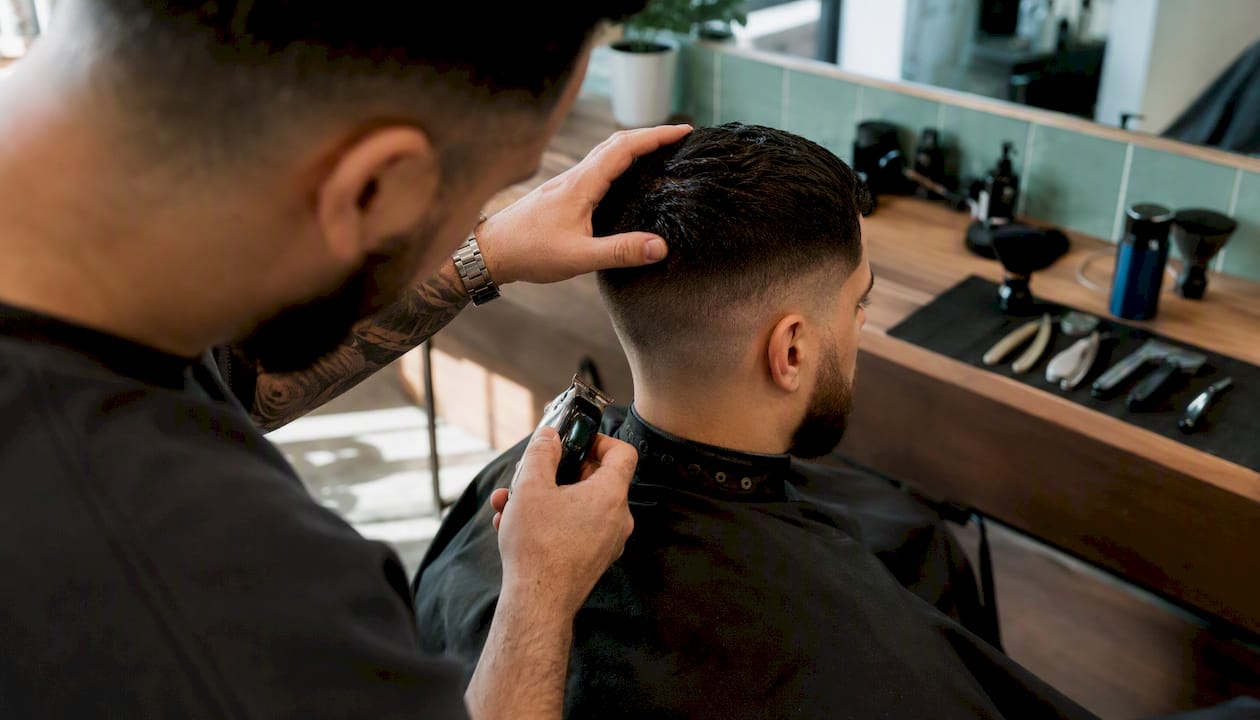
The philosophy here is simple: a contrast fade should look intentional from every angle, not just the one the client sees in the mirror. That means taking the time to pick out dark spots with the corner of the clipper, running a foil shaver across the base for the cleanest skin value, and finishing the outline with a straight razor. These aren’t extras. They’re the standard.
Men sometimes ask whether a high skin fade is worth the upkeep. My honest answer: if you want the sharpest possible look, yes. But if your schedule doesn’t allow for a touch-up every week or two, a mid or low contrast fade gives you 80% of the visual impact with half the maintenance. The right fade is the one that fits your life, not just your face shape.
Book your contrast fade at Philly’s Barber Shop
Philly’s Barber Shop delivers premium contrast fades with a straight-razor lineup, multi-angle blend checks, and optional beard trim included in a single appointment. No rushed cuts, no skipped steps.
Master Barber Philly brings 20+ years of precision to every fade, whether you’re after a tight skin fade or a low contrast blend. Add a beard trim or a straight-razor finish to complete the look. Appointments run 45–75 minutes and are available to book online now at Philly’s Barber Shop. Secure your spot and walk out with a fade that holds up from every angle.
Useful sources
- Fade haircuts
- How to Make a Fade Look Sharper: Professional Techniques for a Flawles
- What Is a Fade Haircut? Expert Guide | Mahbod Style LA
- What Is a Skin Fade? A Barber’s Explanation | Eddie’s
- Types of Fade Haircuts Explained: Your 2026 Style Guide
- Philly’s Barber Shop