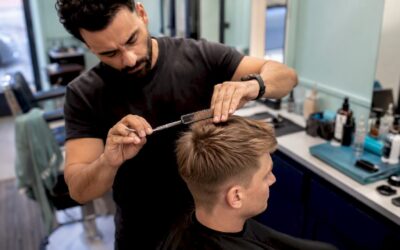
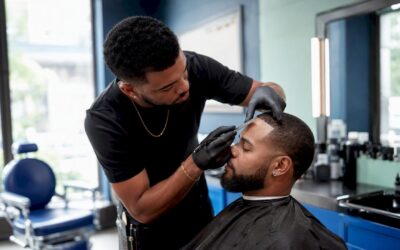
Keep Hair Neat Between Cuts: Your Barber’s Guide
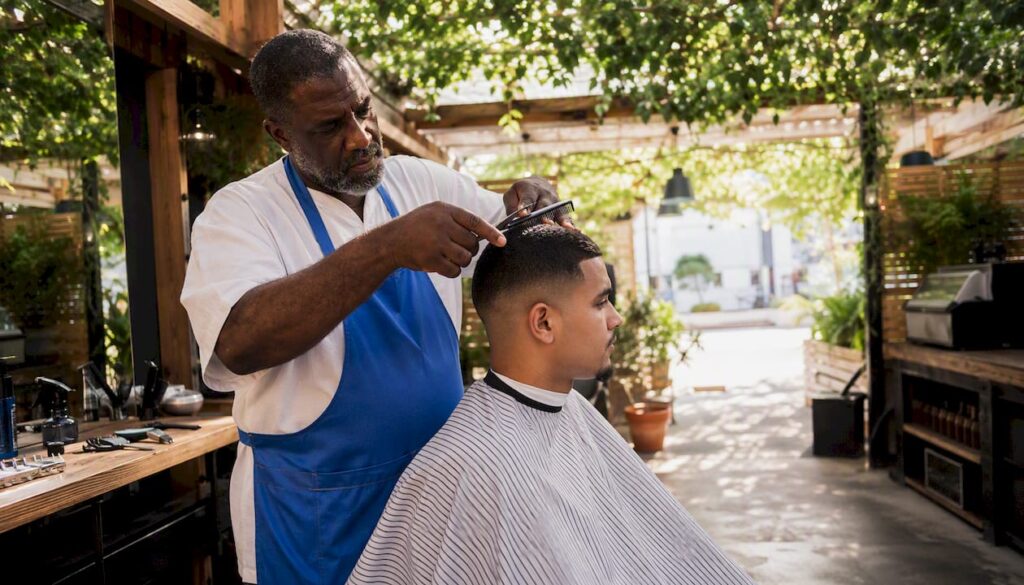
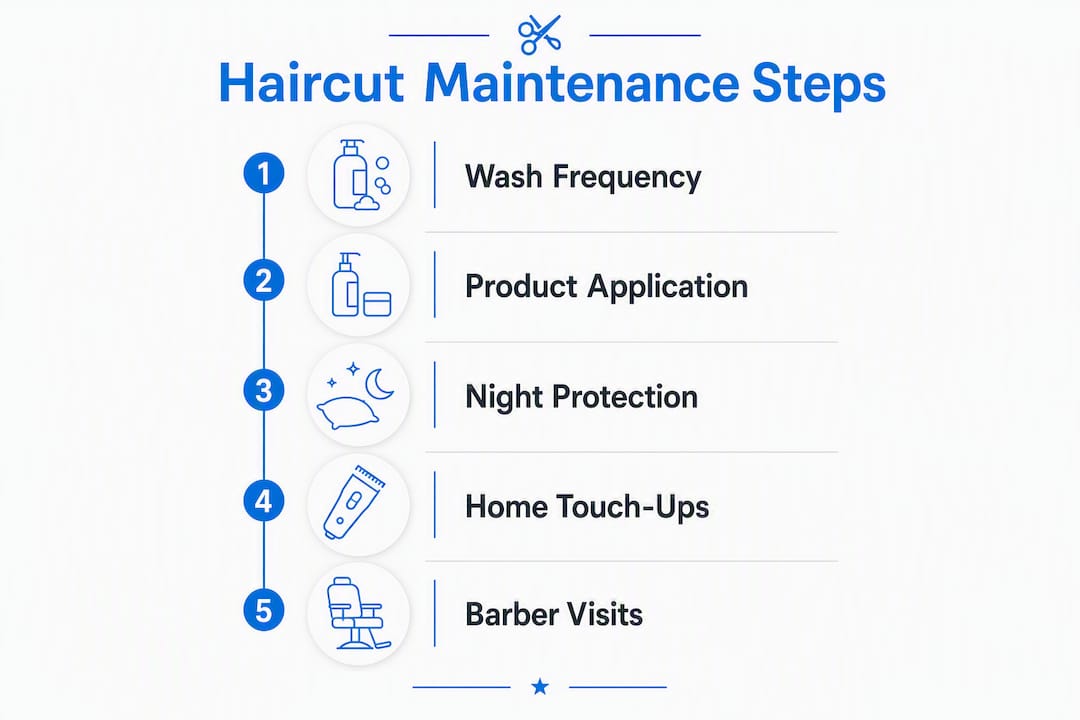
The single most effective way to keep hair neat between cuts is a three-part daily habit: protect your hair at night, style it correctly in the morning, and clean up the neckline every one to two weeks. Small daily practices matter more than expensive products — consistency is what keeps a cut looking intentional as it grows out.
Here is your quick-start checklist:
- Daily: Brush or comb in the direction of your style, apply a small amount of product to ~80% dry hair, reset your part or crown in under two minutes.
- Nightly: Sleep on a satin pillowcase or wear a durag/wave cap to reduce friction.
- Weekly: Wash regularly, use dry shampoo on off-days, and do a light neckline cleanup with a trimmer every week or two.
- Rebook: Skin fades need touch-ups every 7–14 days; classic scissor cuts usually hold their shape for about 3–5 weeks.
- Know your limit: Neckline and sideburns are safe DIY territory. Your lineup and fade are not.
Table of Contents
- How long does your haircut actually stay sharp?
- What does a smart daily and weekly routine look like?
- What can you safely touch up at home?
- Which products and tools actually keep your style intact?
- When should you go back to the barber — and what do you say?
- Philly’s master barber tips you won’t find on a generic list
- Why the small stuff matters more than the big cut
How long does your haircut actually stay sharp?
Not all cuts age the same way. A skin fade looks crisp on day one and starts blurring by day five because the contrast between shaved skin and growing hair is so stark. A classic taper or scissor cut, on the other hand, grows out more gradually and forgives a few extra days without much visible change.
| Cut Type | Sharp Window | Recommended Touch-Up |
|---|---|---|
| Cut Type | Sharp Window | Recommended Touch-Up |
| — | — | — |
| Skin / razor fade | 7–14 days | Frequent touch-ups every 7–14 days |
| Taper fade | 14–21 days | Regular touch-ups every 14–21 days |
| Classic taper / scissor cut | 3–5 weeks | Maintenance every 3–5 weeks |
| Medium textured (e.g., crop top) | About 2–3 weeks | Routine visits every 2–3 weeks |
| Longer styles | 4–8 weeks | Less frequent appointments, every 1–2 months |
The practical takeaway: if you want fewer barber visits, pick a style that grows out gracefully. A mid-length textured cut or a classic taper gives you far more runway than a tight skin fade before the shape starts to look unintentional.
What does a smart daily and weekly routine look like?
A good maintenance routine takes under three minutes a day. The goal is not perfection — it is preventing the small things that compound into a messy look by week two.
Daily habits:
- Brush or comb in the direction of your style every morning, even if your hair looks fine.
- Apply product when hair is about 80% dry, not soaking wet or bone-dry. This gives you the best hold without stiffness.
- Use a dime-to-quarter-sized amount and build from there. Starting with too much is the fastest way to a greasy look.
- Spend 60–90 seconds resetting your crown or part after sleeping.
Weekly habits:
- Wash 2–3 times per week to avoid stripping the natural oils that control texture and shine. On off-days, a water rinse or dry shampoo keeps things fresh without the damage.
- Moisturize your scalp lightly if you notice dryness or flaking, especially in winter.
- Do a neckline cleanup every 1–2 weeks (more on this below).
Avoid: daily shampooing with harsh sulfate formulas, heavy wax or grease that builds up on the scalp, and skipping the brush entirely because “it looks okay.”
Pro Tip: Apply your styling product in sections — work it through the sides first, then the top. This distributes hold evenly and avoids the clumped, product-heavy look at the crown.

What can you safely touch up at home?
The rule is simple: neckline, sideburns, and behind the ears are yours to manage. Everything else — your lineup, your fade, any blending — belongs to your barber.
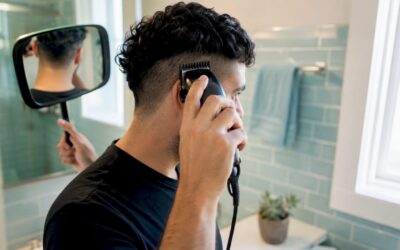
Safe DIY neckline cleanup (step by step):
- Use an electric trimmer with a #0 or #0.5 guard (or no guard for a natural neckline).
- Stand with two mirrors so you can see the back clearly.
- Follow your natural neckline shape. Do not try to square it off unless your barber already cut it that way.
- Clean up stray hairs below the neckline only. Move the trimmer upward in short, controlled strokes.
- Wipe the trimmer blades clean and apply blade oil after each use to keep the edge sharp.
Safe tools: a quality electric trimmer, short barber scissors for stray hairs around the ears, and a handheld mirror. Keep blades clean and sharp — a dull trimmer pulls instead of cuts and leaves a ragged edge.
What to avoid:
- Never try to redefine your own lineup or hairline. Even a small shift compounds over weeks.
- No freehand fade-blending. Without the right guards and technique, you will create a visible line or a bald patch.
- Do not use dull trimmers. Replace or sharpen blades every few months.
The #1 mistake men make at home is “chasing the line.” Trying to fix your own lineup every few days pushes the hairline back permanently — small errors stack up fast. If your lineup looks off, stop and book a quick cleanup appointment instead of going deeper.
How does sleep affect your haircut — and what actually fixes it?
Friction from a cotton pillowcase roughens the hair cuticle overnight. For men with fades or textured styles, that friction softens the edges and flattens the shape you styled the morning before. Switching to a satin or silk pillowcase — or wearing a durag or wave cap — reduces that friction and keeps the surface of your hair smoother by morning.

A durag or wave cap is the better choice if you have waves, a tight curl pattern, or a fresh fade you want to preserve. A satin pillowcase is lower effort and works well for straight or loosely textured hair. Both are inexpensive and make a visible difference within a few nights.
Your morning reset takes 60–90 seconds: brush or comb in the direction of your style, use your fingers to reshape any flat spots, and apply a small touch of product if needed. That is it.
Pro Tip: For curly or textured hair, apply a light leave-in conditioner or curl cream before putting on your durag at night. You will wake up with definition intact instead of spending extra time re-moisturizing in the morning. For scalp care strategies that support this routine, especially if you wear protective styles, that resource covers the essentials.
Which products and tools actually keep your style intact?
The right tools make the routine faster and the results noticeably better. You do not need a full shelf — you need the right few items used correctly.
Core tools:
- Electric trimmer with guards #0–#2 for neckline and sideburn cleanup
- Vented brush or boar-bristle brush for daily shaping
- Blow dryer with a nozzle attachment on low-to-medium heat — a short 2–3 minute directed blow-dry before product application improves finish and reduces how much product you need
- Handheld mirror for neckline visibility
Product categories by hair type:
| Hair Type | Best Product | Why It Works |
|---|---|---|
| Fine / straight | Lightweight cream or water-based pomade | Adds hold without weight |
| Thick / coarse | Matte clay | Controls bulk, natural finish |
| Curly / textured | Leave-in conditioner + light curl cream | Defines without crunch |
| Oily scalp | Dry shampoo | Absorbs oil, refreshes volume |
Light hold pomade, matte clay, or lightweight cream outperforms heavy grease for maintaining texture between visits. Heavy products build up on the scalp, attract dirt, and make hair look flat by day two. A blow dryer with a nozzle on low-to-medium heat sets your hair’s direction and creates a structural base that air-drying alone rarely achieves.
You can browse barber-recommended products for specific picks by hair type, or pick up the right product directly at Phillythebarber’s shop.
When should you go back to the barber — and what do you say?
Knowing when to rebook saves you from either over-trimming at home or letting the cut go too long. Here is a simple decision framework:
- Neckline cleanup only: Hair is growing but the shape is still intact. Book a quick 15-minute cleanup.
- Mini trim / lineup: The overall shape is starting to soften but no major reshaping is needed. This is a 20–30 minute visit.
- Full cut: The style has grown out past its shape, or you want a change. Plan for a full appointment.
- Shape trim: Barbers recommend scheduling shape trims every 6–8 weeks when growing hair out. These preserve structure without removing intended length.
Exact phrases that work at booking: “I just need a neckline cleanup and a lineup refresh — no length off the top.” Or: “Can I book a shape trim? I’m growing it out and just need the sides and back cleaned up.” Short, specific, and your barber will know exactly what you need.
Pro Tip: Pre-book your next appointment before you leave the chair. You will always wait longer than you planned otherwise, and the cut will show it.
For more precise phrasing, how to describe a haircut to your barber covers the exact language that gets you the result you want.
Philly’s master barber tips you won’t find on a generic list
After 20 years behind the chair, a few things stand out as the moves most men skip — and they make the biggest difference.
A few more non-obvious habits worth building:
- Never trim with a cold trimmer. Run it for 30 seconds before touching your neckline. A warm blade cuts cleaner.
- Brush before you style, not after. Brushing distributes natural oils and sets the direction before product locks it in.
- Your morning reset is 90 seconds, not 10 minutes. Brush, finger-shape any flat spots, apply a small amount of product. Done. Consistency beats the occasional long session.
For a deeper look at common haircut mistakes barbers fix, that guide covers the most frequent at-home errors and how to correct them before they become permanent.
Key Takeaways
Keeping a haircut sharp between visits comes down to three things: a consistent daily routine, smart nightly protection, and knowing exactly where your DIY limit ends.
| Point | Details |
|---|---|
| Wash 2–3 times per week | Washing more often strips natural oils that control texture and shine. |
| Protect hair at night | A satin pillowcase or durag reduces friction and preserves shape overnight. |
| Neckline every 1–2 weeks | Safe DIY cleanup adds noticeable freshness; never touch the lineup or fade. |
| Apply product at 80% dry | Hair at this dampness gives the best hold, finish, and product efficiency. |
| Phillythebarber for touch-ups | Book a quick neckline cleanup or shape trim to stay sharp between full cuts. |
Why the small stuff matters more than the big cut
Most men think the barber visit is the whole story. Get the cut, look great for a week, repeat. But the cut is really just the starting point. What happens between visits — the brushing, the sleep protection, the product timing — determines whether that cut looks intentional at week three or just grown-out.
I have seen clients come in with a great cut that looked rough by day ten, not because the cut was wrong, but because nothing was done to maintain it. No nightly protection, product applied to soaking-wet hair, no neckline cleanup. The cut never had a chance. Then I have seen clients with a simpler style who follow a basic routine and look sharp right up until their next appointment.
The barber-client relationship works best when both sides do their part. My job is to give you a precise, well-executed cut. Your job is to protect it. When you show up with a maintained cut, I can focus on refining and improving rather than correcting. That is when the results get genuinely great.
Ready for a fresh cut or quick touch-up?
Phillythebarber offers neckline cleanups, lineups, shape trims, and full haircuts at the shop in Copenhagen. Whether you need a quick 15-minute refresh or a full reshaping, Philly’s 20-plus years of master barber experience means you leave with a cut that is built to last and easy to maintain at home. The shop also carries grooming products selected specifically for men’s hair types, so you can pick up exactly what you need for your daily routine in one visit.
Book your next maintenance visit or explore the full grooming experience at Phillythebarber and keep your cut looking sharp all the way to your next appointment.
Useful sources
- How often should you get a haircut? A barber’s guide to staying fresh — fade and taper timeline data
- Tips for maintaining your haircut between visits — neckline cleanup as the highest-impact DIY step
- Satin pillowcases benefits — friction reduction and sleep protection
- How to maintain your haircut between reservations — washing cadence and scalp oil preservation
- Men’s haircut maintenance: how often — product timing at 80% dry and consistency over cost
- When to schedule shape trims — 6–8 week shape trim cadence
- 5 tips on how to use a hairdryer for men — nozzle technique and heat guidance
- Lineup importance and neckline cleanup tips — the “chasing the line” warning
- Men’s hair maintenance: keeping your cut looking sharp between visits — product weight and buildup guidance
- How to maintain that fresh cut look between appointments — blow-dry before product application