Dandruff Treatment for Men: What Actually Works
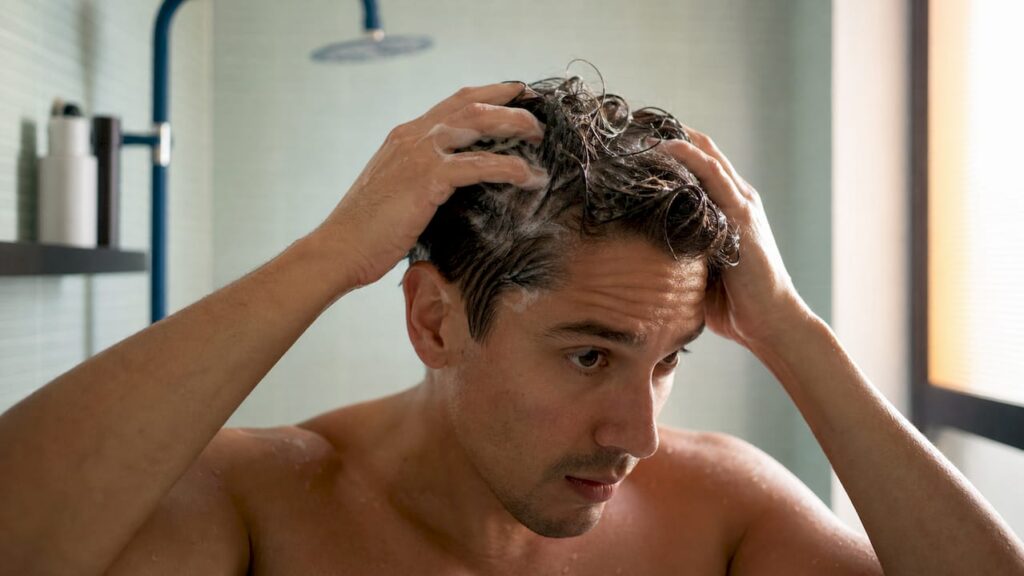
You can control visible dandruff, and usually clear it completely, by using an antifungal medicated shampoo on a short intensive schedule, then stepping down to a maintenance routine. Most men see a real difference within a few weeks of consistent use. The key is leaving the shampoo on your scalp for several minutes, not just lathering and rinsing, and rotating active ingredients when one product stops delivering results.
Your quick-start plan:
- Days 1–7: Wash with a medicated shampoo (ketoconazole or selenium sulfide) every shower. Let it sit for 5 minutes before rinsing.
- Days 8–14: If flaking has reduced, drop to every other day. Add a lightweight conditioner on the lengths after each medicated wash.
- Week 3 onward: Shift to maintenance mode, 1–2 medicated washes per week, and rotate to a pyrithione zinc shampoo to prevent adaptation.
Do this now:
- Stop heavy waxes, pomades, and dry shampoo until flaking clears.
- Do not scratch. Scratching breaks skin and can cause infection.
- Use a conditioner on the lengths after every medicated wash to prevent over-drying.
According to Men’s Health grooming editors, men most often fail at dandruff control not because they choose the wrong product, but because they treat it as a short-term problem rather than a maintenance habit.
Key Takeaways
Consistent use of the right medicated shampoo, with proper dwell time and a planned rotation, clears most dandruff in 2–4 weeks and keeps it from coming back.
| Point | Details |
|---|---|
| Start with the right active | Ketoconazole (Nizoral) or selenium sulfide (Selsun Blue) for oily, fungal dandruff; pyrithione zinc for mild or maintenance use. |
| Dwell time is non-negotiable | Leave medicated shampoo on for at least 5 minutes every wash, or the active ingredients won’t reach the scalp effectively. |
| Rotate actives to stay ahead | Switch between ketoconazole, pyrithione zinc, and selenium sulfide every few months to prevent the scalp from adapting. |
| See a dermatologist after 4 weeks | If OTC treatment hasn’t improved your scalp after a full month, prescription options like topical corticosteroids or calcineurin inhibitors are the next step. |
| Phillythebarber supports your routine | A scalp consultation at Phillythebarber in Vesterbro combines professional deep-cleansing with product guidance tailored to your scalp type. |
Table of Contents
- What causes dandruff, and how do you know it’s not dry scalp?
- Which OTC active ingredients actually treat dandruff in men?
- How to use medicated shampoos correctly, step by step
- Lifestyle habits and extra steps that support scalp treatment
- When should you see a dermatologist about dandruff?
- What a barber can do for your scalp, and what only a doctor can
- The barber’s honest take on managing dandruff long-term
- Phillythebarber: scalp care built into your grooming routine
- Sources
What causes dandruff, and how do you know it’s not dry scalp?
Dandruff is the common name for seborrheic dermatitis of the scalp. The underlying driver is a yeast called Malassezia, which lives on most people’s skin but irritates the sebaceous glands in some men, speeding up skin-cell turnover and producing the flaking you see on your shoulders.
Men are more prone to seborrheic dermatitis than women, partly because androgens increase sebum production, and Malassezia thrives in oily environments. Stress, cold weather, irregular washing, and heavy product buildup all make flares worse.
Three conditions that look similar but need different treatment:
- Dandruff (seborrheic dermatitis): Greasy, yellowish flakes. Often accompanied by redness or mild itching. Scalp feels oily. Antifungal shampoos work well here.
- Dry scalp: Small, white, powdery flakes. No oiliness. Usually triggered by cold air, over-washing, or harsh shampoos. Antifungal shampoos can make this worse, not better. Hydrating shampoos and conditioners are the right call.
- Scalp psoriasis: Thick, silvery-white plaques that extend beyond the hairline. Persistent and often itchy. Requires a dermatologist’s input, not just a shampoo swap.
Getting this distinction right before you buy anything saves you weeks of using the wrong product. If your flakes are dry and powdery with no oiliness, skip the antifungal aisle and start with a moisturizing routine first.
Which OTC active ingredients actually treat dandruff in men?
The Mayo Clinic confirms that ketoconazole, pyrithione zinc, selenium sulfide, coal tar, and salicylic acid are the five proven active ingredients in OTC dandruff shampoos. Each works differently, and the right pick depends on your scalp type and how severe your flaking is.
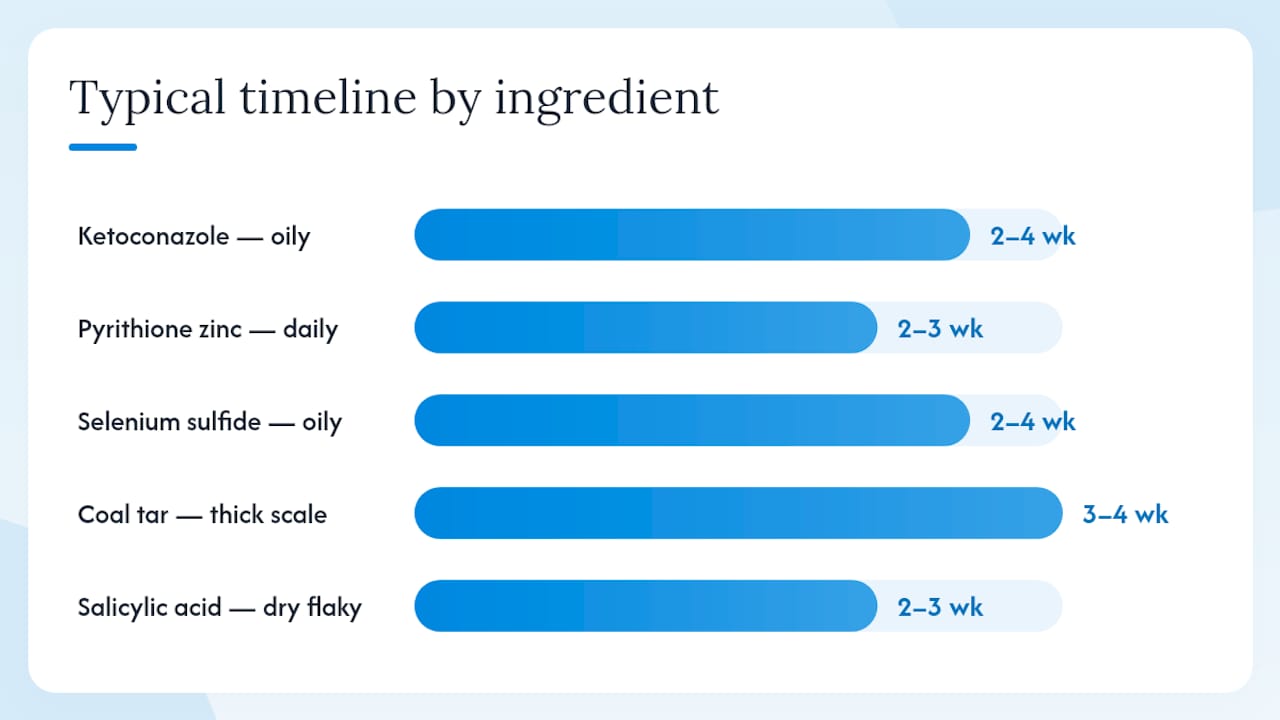
If one active ingredient stops working after a few months, rotating to a different one is more effective than simply using more of the same product.
| Active ingredient | How it works | Best for | How to use | Typical timeline | Product example |
|---|---|---|---|---|---|
| Ketoconazole | Antifungal; targets Malassezia directly | Oily scalp, moderate to severe flaking | 3–5 min dwell, 2–3x/week | 2–4 weeks | Nizoral |
| Pyrithione zinc | Antifungal + antibacterial | Mild to moderate, daily-use maintenance | 2–3 min dwell, daily or every other day | 2–3 weeks | Head & Shoulders, Dove Men+Care Dermacare |
| Selenium sulfide | Slows skin-cell turnover, antifungal | Oily scalp, stubborn flaking | 5 min dwell, 2x/week | 2–4 weeks | Selsun Blue |
| Coal tar | Slows skin-cell turnover | Thick scaling, psoriasis-adjacent | 5 min dwell, 2–3x/week | 3–4 weeks | Neutrogena T/Gel |
| Salicylic acid | Exfoliates scale buildup | Heavy buildup, flaky without oiliness | 3 min dwell, 2–3x/week | 2–3 weeks | Neutrogena T/Sal |
A few practical cautions worth knowing:
- Coal tar can stain light-colored or bleached hair and increases sun sensitivity. Wear a hat or rinse thoroughly before sun exposure, and check the label before using it on color-treated hair.
- Salicylic acid strips moisture. Always follow with a conditioner on the lengths, and don’t use it daily on an already dry scalp.
- Ketoconazole (Nizoral) is the strongest OTC antifungal available. It’s well-tolerated for most men, but if you’re using topical minoxidil for hair loss, check with a pharmacist about timing, since both affect the scalp barrier.
Pro Tip: Dove Men+Care Dermacare is a solid entry point if you’re new to medicated shampoos. It uses pyrithione zinc in a gentler formula that works well for mild dandruff and daily use without stripping the scalp.
Clinical research on antifungal efficacy for scalp conditions is indexed on PubMed, and practitioners draw on that literature when selecting ingredient strategies for their patients.
How to use medicated shampoos correctly, step by step
Most men use medicated shampoos wrong. They lather, rinse in 30 seconds, and wonder why nothing changes. The active ingredients need time to penetrate the scalp, which means dwell time is non-negotiable. Men’s Health and the Mayo Clinic both emphasize leaving the shampoo on for about five minutes for it to actually work.
Active flare routine (weeks 1–2):
- Wet your hair thoroughly before applying the shampoo.
- Apply a generous amount directly to the scalp, not just the hair.
- Massage in slow, firm circles for 60–90 seconds. This loosens scale and improves contact with the skin.
- Leave the shampoo on for at least 5 minutes. Set a timer if you need to.
- Rinse completely. Residue left on the scalp can cause irritation.
- Follow with a lightweight conditioner on the mid-lengths and ends only. Keep conditioner off the scalp during the active phase.
Rotation plan for long-term control:
According to the Mayo Clinic’s treatment guidance, rotating between actives prevents the scalp from adapting to a single ingredient. A practical three-product rotation looks like this: ketoconazole for the first 4–6 weeks of intensive treatment, then pyrithione zinc as your primary maintenance shampoo, with selenium sulfide as a periodic reset every few months if flaking returns.
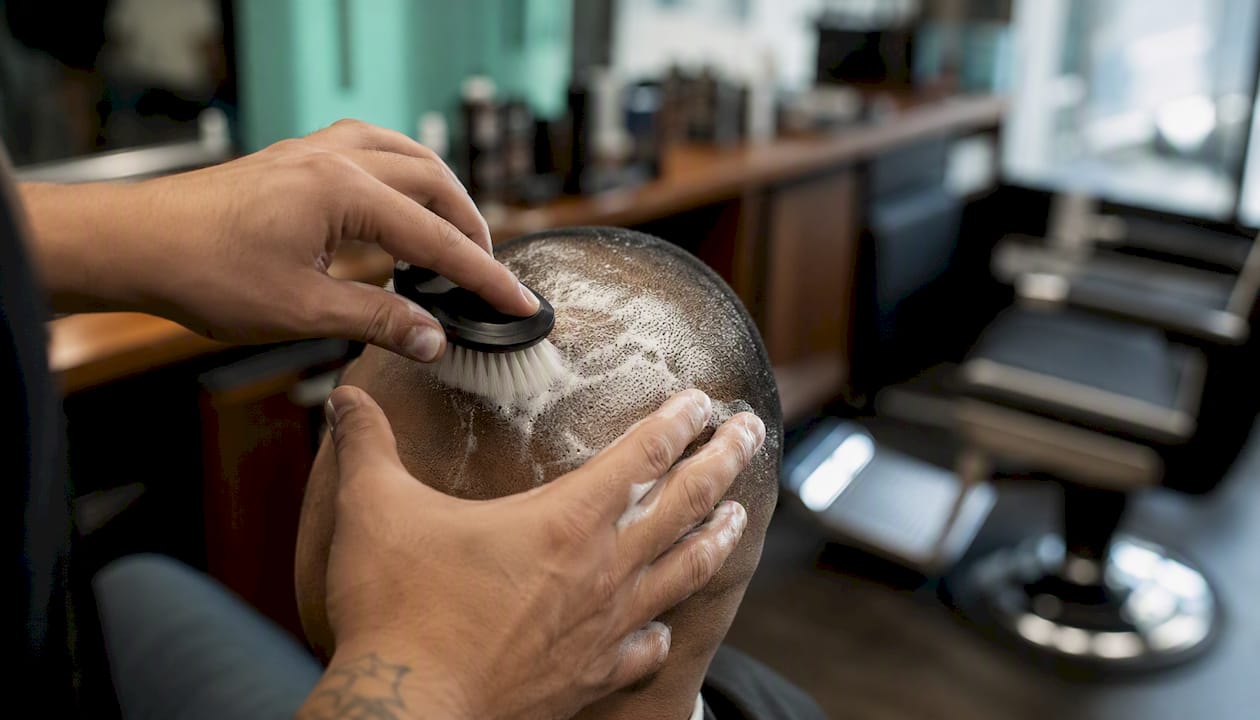
Once flaking is under control, drop to 1–2 medicated washes per week. You don’t need to use a medicated shampoo every day forever. That’s how you over-dry the scalp and create a new problem.
For different hair types:
- Short or fine hair: Dwell time matters more than volume. A small amount massaged in well outperforms a large amount rinsed quickly.
- Thick or curly hair: Apply to sections to get product to the scalp, not just the outer hair. Follow with a moisturizing conditioner every wash.
- Textured hair: Avoid daily medicated washing. Every-other-day or twice-weekly is enough. Prioritize hydration between washes with a leave-in conditioner or scalp serum.
For men building a consistent men’s grooming routine, pairing medicated washes with the right conditioning products makes the difference between a routine you’ll stick to and one you’ll abandon after two weeks.
Pro Tip: If you use topical minoxidil, apply it at least 30 minutes after your medicated shampoo and make sure the scalp is completely dry first. Wet skin absorbs minoxidil unevenly and can cause irritation.
Lifestyle habits and extra steps that support scalp treatment
Medicated shampoo does the heavy lifting, but what you do between washes either speeds recovery or slows it down.
Scalp exfoliation: A gentle scalp scrub or a salicylic acid scalp serum used once a week helps remove product buildup and dead skin before it accumulates into visible flakes. Don’t use a physical scrub on an actively inflamed or broken scalp. Chemical exfoliants (salicylic acid, low-concentration AHAs) are safer when the scalp is irritated.
Leave-on serums and lightweight conditioners: After the active treatment phase, a leave-on scalp serum with niacinamide or zinc can help maintain the scalp barrier between washes. Look for scalp-care products designed for daily use without buildup. Avoid anything with heavy silicones or occlusive oils applied directly to the scalp.
Styling product hygiene:
- Heavy waxes, clays, and pomades applied close to the scalp trap oil and dead skin, feeding Malassezia.
- Dry shampoo used too frequently creates the same buildup problem.
- Rinse your combs and brushes weekly. Product residue on tools transfers straight back to a clean scalp.
Lifestyle triggers worth addressing:
- Stress raises cortisol, which increases sebum production and worsens flaring. Even basic stress management, consistent sleep, and regular exercise, tends to reduce flare frequency over time.
- Sun exposure in moderate amounts can actually suppress Malassezia activity. Wearing a hat constantly in warm weather keeps the scalp damp and warm, which is the opposite of what you want.
- Diet has a modest but real effect. Reducing refined sugars and alcohol tends to lower sebum production, though it won’t replace medicated treatment during an active flare.
Tea tree oil and apple cider vinegar are popular home remedies, but the evidence for both is mixed. Both can irritate a sensitive or already-inflamed scalp, so use them cautiously and always diluted if you try them.
When should you see a dermatologist about dandruff?
OTC treatment clears most cases of dandruff within 2–4 weeks. If yours hasn’t improved after a full month of consistent medicated washing, that’s a clear signal to book a dermatology appointment.
Red flags that warrant a visit sooner:
- Intense redness spreading beyond the hairline
- Thick, silvery plaques that don’t respond to shampoo
- Signs of infection: weeping, crusting, or tenderness
- Hair thinning or shedding that started alongside the flaking
- Severe itch that disrupts sleep or concentration
When OTC options fail, Harvard Health notes that dermatologists can prescribe prescription-strength ketoconazole shampoo or foam, short courses of topical corticosteroids to reduce inflammation quickly, and calcineurin inhibitors (tacrolimus or pimecrolimus) for longer-term control without the side effects of steroids. Oral antifungals are considered only in rare, severe cases and are not a standard first step.
What to bring to your appointment:
- Photos of your scalp at its worst (taken in good lighting)
- A list of every product you’ve tried, with how long you used each
- A rough timeline of when symptoms started and what made them better or worse
- Any medications you’re currently using on the scalp, including minoxidil
Topical corticosteroids work fast but aren’t meant for long-term daily use. A dermatologist will typically prescribe a short course to clear a severe flare, then transition you to a maintenance antifungal. Calcineurin inhibitors are the go-to for men who need ongoing control without steroid-related thinning of the scalp skin.
What a barber can do for your scalp, and what only a doctor can
A professional barbershop visit isn’t a substitute for medicated treatment, but it’s a genuinely useful part of a long-term scalp maintenance plan. Here’s what a skilled barber can realistically offer:
- Deep-cleansing scalp wash: Professional-grade cleansers remove product buildup more thoroughly than most at-home washes.
- Mechanical scalp exfoliation: A trained barber can safely remove surface scale using a soft brush or exfoliating treatment without irritating the skin.
- Scalp massage: Improves circulation and helps loosen dead skin before a medicated wash, making the active ingredients more effective.
- Professional product application: A barber can apply leave-on serums or treatments evenly across the scalp, which is harder to do yourself, especially with thick or textured hair.
- Grooming consultation: An experienced barber can spot the difference between product buildup, dry scalp, and active seborrheic dermatitis, and tell you honestly when you need a dermatologist instead of a shampoo swap.
What a barber should never do is diagnose a skin condition or recommend prescription treatments. If your scalp shows signs of infection, psoriasis, or severe inflammation, a good barber will refer you to a dermatologist before touching the scalp.
For men who want to understand exactly what a professional barbershop scalp treatment involves, the process typically runs 30–45 minutes, covers cleansing, exfoliation, and a scalp massage, and works best as a monthly maintenance appointment alongside your at-home routine. Frequency and cost vary by shop, but a scalp-focused session at a quality barbershop generally runs $40–$80 in the U.S. market.
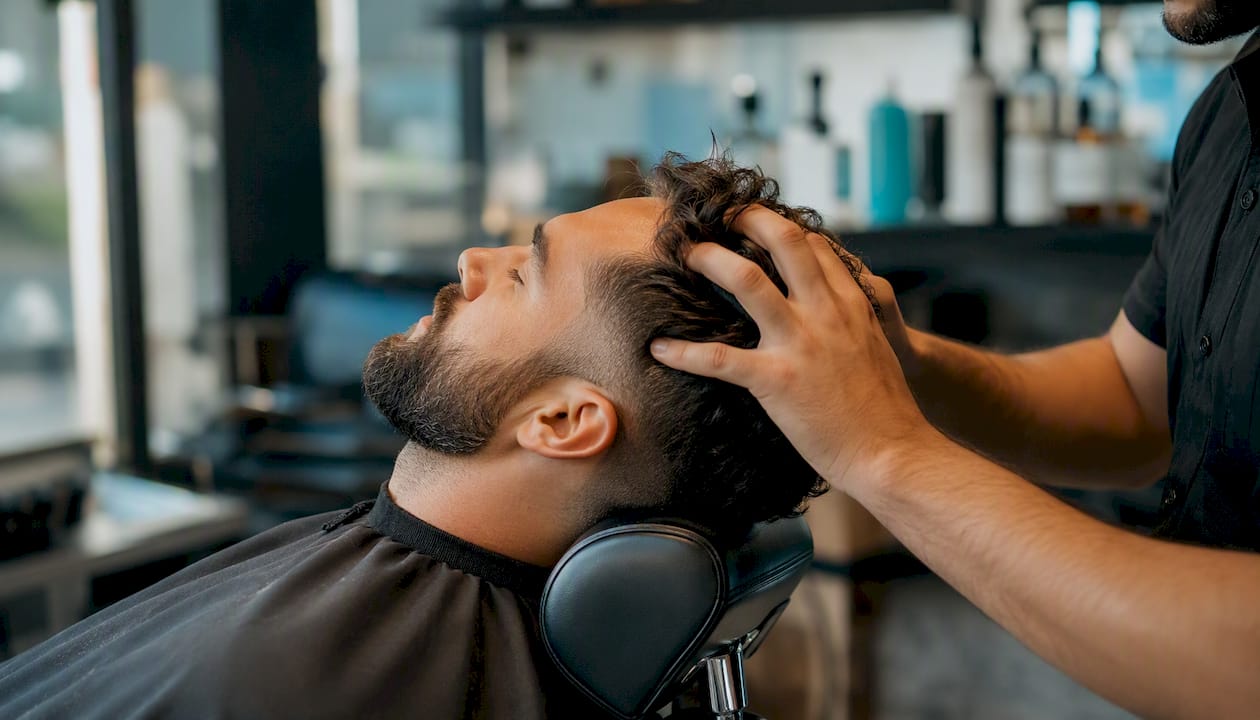
Before booking, ask the barber whether they’re comfortable working around an active flare or whether they’d prefer you to clear the acute phase first with medicated shampoo. Most will want the inflammation down before they apply any physical exfoliation.
The barber’s honest take on managing dandruff long-term
Here’s what I’ve seen over 20 years behind the chair: most men come in embarrassed about dandruff, having tried one shampoo for a week and given up. The product wasn’t the problem; the routine was.
Dandruff is a maintenance condition, not a one-time fix. The men who keep it under control are the ones who build a two-minute habit into their shower routine and stick to it, not the ones chasing the newest shampoo. A medicated wash twice a week, a conditioner on the lengths, and a monthly scalp treatment at the shop, that’s genuinely all most men need.
Where a barber adds real value is in the consistency check. When a client comes in regularly, I can see whether the scalp is improving, whether a product is causing buildup, or whether it’s time to refer them to a dermatologist. That kind of ongoing attention is hard to replicate at home in a mirror.
The medical side and the grooming side aren’t competing. They work together. Get the clinical treatment right first, then use professional grooming to maintain it.
Phillythebarber: scalp care built into your grooming routine
At Phillythebarber in Copenhagen’s Vesterbro neighborhood, scalp health is part of every grooming consultation, not an afterthought. If you’re dealing with persistent flaking, Philly’s 20-plus years as a certified Master Barber means you get an honest assessment of what’s happening at the scalp level, which products are worth your money, and when a dermatologist visit makes more sense than another shampoo.
A visit to Phillythebarber can include a professional deep-cleanse, scalp massage, and product recommendation tailored to your hair type and the severity of your condition. You can also pick up barber-recommended grooming products in-shop, so you leave with exactly what you need for the at-home phase.
Ready to sort out your scalp properly? Book a grooming appointment in Vesterbro and get a scalp consultation built into your next visit.
Sources
These are the clinical and grooming references that underpin this guide:
- Dandruff – Diagnosis and treatment – Mayo Clinic
- What is the best way to treat severe dandruff? – Harvard Health
- Sundhed
- PubMed
- The 7 Best Anti-Dandruff Shampoos for Men in 2025, Tested by Grooming Editors
This article is general information, not a substitute for advice from a qualified doctor. Consult a qualified healthcare professional about your own circumstances before acting on anything here.