The Best Beard Grooming Tools for Men: 2026 Comparison

For most men who want repeatable, pro-looking results, a barber-guided trim from Philly’s Barber Shop plus one all-purpose trimmer at home beats trying to own every gadget. That’s the honest answer. The beard trim process at Philly’s sets the shape right from the start, and a solid trimmer keeps it clean between visits.
If you’re going the DIY route, this beard grooming tools men comparison maps every major pick to a specific use case—most are best matched to a particular beard length, texture, or budget. Some options (like the Philips Norelco Multigroom 9000 and Braun Series 9 Trimmer) are strong all-around picks, but others specialize in daily touchups, thick or coarse beards, budget, or travel use. See the comparison table below for detailed matching by beard length, profile, and budget so you aren’t left with a one-size-fits-all answer.
Read the comparison table below to match a pick to your beard length, texture, and budget.
Key Takeaways
The strongest beard grooming results come from matching your tool to your beard type, maintaining it consistently, and starting with a professional shape when the style is new.
| Point | Details |
|---|---|
| Match tool to beard type | Coarse/curly hair needs a stronger motor; fine hair benefits more from precision attachments. |
| Start with a pro shape | Philly’s Barber Shop sets the initial shape so every home trim stays consistent and on track. |
| Best all-around pick | The Philips Norelco Multigroom 9000 covers most use cases for short-to-medium beards, while other tools are recommended for thick, coarse, or long beards. Choose based on your beard length and texture. |
| Maintain your tools | Brush and oil blades after each use; replacement blades extend trimmer life significantly. |
| Budget doesn’t limit results | The Panasonic ER-GB42 and King C. Gillette Beard Trimmer Pro deliver reliable results for short-to-medium beards at mid-range prices. |
Table of Contents
- How the top beard grooming tools compare at a glance
- Short reviews of the top picks: what each tool actually does best
- How to choose the right beard grooming tools for your needs
- Which tool fits your beard length and hair texture
- How to prepare, trim, and care for your beard and tools
- How these picks were evaluated
- Barber-approved tips from Philly’s Master Barber
- What testing these tools actually taught us
- A sharper beard starts with the right foundation
- What we think about the “best trimmer” question
- Sources
How the top beard grooming tools compare at a glance
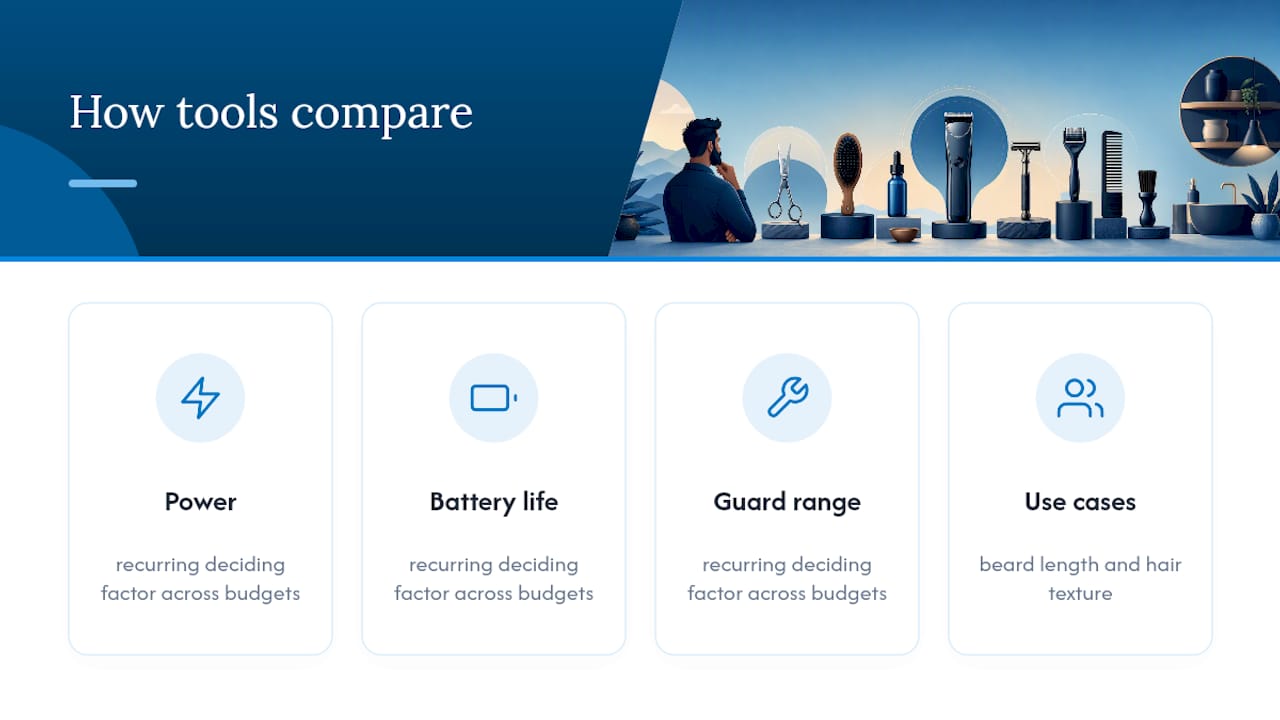
According to hands-on testing by Esquire editors, power, battery life, and guard range are the recurring deciding factors across budgets. The table below maps each tool to its strongest use case so you can scan and shortlist fast.
Short reviews of the top picks: what each tool actually does best
GQ editors note that customization matters more than raw feature count. A man who needs daily touchups benefits more from a compact precision tool than a full 20-piece kit. Keep that in mind as you read.
Philly’s Barber Shop — in-shop service and retail kit
The most consistent beard results start with a professional shape. Philly’s Barber Shop offers beard trims, straight razor shaves, and hybrid service-plus-retail packages where you leave with both a shaped beard and the tools to maintain it. Philly is a certified Master Barber with 20+ years of experience, and the shop’s curated retail kit includes professional clippers, scissors, combs, and beard oil matched to your beard type. For men who want a picture-ready result without guessing at guard lengths, this is the strongest starting point.
- Pros: Professional shaping, personalized tool selection, expert consultation
- Cons: Requires booking; in-person only
Philips Norelco Multigroom 9000
Independent testing by TechGearLab consistently names the Multigroom 9000 a versatile top pick. Up to 5 hours of runtime, 18 attachments covering 0.5–18 mm, and a fully washable housing make it the strongest single-kit option for men who want one device to handle beard, mustache, nose, and body. The steel blades self-sharpen, which extends the time between replacements.
- Pros: Massive attachment range, long battery, fully washable
- Cons: The kit size is overkill if you only trim your beard
Braun Series 9 Trimmer (9440/13-in-1)
The Braun Series 9 Trimmer delivers 100 minutes of runtime and multiple attachments in a fully washable body. The motor handles thick hair without pulling, and the precision comb steps down to fine increments for mustache and sideburn work. It sits at the premium end of mid-range pricing, but the build quality justifies it for daily users.
- Pros: Strong motor, precise comb steps, fully washable
- Cons: Price is higher than most mid-range trimmers
Brio Beardscape V2
The Beardscape V2 runs a brushless motor, which is quieter and more durable than standard motors. Up to 4 hours of battery on a single charge, 8 guards covering a range of guard lengths, and a fully washable body. Men with thick or coarse beards who want a premium feel without jumping to a professional clipper will find this a natural fit.
- Pros: Brushless motor, long battery, premium build
- Cons: Fewer attachments than multigroom kits; higher price
Wahl Cordless Magic Clip
Built for heavy-duty cutting, the Magic Clip uses a professional-grade motor and a taper lever for micro-adjustments during fades. Barber professionals rely on taper levers for consistent blends, and the Magic Clip brings that capability home. Up to 90 minutes of cordless runtime. Not washable, so blade cleaning requires brushing and oil.
- Pros: Pro-grade motor, taper lever, strong fade capability
- Cons: No wet use; heavier than consumer trimmers
Philips Norelco OneBlade 360
The OneBlade 360 is a hybrid trimmer and shaver. The 360-degree blade flexes to follow jaw contours, making it the fastest tool for daily stubble management and tight edge work. Three length combs cover a limited range focused on shorter lengths. Fully washable. Battery runs about 45 minutes, which is enough for a daily touchup but not a full session on a longer beard.
- Pros: Fast daily use, flexible blade, fully washable
- Cons: Not suited for beards longer than 5 mm
Panasonic ER-GB42
Nineteen length settings from 1–20 mm via a rotary dial give the ER-GB42 precise length control without swapping combs mid-trim. Fully washable, 50-minute battery, and a linear motor that cuts cleanly through medium-density hair. A solid choice for men maintaining a short-to-medium beard who want repeatable length every session.
- Pros: Rotary dial precision, fully washable, consistent motor
- Cons: Fewer attachments than full multigroom kits
Remington Vacuum Beard Trimmer 6000
The integrated vacuum captures trimmed hair before it hits the sink or floor. Nine combs cover 1.5–18 mm, and the 70-minute battery handles a full trim session. The housing is not fully washable, so the vacuum chamber needs emptying after each use. Best for men who trim frequently and want to skip the cleanup.
- Pros: Vacuum reduces mess, wide guard range, decent battery
- Cons: Bulkier than standard trimmers; not fully washable
Wahl Peanut 8655
Small enough to fit in a toiletry bag, the Peanut 8655 is a corded clipper that punches above its size. Four guide combs, a powerful motor for bulk removal, and a compact grip make it the go-to travel companion. The corded-only design is the main limitation for on-the-go use, but the consistent power output compensates.
- Pros: Compact, powerful for its size, great for travel
- Cons: Corded only; limited guard range
King C. Gillette Beard Trimmer Pro
A rotary dial cycles through length settings from a range covering short to medium beards, and the kit includes a large guard set for short-to-medium beard work. Fully washable, 90-minute battery, and mid-range pricing make it a strong value pick for men who want many length steps without paying a premium.
- Pros: Many length settings, fully washable, good value
- Cons: Motor less powerful than pro-grade clippers
Bevel Beard Trimmer
Designed with coarse and curly hair in mind, the Bevel uses a T-blade for clean lines and 8 guards for length control. Up to 4 hours of battery, fully washable, and a build that handles dense, tightly coiled hair without snagging. Men with natural or coarse textures will find the Bevel more reliable than standard consumer trimmers.
- Pros: Built for coarse/curly hair, long battery, clean T-blade
- Cons: Fewer attachments than multigroom kits
Philips Norelco Series 9000 Precision Trimmer
The Series 9000 Precision Trimmer steps down to 0.2 mm increments using a laser-guided comb, making it the most precise consumer trimmer on this list. Up to 120 minutes of runtime, fully washable, and a premium price. Best for men who maintain a very specific beard length and need exact repeatability every time.
- Pros: 0.2 mm precision steps, long battery, fully washable
- Cons: Specialized tool; not a bulk trimmer
Quick specs reference for the top picks:
How to choose the right beard grooming tools for your needs
Healthline’s beard maintenance guide puts it plainly: if you plan to keep a beard long-term, invest in quality core tools and follow a routine. You don’t need every gadget. You need the right ones for your beard type and routine.
Work through this checklist before buying:
- Blade material: Stainless steel blades stay sharp longer and resist corrosion. Titanium-coated blades add durability for coarse hair. Avoid trimmers with no published blade spec.
- Guard and comb flexibility: More settings mean finer length control. A rotary dial (like the Panasonic ER-GB42 or King C. Gillette Beard Trimmer Pro) is faster to adjust than swapping individual combs.
- Motor power: Coarse or thick beards need a stronger motor to avoid pulling. The Wahl Cordless Magic Clip and Brio Beardscape V2 lead here. Fine or straight hair is less demanding.
- Battery life and charge speed: Lithium-ion batteries hold up better over time and support quick charges for last-minute touchups. A 60-minute runtime covers most home sessions comfortably.
- Waterproofing: Fully washable housing simplifies cleaning and allows wet use. If you trim in the shower, this is non-negotiable.
- Attachments: Match the attachment count to your actual needs. A daily stubble trimmer needs three combs, not 18. An all-in-one grooming kit needs more.
- Replacement parts: Check that replacement blades and guards are available before buying. A trimmer with no replacement parts is a disposable product.
- Ergonomics: A heavy or awkward grip causes uneven passes. Hold the trimmer before buying when possible, or check user reviews specifically for grip feedback.
Ask yourself before buying:
- How long will I use it per session? (Under 5 minutes = compact precision tool; 10+ minutes = strong battery and ergonomic grip)
- Do I need bulk removal, precision detailing, or both?
- Will I trim in the shower?
- How often will I replace blades?
Red flags to avoid: no published replacement parts, poor battery reviews after 6 months of use, flimsy plastic guards that slip during trimming, and no washable housing if you plan wet use.
For a broader view of men’s grooming best practices, Phillythebarber’s grooming playbook covers routines and product pairings that go beyond the trimmer itself.
Which tool fits your beard length and hair texture
Matching tool to beard type is where most men go wrong. They buy a precision trimmer for a thick, long beard, or a heavy clipper for daily stubble management. L’Oréal Paris recommends trimming after a warm shower because hydrated facial hair cuts more smoothly and comfortably, which also reduces skin irritation.
By beard length:
- Stubble (0–3 mm): A hybrid trimmer like the Philips Norelco OneBlade 360 or Philips Norelco OneBlade handles daily stubble management and edging without over-engineering the task.
- Short beard (3–12 mm): An all-purpose trimmer with a wide guard range works best here. The Philips Norelco Multigroom 9000, Panasonic ER-GB42, or King C. Gillette Beard Trimmer Pro all cover this range well.
- Medium beard (12–25 mm): You need a stronger motor and longer guard combs. The Brio Beardscape V2, Wahl Cordless Magic Clip, or Braun Series 9 Trimmer handle medium-length beards without pulling.
- Long beard (25–40+ mm): A heavy-duty clipper or a scissors-plus-trimmer combination gives the most control. The Wahl Cordless Magic Clip or Wahl Stainless Steel Lithium Ion paired with barber scissors works well. For initial shaping of a long beard, a professional session at Philly’s Barber Shop saves significant time and avoids common length mistakes.
By hair texture:
- Coarse or curly hair: Needs a stronger motor and durable stainless or titanium blades to cut cleanly without snagging. The Bevel Beard Trimmer is built specifically for this texture. The Wahl Cordless Magic Clip and Brio Beardscape V2 also handle coarse hair reliably.
- Fine or straight hair: Less motor power needed, but precision attachments matter more. The Philips Norelco Series 9000 Precision Trimmer or Panasonic ER-GB42 give fine-hair users the length accuracy they need.
- Mixed or medium texture: Most mid-range trimmers handle this well. The Philips Norelco Multigroom 7000 or Braun Series (13-in-1) cover mixed textures without specialization.
Recommended starting guard lengths by style:
- Stubble: 1–2 mm guard
- Short boxed beard: 6–8 mm guard
- Medium full beard: 10–15 mm guard
- Long beard maintenance: 18–20 mm guard
Pro Tip: Wahl’s trimming guide recommends starting with a longer guard than you think you need. You can always trim more, but you can’t put hair back. Start one guard length longer than your target and work down.
How to prepare, trim, and care for your beard and tools
A clean routine protects both your beard and your tools. Follow these steps for consistent results:
- Wash your beard with warm water before trimming. Hydrated hair cuts more cleanly and reduces skin irritation.
- Detangle with a wide-tooth comb, working from the neck upward.
- Select your guard length based on your target style. When in doubt, go one step longer.
- Make a conservative first pass with the guard attached, trimming with the grain of hair growth.
- Check symmetry before removing the guard. Step back from the mirror and assess both sides.
- Detail without a guard for neckline and cheek lines, using short, controlled strokes.
- Define the neckline just above the Adam’s apple. Live Bearded’s trimming guide advises a conservative approach here because a too-high neckline is one of the most common and visible mistakes.
Tool care after every use:
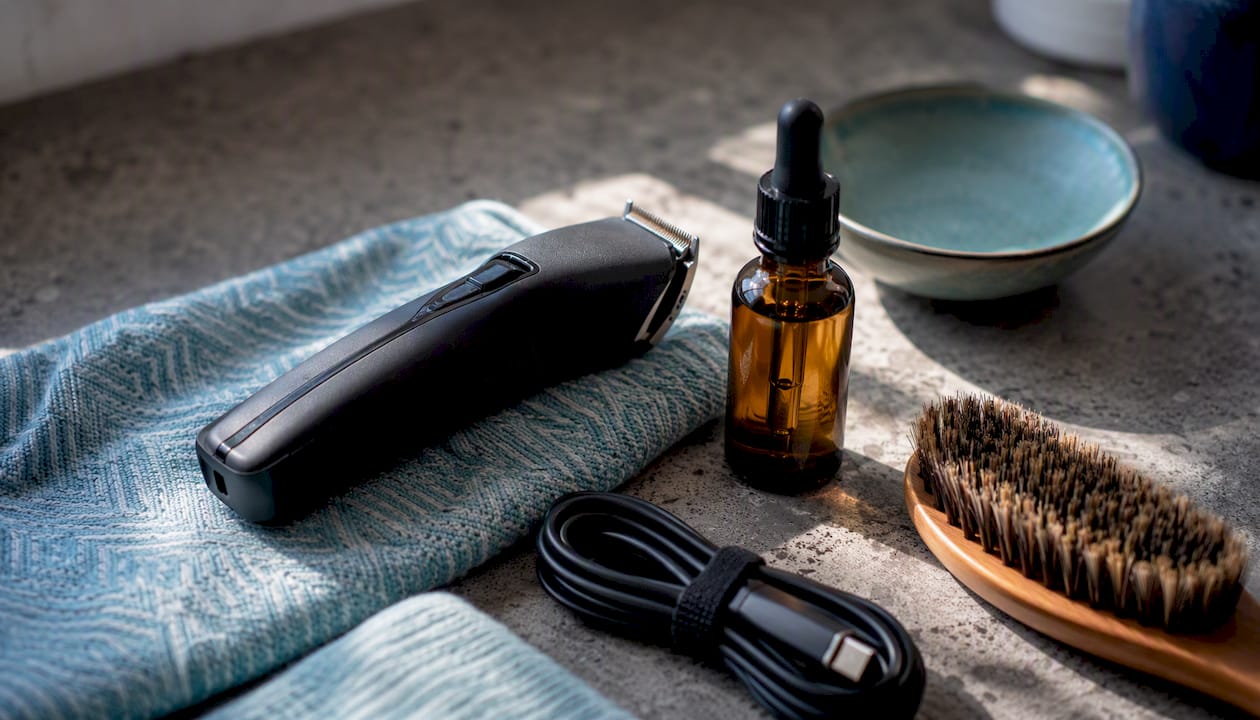
- Brush trimmed hair from blades immediately after use using the included cleaning brush.
- Rinse washable heads under running water and shake dry.
- Let tools air dry completely before storing.
- Oil blades lightly after drying, following the manufacturer’s schedule. For high-frequency users, weekly oiling keeps blades sharp.
- Store in a dry case or drawer, never on a wet bathroom surface.
Healthline’s beard maintenance guidance is clear: regular cleaning prevents bacterial growth on blades and extends motor life. A trimmer that’s brushed and oiled after each session lasts significantly longer than one that isn’t.
Pro Tip: For barber-recommended products to pair with your trimmer, Phillythebarber’s barber-recommended men’s products guide covers beard oils, brushes, and accessories that complement your tool routine.
How these picks were evaluated
Every tool on this list was assessed against a consistent set of tasks and metrics. Here’s the methodology:
Test tasks performed:
- Bulk trim from a longer starting length to a target guard length
- Fading and blending at the sideburns and neckline
- Precision edging without a guard along the cheek and jaw line
- Wet trimming (for washable models) to assess performance and comfort
- Travel simulation: packing, portability, and corded vs. cordless convenience
Metrics tracked:
- Pulling or snagging during bulk removal (especially on coarse hair)
- Evenness of cut across multiple passes
- Battery drain rate during a full session
- Guard fit and stability (no slipping mid-pass)
- Ease of cleaning after use
How we weighted the results:
Durability and precision carried the most weight for daily-use picks. Battery life and portability drove the travel category. Value weighting compared price band against real-world performance, not spec sheets. Tools with no available replacement parts were penalized regardless of initial performance.
Limitations: Long-term durability beyond a standard test period is harder to assess than initial performance. User technique affects results significantly, particularly for fading and neckline work. Where technique matters most, we note it in the review.
Barber-approved tips from Philly’s Master Barber
Philly is a certified Master Barber with 20+ years of experience. These are the techniques that separate a clean beard from a great one.
Shaping the neckline:
- Place two fingers above the Adam’s apple. That’s your neckline guide.
- Trim below that line first, then blend upward. Never start too high.
- Use a detail trimmer or the bare blade for the final edge. A guard here creates a soft line where you want a sharp one.
Fading the sideburns:
- Use the taper lever on clippers like the Wahl Cordless Magic Clip to create a gradual blend from the beard into the sideburn.
- Start with the lever closed (longest setting) at the top of the sideburn and open it gradually as you move down.
- Barbers rely on taper levers and premium guards for micro-adjustments that consumer trimmers without levers simply can’t replicate.
Balancing the mustache:
- Comb the mustache downward before trimming. Hair that’s combed into place shows the true length.
- Use scissors for the upper lip line where a trimmer can remove too much at once.
- Trim the mustache slightly shorter than the beard to keep the face balanced.
For beginners:
Wahl’s guide to trimming with and without guide combs backs this up: beginners should always start with longer guards and work down incrementally.
For men who want to understand why expert barber guidance matters beyond the tools themselves, Phillythebarber’s guide covers the craft behind the result.
What testing these tools actually taught us
Testing a range of beard grooming tools reveals a pattern that specs alone don’t show: most men overbuy. They purchase a 20-piece multigroom kit when their actual routine is a 3-minute touchup twice a week. The Philips Norelco Multigroom 9000 is genuinely excellent, but if you only trim your beard, 16 of its 18 attachments will never leave the case.
The other common mistake is ignoring replacement blades. A trimmer that pulls after 18 months isn’t broken; it needs new blades. Men who skip this step blame the tool when the fix costs less than $15.
Practical takeaways from the testing process:
- Pick one primary use case and buy the tool built for that job, not the one with the most pieces.
- Maintain your trimmer after every session. The difference in blade sharpness after 6 months of oiling vs. no oiling is noticeable.
- Book a professional shaping session at the start of a new beard style. Getting the initial shape right makes every subsequent home trim easier and more consistent.
- You don’t need the most expensive model to get consistent results. The Panasonic ER-GB42 and King C. Gillette Beard Trimmer Pro both deliver reliable performance at mid-range prices when matched to the right beard type.
A sharper beard starts with the right foundation
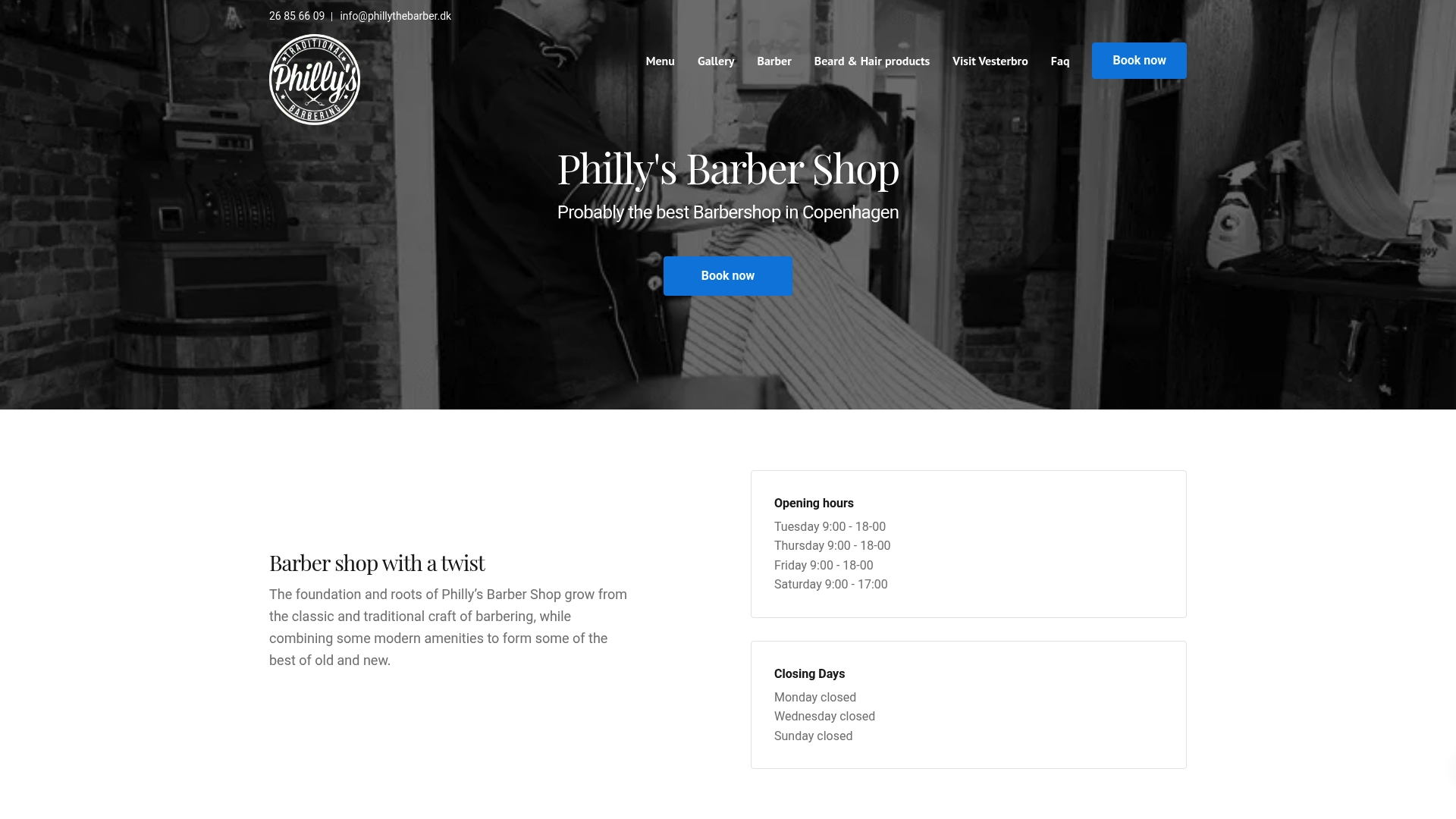
Every trimmer on this list handles maintenance well. What they can’t do is set the initial shape. A beard that starts with a professional trim at Philly’s Barber Shop is easier to maintain at home because the lines are already right. You’re not guessing at the neckline or the cheek boundary; you’re following a shape that a Master Barber built for your face.
Philly’s offers beard trims, straight razor shaves, and hybrid service-plus-retail packages where you leave with both a shaped beard and the specific tools to keep it that way. Philly is a certified Master Barber with 20+ years of experience, and every service is matched to your beard type and style goals. No generic approach, no rushed session.
If you’re ready to stop guessing at your neckline and start with a shape that actually fits your face, book a beard trim at Philly’s Barber Shop. For men exploring types of beard grooming services before booking, that page walks through every option available at the shop.
What we think about the “best trimmer” question
The question “which trimmer is best?” is the wrong starting point. The right question is “best for what?” A Wahl Cordless Magic Clip is the right answer for a man with a thick, dense beard who fades his own sideburns. It’s the wrong answer for a man who wants a 3-minute daily stubble touchup. Matching tool to task is the entire game.
The second thing testing makes clear: the gap between a $40 trimmer and a $150 trimmer is real but narrower than the marketing suggests. The Philips Norelco Multigroom 3000 and Multigroom 5000 both perform well for short-to-medium beards. The Multigroom 9000 earns its price through runtime, attachment count, and build quality, but it’s not three times better for a man with a simple routine.
What actually separates great beard results from average ones isn’t the price of the trimmer. It’s the initial shape, the consistency of the routine, and the maintenance of the tool. Get those three right, and most mid-range trimmers will serve you well for years.
Sources
The following sources informed the technique guidance, tool-care advice, and product evaluations in this article:
- How to groom a beard — L’Oréal Paris USA
- 17 Best Beard Trimmer Picks, Tested by GQ Editors in 2026 | GQ
- Beard maintenance: 12 do’s and don’ts | Healthline
- The 7 Best Beard Trimmers for Men in 2026 — Esquire
- The Best Beard Trimmers | Tested & Ranked – TechGearLab
- DIY Beard Trim – Professional instruction from Church Barber
- How to trim a beard yourself — Live Bearded