Barbershop Scalp Treatment for Men: A Clear Guide
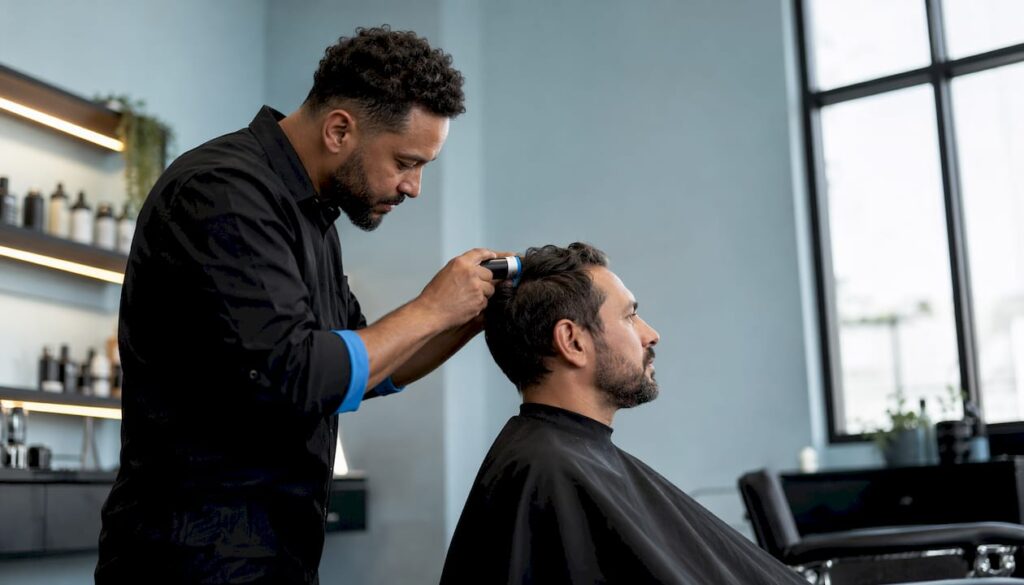
A barbershop scalp treatment is a focused, professional service that deep cleanses the scalp, removes product buildup, exfoliates dead skin, applies targeted products, and finishes with a circulation-boosting massage. It works reliably for improving scalp comfort and creating a healthier environment for hair growth. It is not a medical cure for diagnosed conditions like alopecia areata or advanced pattern hair loss, but for the everyday scalp issues most men deal with, it delivers real, noticeable results.
Here is what you can expect to feel after a single session:
- Reduced flaking and visible dandruff
- Less itching and irritation
- A noticeably fresher, lighter feeling on the scalp
- Cleaner follicles that allow hair to grow without obstruction
Table of Contents
- What does a barbershop scalp treatment actually include?
- Which scalp problems can a barber actually fix?
- What professionals and the evidence say about results
- How often to go, how long it takes, and what it costs
- How to choose the right scalp treatment and what to ask your barber
- What to expect during your appointment
- When to skip the barbershop and see a dermatologist
- Barber-recommended aftercare to keep your scalp healthy between visits
- Key Takeaways
- Why barbers take scalp care seriously
- Ready for a professional scalp treatment at Philly’s?
- Useful sources for further reading
What does a barbershop scalp treatment actually include?
A proper in-shop scalp service is more structured than a standard shampoo. According to barber association guidance, a professional session typically follows a clear four-step sequence: assessment, deep cleanse, targeted treatment, and massage.
Step 1: Scalp assessment. Before anything touches your head, a trained barber examines your scalp for dryness, excess oil, flaking, redness, or irritation. This determines which products and techniques are appropriate for you specifically.
Step 2: Clarifying cleanse. A scalp-specific or clarifying shampoo removes product buildup, excess sebum, and debris. This is not the same as a regular shampoo at home. The formulas used in-shop are designed to reset the scalp without stripping it entirely.
Step 3: Exfoliation and targeted treatment. Exfoliation comes in two forms. Physical exfoliation uses a brush or scrub to lift dead skin cells. Chemical exfoliation uses ingredients like salicylic acid, which is particularly effective for seborrheic flaking. After exfoliation, a targeted serum or medicated product is applied. Common active ingredients include tea tree oil, zinc pyrithione, and salicylic acid, each addressing different scalp concerns. Treatment types range from hydrating and clarifying to anti-dandruff and invigorating, depending on what your scalp needs.
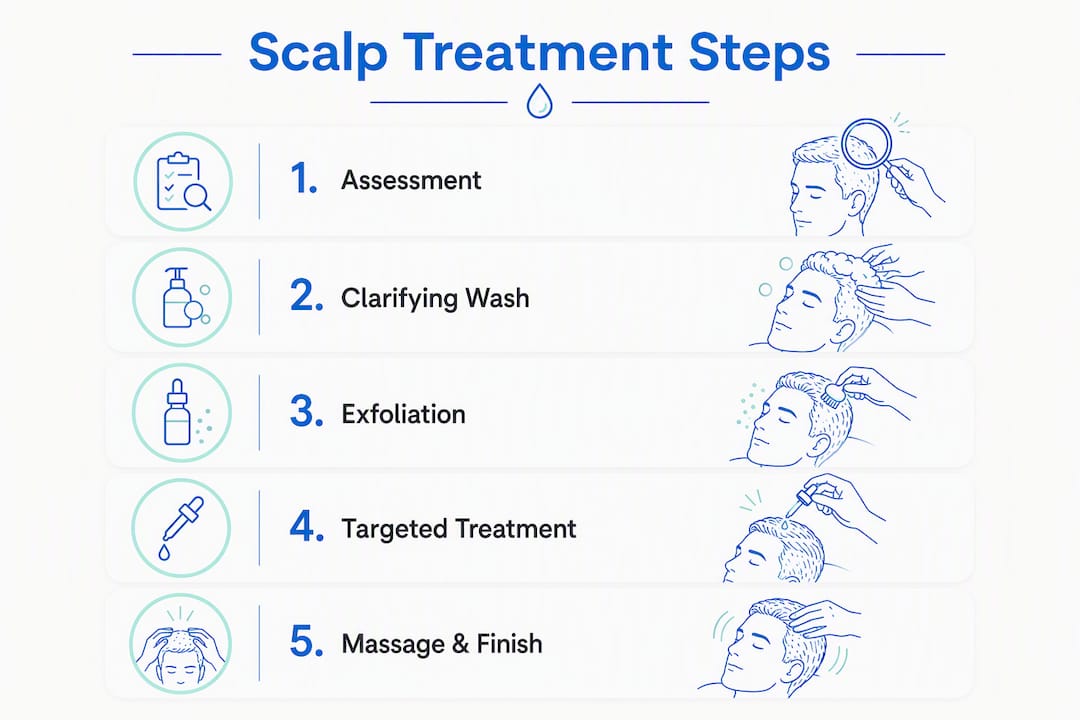
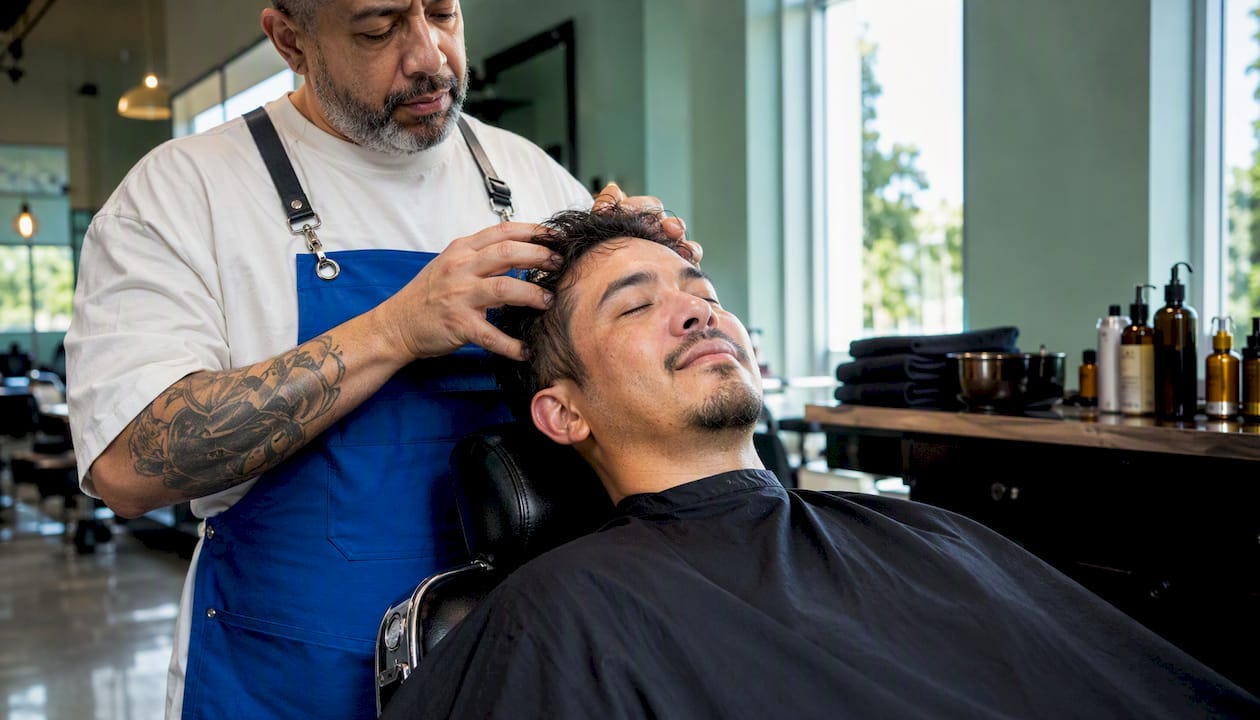
Step 4: Massage, rinse, and finish. The scalp massage is where circulation gets a real boost. Barbers report that cooling or menthol-based products used during this stage signal increased circulation and enhance the client’s perception of the treatment working. After rinsing, a leave-in conditioner or lightweight serum is applied, and your barber will give you aftercare advice tailored to your scalp type.
| Treatment Type | Best For | Key Ingredients |
|---|---|---|
| Clarifying/Detox | Product buildup, oily scalp | Salicylic acid, charcoal |
| Hydrating | Dry, tight, flaky scalp | Hyaluronic acid, aloe vera |
| Anti-dandruff | Dandruff, seborrheic flaking | Zinc pyrithione, tea tree |
| Invigorating/Stimulating | Sluggish growth, dull scalp | Peppermint, caffeine |
| Exfoliating/Purifying | Dead skin buildup, clogged follicles | Salicylic acid, enzyme peels |
Pro Tip: Arrive with a clean, product-free scalp if possible. Heavy wax or pomade residue can limit how deeply the clarifying shampoo penetrates, which means the treatment products that follow are less effective.
Which scalp problems can a barber actually fix?
Barbershop scalp care handles a clear range of common issues well. Where it falls short is equally worth knowing.
What in-shop treatments address effectively:
- Product buildup from waxes, pomades, and dry shampoos
- Mild to moderate dandruff caused by excess oil or dryness
- Dry, itchy scalp with no underlying skin disease
- Excess sebum production and oily roots
- Temporary shedding linked to clogged follicles or scalp inflammation
- General scalp discomfort and tightness
What requires medical care instead:
- Alopecia areata and other autoimmune hair loss conditions
- Advanced androgenetic alopecia (pattern baldness) requiring prescription therapy
- Scalp psoriasis or eczema during active flare-ups
- Fungal infections needing antifungal prescription medication
- Open sores, spreading redness, or signs of bacterial infection
A professional scalp treatment can reduce shedding caused by dandruff, dry scalp, and buildup, but it is not a replacement for medical care when a diagnosed condition is driving the hair loss. Think of the barber’s role as optimizing the scalp environment. When the environment is healthy, hair has a better chance of growing well. When a medical condition is the root cause, that needs a dermatologist.
| Condition | Barbershop Treatment | Needs Medical Care |
|---|---|---|
| Product buildup | Yes | No |
| Mild dandruff | Yes | No |
| Dry/itchy scalp | Yes | No |
| Oily scalp | Yes | No |
| Seborrheic dermatitis (mild) | Supportive | Sometimes |
| Alopecia areata | No | Yes |
| Scalp infection | No | Yes |
| Advanced pattern hair loss | No | Yes |
What professionals and the evidence say about results
The evidence on barbershop scalp treatments points in a consistent direction: they improve scalp comfort, remove buildup, and create better conditions for hair health. They are not a standalone solution for regrowing lost hair.
Scalp conditioning reduces dryness, controls dandruff, stimulates circulation, and improves the client experience when integrated into regular barber services. The National Barbers Association frames scalp conditioning as foundational to hair health, not an optional add-on. That framing matters because it shifts the conversation from “luxury treatment” to “basic maintenance.”
Professional cleaning and massage improve scalp comfort and remove buildup that prevents follicles from functioning properly. Measurable improvements in shedding or hair thickness require regular treatments paired with at-home maintenance and, when appropriate, medical evaluation. A single session offers symptomatic relief; consistency is what produces lasting change.
The Academy of Beauty Professionals notes that exfoliation and massage stimulate blood flow to the scalp, making it easier for blood to reach follicles and deliver nutrients. Healthier follicles produce healthier hair. That is not a marketing claim; it is basic scalp physiology.
Where the evidence is thinner is on hair regrowth from occasional treatments alone. No credible source claims that a monthly barbershop visit reverses pattern baldness. What the evidence does support is that a clean, well-maintained scalp responds better to any treatment, including medical ones, because active ingredients can actually penetrate when buildup is not blocking the surface.
How often to go, how long it takes, and what it costs
Frequency depends on your scalp type. Here is a practical guide:
- Normal scalp: Regularly, aligned with typical grooming routines
- Oily scalp: More frequently to manage excess sebum and prevent buildup
- Dry or sensitive scalp: With treatments aimed at hydration
- Flaky or dandruff-prone: Regularly, especially with anti-dandruff protocols
- Heavy product users: Periodically to clear wax and pomade residue before it clogs follicles
This frequency guidance reflects industry consensus from salon professionals. Starting more frequently and scaling back once your scalp stabilizes is a common approach for men with chronic dryness or dandruff.
Appointment length varies by service type. An add-on scalp treatment tacked onto a haircut typically runs 15–20 minutes. A dedicated scalp session, which may include a scalp camera assessment and a fully tailored protocol, can run 60–90 minutes.
Cost range: Add-on treatments generally start at an affordable rate. Dedicated sessions at premium barbershops or scalp-specialist studios vary widely in price depending on the products used, diagnostic tools involved, and appointment length. Shops that use scalp cameras or prescription-grade serums sit at the higher end.
How to choose the right scalp treatment and what to ask your barber
Not every barbershop offering a “scalp treatment” delivers the same quality. Professional training and product knowledge make a measurable difference in treatment consistency and appropriate referrals to dermatology. Here is how to vet a service before you commit.
Questions worth asking:
- Do you perform a scalp assessment before choosing products?
- What ingredients are in the treatment, and are any of them medicated?
- What results should I realistically expect after one session versus several?
- What at-home routine do you recommend maintaining results?
- Have you had training in scalp anatomy or scalp-specific services?
Red flags to watch for:
- No scalp assessment before the treatment begins
- One product used on every client regardless of scalp type
- Aggressive scrubbing on visibly inflamed or irritated skin
- No aftercare advice given at the end of the session
- Reluctance to refer you to a dermatologist when your condition is beyond barbershop scope
Barbers who take personalized service seriously will always start with a consultation. If a barber reaches for a product before looking at your scalp, that is a sign the service is more cosmetic than therapeutic.
Pro Tip: Ask to see the product labels. A barber who knows their formulas can tell you exactly why they chose a particular shampoo or serum for your scalp type. Vague answers like “it’s good for everyone” are a warning sign.
What to expect during your appointment
Knowing the sequence reduces any uncertainty about what you are walking into. Here is how a typical session runs:
- Brief consultation. Your barber asks about your scalp history, any sensitivities, current products you use, and what is bothering you most. This takes two to five minutes and shapes everything that follows.
- Scalp assessment. The barber examines your scalp under good lighting, checking for oiliness, dryness, flaking, redness, or irritation.
- Clarifying cleanse. A targeted shampoo is worked through the scalp to remove buildup. This is not rushed.
- Exfoliation and treatment application. Physical or chemical exfoliation is applied based on your scalp type, followed by a serum or medicated product.
- Scalp massage. The massage works the product into the scalp, stimulates circulation, and is genuinely relaxing.
- Rinse and finish. A leave-in conditioner or lightweight serum is applied. Your barber gives you specific aftercare recommendations.
For a smooth visit, check out how to prepare for a barber visit before you book.
What to bring: A list of the products you currently use on your scalp and hair, and a note of any known sensitivities or allergies.
What to avoid: Applying heavy styling wax, pomade, or dry shampoo the morning of your appointment. Heavy product residue makes the clarifying step harder and reduces how well treatment products absorb.
Pro Tip: Tell your barber if you have been using any medicated shampoos at home, like ketoconazole or selenium sulfide. This helps them choose complementary in-shop products rather than overlapping actives that could irritate your scalp.
When to skip the barbershop and see a dermatologist
Some scalp conditions need medical attention, and going to a barbershop first can delay the right care or make things worse.
Skip the in-shop treatment and see a dermatologist if you have:
- Open sores, scabs, or wounds on the scalp
- Spreading redness or warmth that suggests infection
- Pus or discharge from the scalp
- Rapid, unexplained hair loss over a short period
- Intense pain or burning on the scalp
- A rash that has spread beyond the scalp to the neck or ears
These symptoms often point to conditions requiring prescription antifungal, antibiotic, or steroid treatments. A professional scalp treatment will not resolve them and could aggravate inflamed or broken skin.
Conditions that usually respond well to in-shop care: mild dandruff, product buildup, dry scalp without active inflammation, and general oiliness. Clients with sensitive skin, eczema, or psoriasis should consult a dermatologist before beginning any professional scalp treatment, even a gentle one.
This article is general information, not medical advice. If you are unsure whether your scalp condition is suitable for a barbershop treatment, confirm with a dermatologist before booking.
Barber-recommended aftercare to keep your scalp healthy between visits
A single in-shop session resets your scalp. What you do between visits determines how long that reset lasts.
Pro Tip: Treat your scalp the way you treat your face. Avoid hot water, limit harsh sulfates, and do not let heavy waxes or pomades sit on your scalp for days without a proper cleanse. The scalp responds to the same care principles as facial skin.
Your at-home maintenance checklist:
- Use a gentle, sulfate-free shampoo for regular washing
- Add a clarifying shampoo once every 1–3 weeks if you use styling products regularly
- Apply a lightweight leave-in serum or scalp oil after washing if your scalp runs dry
- Use an anti-dandruff shampoo with zinc pyrithione or ketoconazole if flaking persists between visits
- Massage your scalp for 2–3 minutes during every shampoo to maintain circulation
- Rinse with cool or lukewarm water, not hot
- Avoid layering multiple heavy styling products without a thorough cleanse
For product recommendations that complement in-shop treatments, barber-recommended men’s hair products are a solid starting point. Pairing the right at-home products with regular barbershop visits is what produces consistent, lasting improvement.
Key Takeaways
Barbershop scalp treatments deliver reliable relief for common scalp issues when done consistently and paired with the right at-home routine.
| Point | Details |
|---|---|
| What it is | A professional service combining deep cleanse, exfoliation, targeted products, and scalp massage. |
| What it fixes | Product buildup, mild dandruff, dry or oily scalp, and temporary shedding linked to clogged follicles. |
| What it cannot fix | Alopecia areata, advanced pattern hair loss, scalp infections, and conditions needing prescription care. |
| How often to go | Normal scalp: every 3–4 weeks; oily scalp: every 1–2 weeks; dry or sensitive scalp: every 2–3 weeks; flaky or dandruff-prone scalp: every 1–2 weeks. |
| Phillythebarber | Philly’s Barber Shop offers personalized scalp assessments and targeted treatments as part of a premium grooming experience in Copenhagen. |
Why barbers take scalp care seriously
Most men come in asking about their hair. The real conversation, the one that actually changes results, is about the scalp underneath it.
Barbers who have been in this trade long enough know that a great haircut on a neglected scalp is a short-term fix. The scalp is the foundation. When it is congested with buildup, producing too much oil, or chronically dry, the hair that grows from it reflects that. Clients who add a regular scalp treatment to their grooming routine consistently report that their hair looks better, feels healthier, and holds a style longer between visits.
The sensory experience matters too. The massage, the cooling sensation from peppermint or menthol products, the clean feeling after a proper clarifying cleanse. These are not just comfort features. They signal that something real is happening at the follicle level. Consistency is what separates a one-off relief session from genuine, sustained improvement. That is the honest barber’s perspective on it.
Ready for a professional scalp treatment at Philly’s?
Phillythebarber brings the same precision and care to scalp services that goes into every haircut and shave. A session at Philly’s starts with a proper scalp assessment, moves through a targeted cleanse and exfoliation, and finishes with a focused massage and personalized aftercare advice. No guesswork, no one-size-fits-all products.
Philly is a certified Master Barber with over 20 years of experience, and scalp health is part of how he approaches every client’s grooming. Whether you are dealing with persistent dandruff, a dry and itchy scalp, or just want a proper reset, the shop in Vesterbro, Copenhagen is where to start. Check out the full grooming experience at Philly’s and book your appointment today.
Useful sources for further reading
- National Barbers Association: Scalp Conditioning Guide — Covers scalp anatomy, conditioning principles, and referral thresholds for barbers.
- Academy of Beauty Professionals: 5 Benefits of Scalp Treatments — Explains follicle health, circulation benefits, and dandruff management from a professional education perspective.
- Haste Hair: How Often Should You Get a Scalp Treatment? — Practical frequency guidance by scalp type.
- Lavie Bella: The Complete Guide to Scalp Care — Covers diagnostic tools, dedicated session formats, and premium treatment protocols.
- Zieda’s Clinic: 6 Benefits of Professional Scalp Treatment — Clinical perspective on exfoliation, circulation, and when to refer to a dermatologist.