Why Barbers Use Straight Razors: Precision and Craft
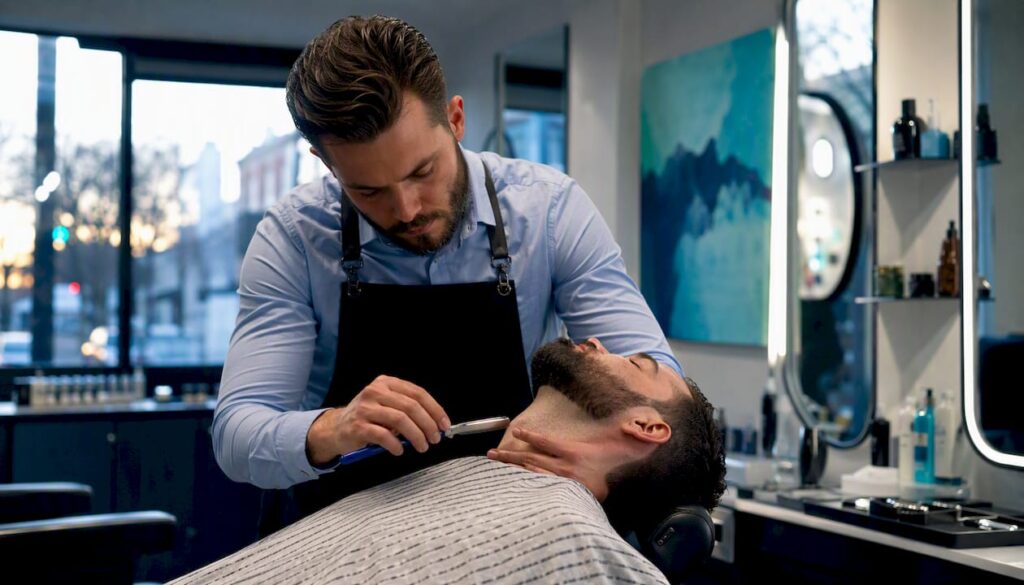
Barbers use straight razors because a single, ultra-sharp blade delivers unmatched precision and the closest possible finish for edging, necklines, and detailed beard work. No other tool gives a barber the same degree of control over angle, pressure, and stroke direction in one pass. That control is what separates a crisp fade line from a blurry one, and a smooth neckline from one that needs three passes to clean up. Dermatologists and grooming professionals consistently point to single-blade systems as the standard for precision contouring and edge definition, and that consensus holds up in the chair every single day.
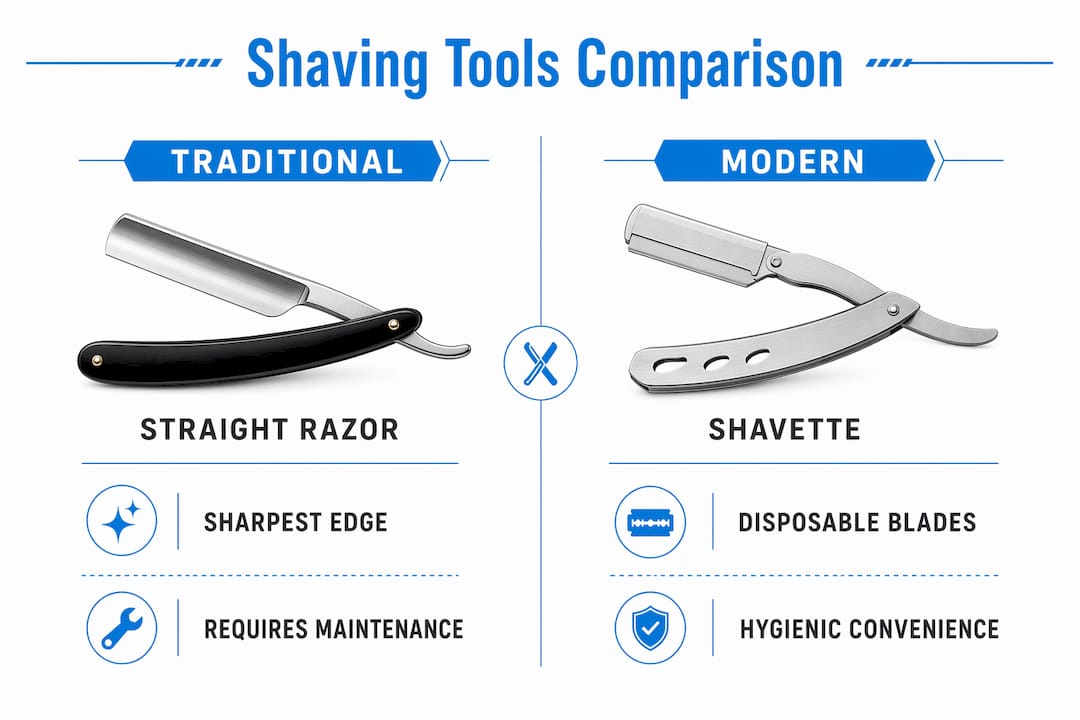
Table of Contents
- Why barbers choose straight razors over any other tool
- How straight razors compare to safety razors and shavettes
- How barbers actually use a straight razor during a professional shave
- How shops keep straight-razor shaves safe and legal
- What razor maintenance actually means for the quality of your shave
- Who should book a straight-razor shave and what to expect
- Honest pros, cons, and myths about straight-razor shaving
- A master barber’s perspective on why the straight razor stays in the kit
- Key Takeaways
- A note from the chair
- Book your straight-razor shave at Phillythebarber
- Useful sources
Why barbers choose straight razors over any other tool
The short answer is control. A straight razor puts the barber’s hand directly behind the blade with nothing in between, no pivoting head, no cartridge stack, no safety guard dictating the angle. That direct connection is what makes the tool so effective for professional work.
Here is what that control actually produces:
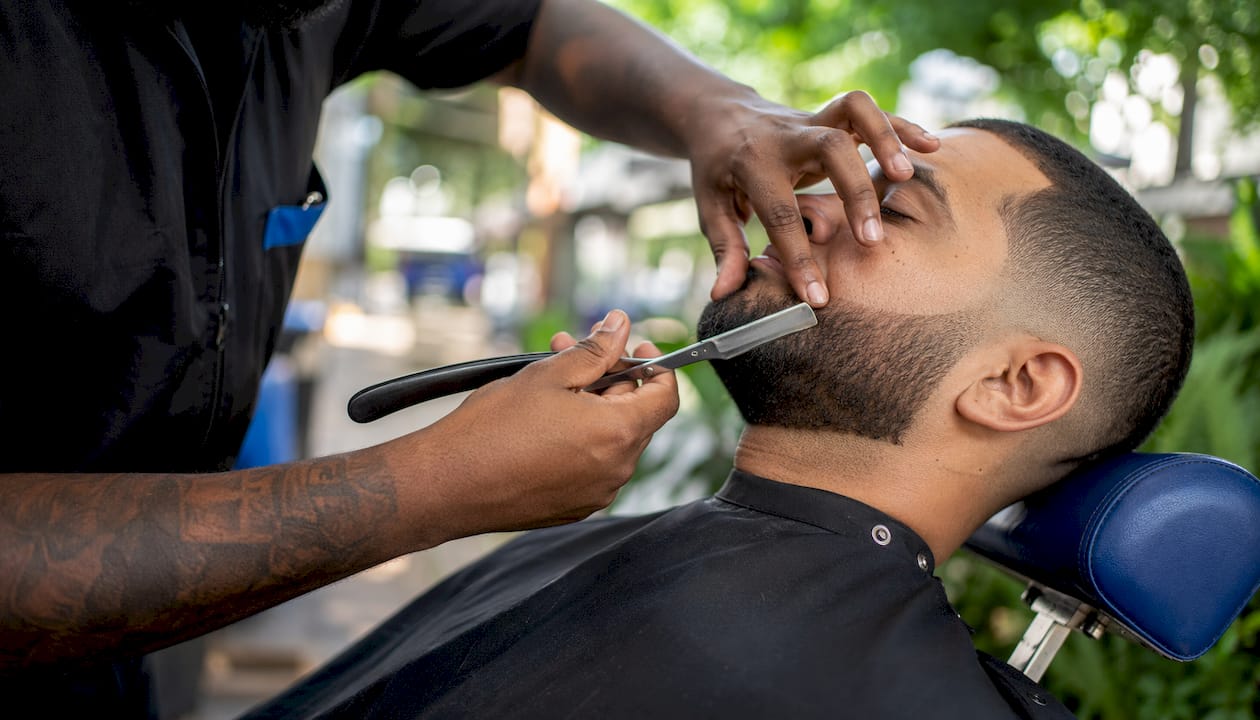
- Precision for lining and sculpting. The long, single edge lets a barber draw a clean line around a beard, sideburns, or hairline with one deliberate stroke. Cartridge razors can’t replicate that because the blade geometry is too short and the pivot fights the barber’s angle.
- Closest possible shave. A straight razor cuts hair at the follicle exit, right at skin level, in one clean pass. Multi-blade systems use a lift-and-cut action that can pull hair below the surface and cause ingrowns as it regrows.
- Fewer passes, less irritation. Single-blade razors reduce friction by requiring fewer passes, which directly lowers the incidence of razor burn and ingrown hairs compared to multi-blade cartridge systems.
- Skin health over time. Less mechanical friction means less trauma to the skin barrier. Clients who struggle with razor bumps or sensitivity often notice a real difference after switching to straight-razor finishing.
- The ritual experience. Hot towels, rich lather, a slow and deliberate pace. The straight-razor shave is as much about the experience as the result. Clients leave feeling genuinely taken care of, not just groomed.
The blade is uniquely useful at the neckline, along mustache edges, and wherever a fade needs a clean finish. Those are the spots where a barber’s straight razor does work that nothing else can match.
How straight razors compare to safety razors and shavettes
Barbers don’t always reach for the same tool. The choice between a traditional straight razor, a shavette, and a safety razor depends on the service, the client, and the shop’s hygiene protocols.
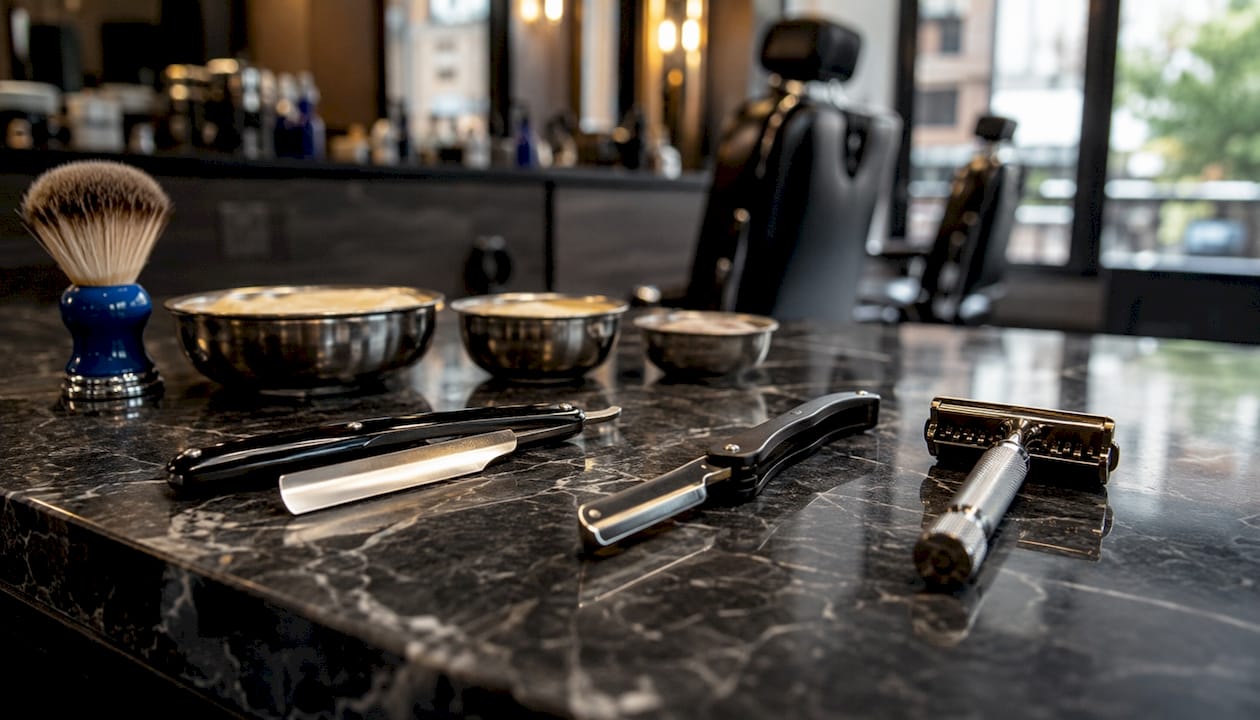
Modern barbers often use shavettes for hygiene and convenience: a shavette holds a disposable blade that gets swapped between clients, preserving the straight-razor technique without the cross-contamination risk of a reusable blade. A traditional straight razor delivers the best possible finish but requires stropping before every use and honing periodically. A safety or double-edge razor is gentler and easier to control, making it a reasonable choice for sensitive skin or quick cleanup work, but it can’t match the edge definition of a straight razor.
| Dimension | Traditional straight razor | Shavette | Safety / DE razor |
|---|---|---|---|
| Closeness of shave | Closest | Very close | Close |
| Precision for edges | Highest | High | Moderate |
| Safety / nick risk | Moderate (skill-dependent) | Moderate | Lower |
| Hygiene between clients | Requires full sterilization | Disposable blade: easy | Requires sterilization |
| Maintenance required | Stropping + periodic honing | Blade replacement only | Blade replacement only |
| Learning curve | Steep | Moderate | Low |
| Typical service time | 30–45 min | 20–35 min | 15 min |
A few practical points worth knowing:
- Shavettes are the go-to in shops where state barber-board rules require disposable blades for client services.
- Traditional straight razors are preferred when a barber wants the absolute best finish and has the maintenance routine dialed in.
- Safety razors show up most often for at-home use or as a gentler alternative for clients with reactive skin.
The finish quality of a traditional straight razor is hard to argue with. But the shavette closes the gap considerably, and in many U.S. shops it’s the standard tool for exactly that reason.
How barbers actually use a straight razor during a professional shave
The technique is what separates a professional result from a risky one. Here’s the sequence a trained barber follows:
- Hot towel prep. A hot towel applied for roughly 90 seconds opens pores and softens stubble, which materially improves how close the razor shaves. This step alone is a major shop advantage over most at-home routines.
- Pre-shave oil or cream. Applied after the towel to create a protective layer and help the blade glide without drag.
- Lather application. A quality shaving soap or cream is worked into the beard with a brush, lifting the hair and lubricating the skin.
- Blade angle and grip. The barber holds the razor at a shallow angle to the skin, using light pressure and letting the blade’s weight do the work. Pressing harder is one of the most common mistakes.
- First pass with the grain. Short, controlled strokes following the direction of hair growth. Skin is held taut with the non-dominant hand to create a flat surface for the blade.
- Across-the-grain pass. A second pass at a slight angle to the grain for extra closeness where the client wants it.
- Touch-up strokes. Precise cleanup around the lip, chin, and jawline where the first passes can’t reach cleanly.
- Cold towel and aftercare. A cool towel closes pores, followed by an antiseptic splash or balm to calm the skin and prevent irritation.
What you’ll feel as a client: warmth from the towels, a slow and deliberate pace, almost no tugging when the technique is right. A good barber barely needs to press at all.
Pro Tip: Skin tension is everything. The barber’s non-dominant hand is constantly stretching the skin flat ahead of the blade. If you feel pulling or dragging during a shave, that’s usually a sign the skin isn’t being held taut enough, not that the blade is dull.
How shops keep straight-razor shaves safe and legal
Client safety and legal compliance aren’t optional. Here’s what professional shops do and what you should expect.
Licensing and legality in the U.S.
Barbers in the United States must hold a state-issued barber license to perform straight-razor shaves on clients. Licensing requirements vary by state, but all require formal training and a practical exam. Some states and jurisdictions require barbers to use shavettes (disposable-blade straight razors) rather than traditional reusable blades for client services, specifically to reduce cross-contamination risk.
Sanitation checklist for straight-razor services:
- Reusable straight razors must be cleaned and disinfected with a hospital-grade disinfectant (such as Barbicide) between every client.
- Shavette blades are single-use: one blade per client, disposed of immediately after the service.
- Barbers wash hands before every service and wear gloves when there is any risk of blood contact.
- All linens, towels, and capes are laundered or replaced between clients.
- Razors are stored dry in a clean, closed container when not in use.
What to watch for during your visit:
- The barber should open a fresh blade in front of you if using a shavette.
- Tools should come from a disinfectant solution or sealed storage, not a countertop.
- If you have active acne, open cuts, or a skin infection, tell the barber before the service starts. A good barber will adjust the approach or recommend an alternative.
When to ask for a disposable blade:
If you have any concern about sanitation, it’s completely reasonable to ask your barber whether they use disposable blades. Most professional shops in the U.S. already do for client services, and no reputable barber will take offense at the question.
What razor maintenance actually means for the quality of your shave
A straight razor is only as good as its edge. Maintenance isn’t optional; it’s what keeps the blade performing at the level that makes the service worth booking.
Stropping vs. honing: the key difference
Stropping realigns the microscopic edge of the blade before each shave. It doesn’t remove metal; it straightens the edge that bends slightly with use. Honing removes a small amount of metal to restore a truly sharp edge when stropping alone isn’t enough. A well-maintained straight razor requires stropping before every shave and honing periodically, and shops follow a maintenance schedule to keep blades shave-ready.
Shop maintenance checklist:
- Strop the blade on a leather strop before every client service.
- Hone the blade on a whetstone when the edge starts to tug rather than glide, typically every few months depending on use frequency.
- Inspect the blade for chips, rust, or visible damage before each use.
- Dry the blade completely after cleaning to prevent oxidation.
- Store razors in a dry case or on a blade rack, never loose in a drawer.
For shavettes, the maintenance equation is simpler: replace the blade after every client, and clean the handle with disinfectant. The trade-off is that shavette blades are thinner and slightly less rigid than a full straight-razor edge, which some barbers say affects the feel of the shave at the margins.
A well-maintained straight razor is more economical over time than a system dependent on disposable cartridges, because there are no proprietary replacement costs once the initial kit is purchased.
Who should book a straight-razor shave and what to expect
Not every client needs a full straight-razor shave, but certain situations make it the obvious choice.
Best candidates:
- Men who want the sharpest possible beard line or neckline definition.
- Anyone prone to razor bumps or ingrown hairs from multi-blade cartridges.
- Clients who want a close, long-lasting shave without doing it themselves.
- Anyone who wants the full grooming ritual: hot towels, lather, slow pace, and a result that lasts.
When to pause or choose an alternative:
- Active acne, open wounds, or a current skin infection. The blade can spread bacteria and worsen inflammation.
- Extremely sensitive or compromised skin. Discuss with your barber first; they may recommend a safety razor finish instead.
- Certain blood-thinning medications can increase bleeding risk from minor nicks. Worth mentioning before the service.
What to expect on time and price:
A professional straight-razor finish (neckline and beard edging only) typically adds extra time to a haircut service. A full straight-razor shave, including prep, multiple passes, and aftercare, generally takes significantly longer in the chair. Pricing varies by market and shop level, but a dedicated straight-razor shave at a premium barbershop in a U.S. city typically falls in the $35–$75 range, with combination services priced higher. If you want to prepare for your barber visit and get the most from the service, arriving with clean, moisturized skin makes a real difference.
Honest pros, cons, and myths about straight-razor shaving
The real trade-offs
Pros:
- Closest possible shave, often lasting longer between sessions.
- Precise edge definition that no other tool matches.
- Fewer passes mean less skin irritation and fewer ingrown hairs.
- Long-term cost efficiency for shops (no ongoing cartridge expense).
- The ritual experience itself has genuine value for many clients.
Cons:
- Steep learning curve. In untrained hands, the risk of nicks is real.
- Requires consistent maintenance (stropping, honing) to perform well.
- Not suitable for all skin conditions or all clients.
- Service takes longer than a quick cartridge shave.
Myths worth clearing up
“Straight razors are inherently more dangerous.” In professional hands, they’re not. The risk comes from poor technique, not the tool itself. A barber trained in angle control and skin tension produces safe, repeatable results. The skill of the barber matters far more than the tool category.
“They’re only for old-school barbers.” Straight razors and shavettes are standard equipment in premium barbershops across the U.S. right now. Demand has been growing since roughly 2008, driven partly by nostalgia and partly by clients who’ve discovered that the results are genuinely better.
“They’re unhygienic by default.” A reusable blade that’s properly disinfected between clients is no more of a hygiene risk than any other reusable tool in the shop. Shavettes with single-use blades eliminate the concern entirely.
A master barber’s perspective on why the straight razor stays in the kit
At Phillythebarber, the straight razor isn’t a throwback or a gimmick. It’s the tool I reach for when a client needs a finish that nothing else can deliver.
The clearest example is neckline work. When I’m finishing a fade or cleaning up a beard line, the straight razor gives me a level of definition that clippers and trimmers simply can’t match at the skin. One deliberate stroke, the right angle, the right tension, and the line is clean. That’s not something you get from a pivoting cartridge head.
Training matters enormously here. At Philly’s, we work on barber craftsmanship as a core skill, including ambidexterity for jawline and neck work, which is where most DIY attempts go wrong. The non-dominant hand is doing as much work as the blade hand. Clients don’t always see that, but they feel the difference in the result.
The ritual side matters too. Clients who book a straight-razor shave at Philly’s aren’t just paying for hair removal. They’re paying for 30–45 minutes of deliberate, skilled attention. The hot towels, the lather, the slow pace. That experience is part of what expert barber guidance actually means in practice.
Key Takeaways
Barbers use straight razors because a single, ultra-sharp blade delivers the closest possible shave, the sharpest edge definition, and fewer passes that reduce skin irritation compared to any multi-blade alternative.
| Point | Details |
|---|---|
| Precision is the core reason | A single blade gives barbers direct control over angle and pressure for crisp lines no cartridge can match. |
| Fewer passes, less irritation | Single-blade razors reduce friction and lower the incidence of razor burn and ingrown hairs. |
| Skill drives safety | A barber trained in angle control (20–30°) and skin tension makes the service safe and repeatable. |
| Shavettes bridge hygiene and technique | Disposable-blade shavettes preserve straight-razor technique while meeting sanitation requirements. |
| Phillythebarber’s straight-razor shave | Philly’s offers a full straight-razor service with hot towel prep, skilled finishing, and aftercare in Copenhagen. |
A note from the chair
I’ve been behind the razor for over 20 years, and the straight razor is still the tool I’m most proud to use. There’s nothing quite like watching a client see their neckline for the first time after a clean straight-razor finish. That reaction tells you everything.
At Philly’s, every straight-razor service follows strict sanitation protocols, and every barber on the floor is trained to the same standard. You’re in safe hands, and the result will show it.
Book your straight-razor shave at Phillythebarber
Phillythebarber offers a full straight-razor shave experience in Copenhagen, built around the kind of prep, technique, and aftercare that actually produces results. The service includes a hot towel prep, professional lather, a skilled multi-pass shave, and a post-shave balm finish. Whether you want a complete shave or just a clean straight-razor edge on your beard or neckline, Philly’s has the service for you.
Philly is a certified Master Barber with over 20 years of experience, and the shop’s straight-razor work reflects that. If you want to understand what’s included in a full beard grooming service or you’re ready to book, the online booking system makes it easy to lock in your appointment. Walk-ins are also welcome. Come in, sit down, and find out what a properly executed straight-razor shave actually feels like.
Book your appointment and experience the difference that 20 years of craft makes.
Useful sources
- Associated Barber College: What Is the Straight Razor and Why It’s a Barber’s Favorite Tool — A detailed breakdown of the straight razor’s role in professional barbering, covering precision, tradition, and client experience.
- Campus.edu: The Straight Razor — An Essential Barber’s Tool — Explains why barbers favor straight razors over safety razors, with practical notes on closeness, skin health, and the shaving ritual.
- Men’s Health: An Argument for Straight Razor Shaving — Covers the skin-health case for single-blade shaving and the maintenance routine that keeps a straight razor performing well.
- Cremo Company: How to Shave with a Straight Razor — Practical technique guide covering angle, pressure, and the ambidexterity required for professional results.
- The Glossy Locks: Straight Razor Shaving Techniques Tutorial — Step-by-step prep and technique, including the 90-second hot towel method and its effect on shave closeness.
- Phillythebarber: The Ultimate Straight Razor Shave in Vesterbro — Philly’s own service page describing the full straight-razor shave offering, what’s included, and how to book.
- Phillythebarber: The Beard Trim Process Explained for Better Results — Details the beard finishing process and the role of razor edging in achieving clean, defined results.