Local Barbershop vs Chain Salon: Copenhagen Men’s Guide
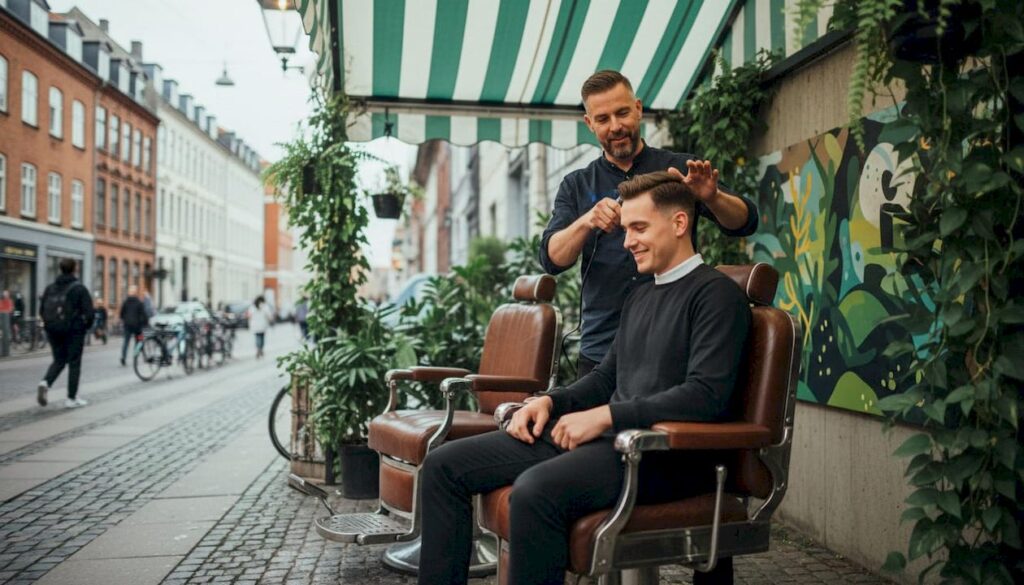
A local barbershop and a chain salon serve fundamentally different purposes in men’s grooming, defined by their specialization, tools, and client experience. The local barbershop vs chain salon debate comes down to one core question: what does your hair actually need? Barbershops specialize in precision clipper work, beard shaping, and straight razor shaves. Chain salons cover color, chemical treatments, and longer layered styles. Knowing which category your grooming goals fall into saves you time, money, and a bad haircut. This guide breaks down every meaningful difference so you can book with confidence in Copenhagen.
What services does a local barbershop vs chain salon actually offer?
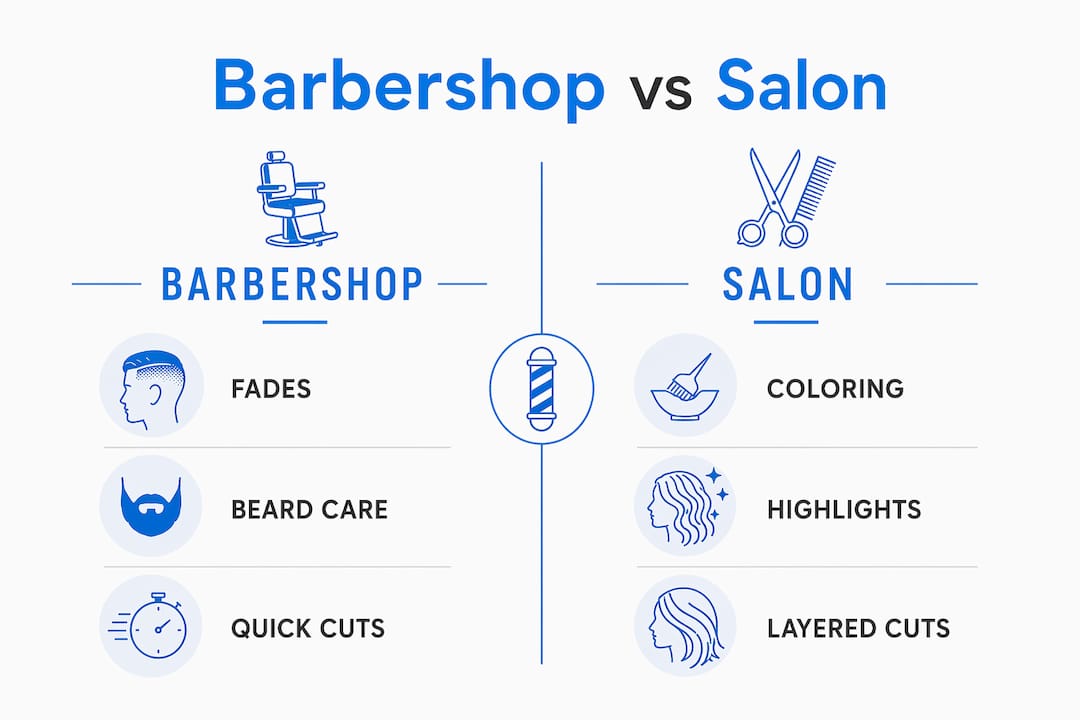
The clearest way to separate a barbershop from a chain salon is by service type. Barbers are optimal for fades, tapers, buzz cuts, and beard shaping, while salons excel in medium to long hair styling, layering, and chemical or color services. That single distinction drives almost every other difference between the two venues.
Barbershop services built around short, structured cuts include:
- Bald fades and skin fades — tight clipper work that requires daily practice to master
- Tapers and crew cuts — clean lines around the ears and neckline
- Beard trims and shaping — defining cheeklines, necklines, and mustache edges
- Straight razor shaves — a service almost never offered at chain salons
- Hot towel treatments — part of a traditional grooming ritual that relaxes skin before a shave
Chain salons, by contrast, are built for a different client. Color, highlights, toning, root work, and corrective treatments require salon expertise that most barbershops simply do not carry. If you wear your hair past your ears, want balayage, or need a keratin treatment, a salon is the correct choice.
Pro Tip: Haircut maintenance cycles differ sharply between venues. Barbershop fades need refreshing every 2–4 weeks, while layered salon cuts grow out gracefully over 6–10 weeks. Factor that into your monthly grooming budget.
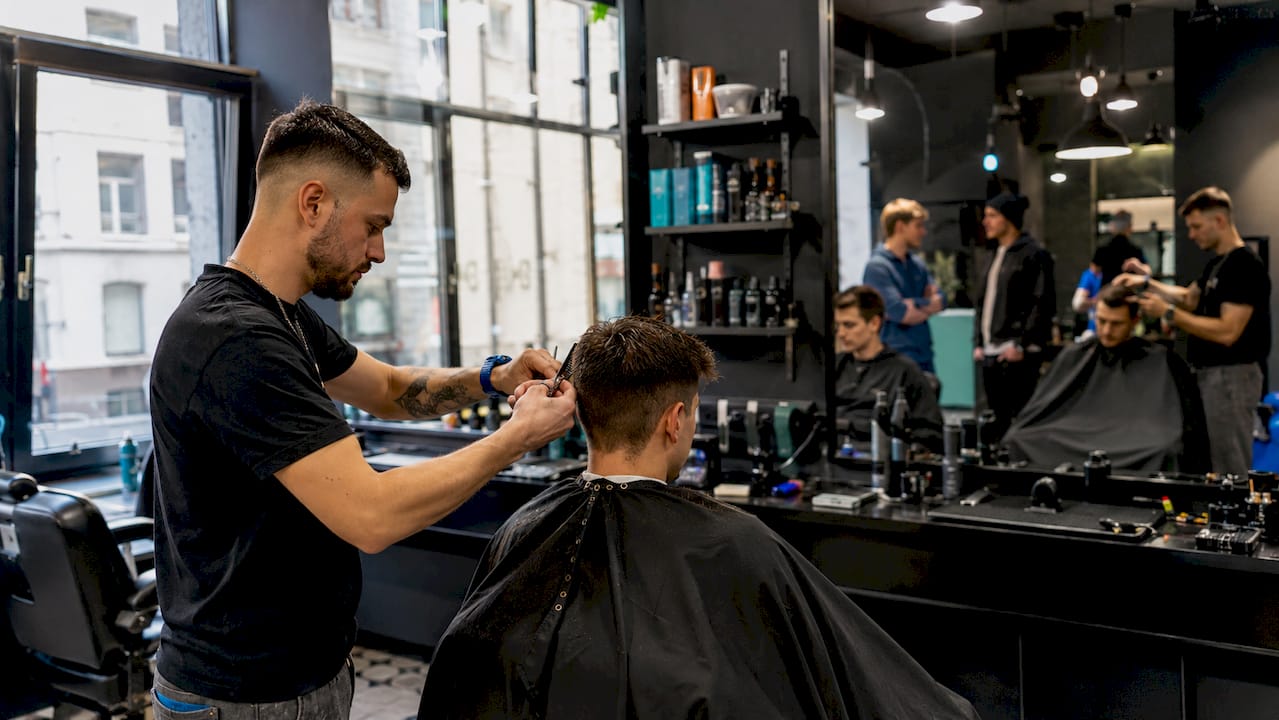
The difference between barber and hairdresser is not about skill level. It is about specialization. A barber who has spent 10 years perfecting skin fades will outperform any salon stylist on that specific cut, and the reverse is true for color correction. Match the venue to the service, not to a general idea of quality.
How do barber training and tools differ from a salon stylist’s?
Training is where the barber vs stylist differences become most concrete. Barbers undergo specialized programs emphasizing razor work and clippers, while stylists attend broader cosmetology curricula that include hair chemistry, color theory, and chemical processing. Neither education is superior. They are designed for different outcomes.
The tools each professional uses reflect that training directly.
| Tool | Barber use | Salon stylist use |
|---|---|---|
| Clippers and trimmers | Primary cutting tool for fades and tapers | Occasional use for necklines |
| Straight razor | Shaving and hairline detailing | Rarely used |
| Barber scissors | Heavy, designed for dense short hair | Not standard |
| Hairdressing scissors | Not standard | Lighter, designed for fine or long hair |
| Color applicators | Not used | Core tool for chemical services |
Barber scissors are heavier and designed for dense, short hair, while hairdressing scissors are lighter and built for longer, finer strands. Using the wrong scissors in either setting reduces cut quality and accelerates blade wear. This is not a minor detail. It directly affects how clean your hairline looks and how long the cut holds its shape.
Pro Tip: When evaluating a barbershop, ask whether the barber holds a certified barber license. Certification confirms formal training in razor technique, sanitation, and clipper work, which matters especially for straight razor shaves.
Barbershops operate on volume, typically performing 12–20 cuts per chair per day at $25–$50 per cut. Salons perform 6–10 cuts per chair per day at $80–$200 or more. That economic model shapes everything from how long your appointment lasts to how much conversation you get. Salons invest more time per client because the margin per service demands it.
What is the customer experience like at each venue?
Walk into a well-run local barbershop and you feel the difference immediately. Barbershops serve as social sanctuaries and community hubs, offering a relaxed, face-to-face environment that chain salons rarely replicate. The barber knows your name, your fade length, and how you take your beard line. That relationship builds over months and years.
Chain salons prioritize throughput. You may see a different stylist every visit, which means re-explaining your preferences each time. The consultation is shorter, the pace is faster, and the focus is on completing the service efficiently. For a simple trim, that works fine. For a complex fade or a beard shaping session, it often falls short.
“The traditional barbershop culture emphasizes community engagement and slow-paced, personalized service, contrasting sharply with chain salons’ high turnover model. That difference in pace is not just atmosphere. It changes the quality of the cut you receive.”
Key experience differences to expect:
- Consultation depth: Barbershops typically spend 3–5 minutes discussing your style before picking up a clipper. Chain salons often skip this step.
- Appointment vs walk-in: Premium barbershops increasingly require advance bookings, though some hold limited walk-in slots on quiet weekday mornings.
- Relationship continuity: Local barbers track your hair growth patterns and adjust the cut accordingly over time.
- Atmosphere: Barbershops lean toward music, conversation, and a relaxed pace. Chain salons lean toward efficiency and standardized service scripts.
For men who want personalized barbershop service and a genuine grooming consultation, the local barbershop wins on experience. For men who need color or chemical work done quickly and professionally, the chain salon delivers.
How to choose the right option for your grooming goals in Copenhagen
The right choice between a local barbershop and a chain salon depends on three factors: your hair length, your style complexity, and how often you maintain it.
Start by identifying your primary grooming goal:
- Short, structured cuts with clean lines — book a barbershop. Fades, tapers, crew cuts, and buzz cuts are barbershop territory.
- Beard shaping and maintenance — book a barbershop. Beard trimming, line definition, and hot towel shaves require razor skills that most salons do not offer.
- Color, highlights, or chemical treatments — book a salon. These services require cosmetology training and specialized products.
- Medium to long hair with layering or texture — book a salon. Stylists are trained specifically for this cut type.
- Straight razor shave or grooming ritual — book a barbershop. This service is almost exclusive to barbershop settings.
Once you know your category, evaluate the specific venue using these criteria:
| Evaluation factor | What to look for |
|---|---|
| Portfolio and photos | Before-and-after shots of your specific cut type |
| Reviews | Mentions of your style (fade, beard trim, color) specifically |
| Barber vs stylist credentials | Barber license for clipper work; cosmetology license for color |
| Booking process | Online booking signals a professional, organized operation |
| Maintenance cost | Factor in visit frequency: every 2–4 weeks for fades vs 6–10 weeks for layered cuts |
Men seeking sharp hairlines, balanced fades, and beard work consistently find barbershops better suited to their needs. For softness, layering, and color versatility, salons are the right call. Neither is universally better. The match between your goal and the venue’s specialty is what determines the result.
Pro Tip: When choosing a barbershop in Copenhagen, look for one that offers a grooming consultation before the cut. A barber who asks questions before picking up clippers is a barber who cares about the outcome.
For Copenhagen men, the local barber vs chain salon decision also carries a practical dimension. Local barbershops in the city tend to build loyal client bases and offer more flexibility on timing and service customization. Chain salons offer more locations and standardized pricing, which suits men who travel frequently or prioritize convenience over relationship.
My honest take on barbershops versus salons in Copenhagen
After years of watching grooming trends among Copenhagen men, one pattern stands out clearly. Most men who end up disappointed with a haircut went to the wrong type of venue for their specific need. They booked a chain salon for a tight fade, or they booked a barbershop for a color job. The mismatch, not the skill of the professional, caused the problem.
The best barbers I have seen in this city build their reputations on a narrow set of services done exceptionally well. That focus is a feature, not a limitation. A barber who has spent 20 years on fades, beard shaping, and straight razor shaves will give you a result that no generalist stylist can match on those specific services.
My advice to any man in Copenhagen is this: define your grooming goal first, then find the specialist who matches it. Do not pick a venue based on price alone or because it is close to your apartment. The relationship you build with a skilled barber or stylist is worth more than the convenience of a walk-in slot.
Grooming routines evolve. A man in his 20s might want a sharp skin fade every three weeks. The same man at 35 might want a more textured, grown-out style that a salon handles better. Stay honest about what your hair needs right now, and let that drive the choice.
— Stephen
Phillythebarber: precision grooming for Copenhagen men
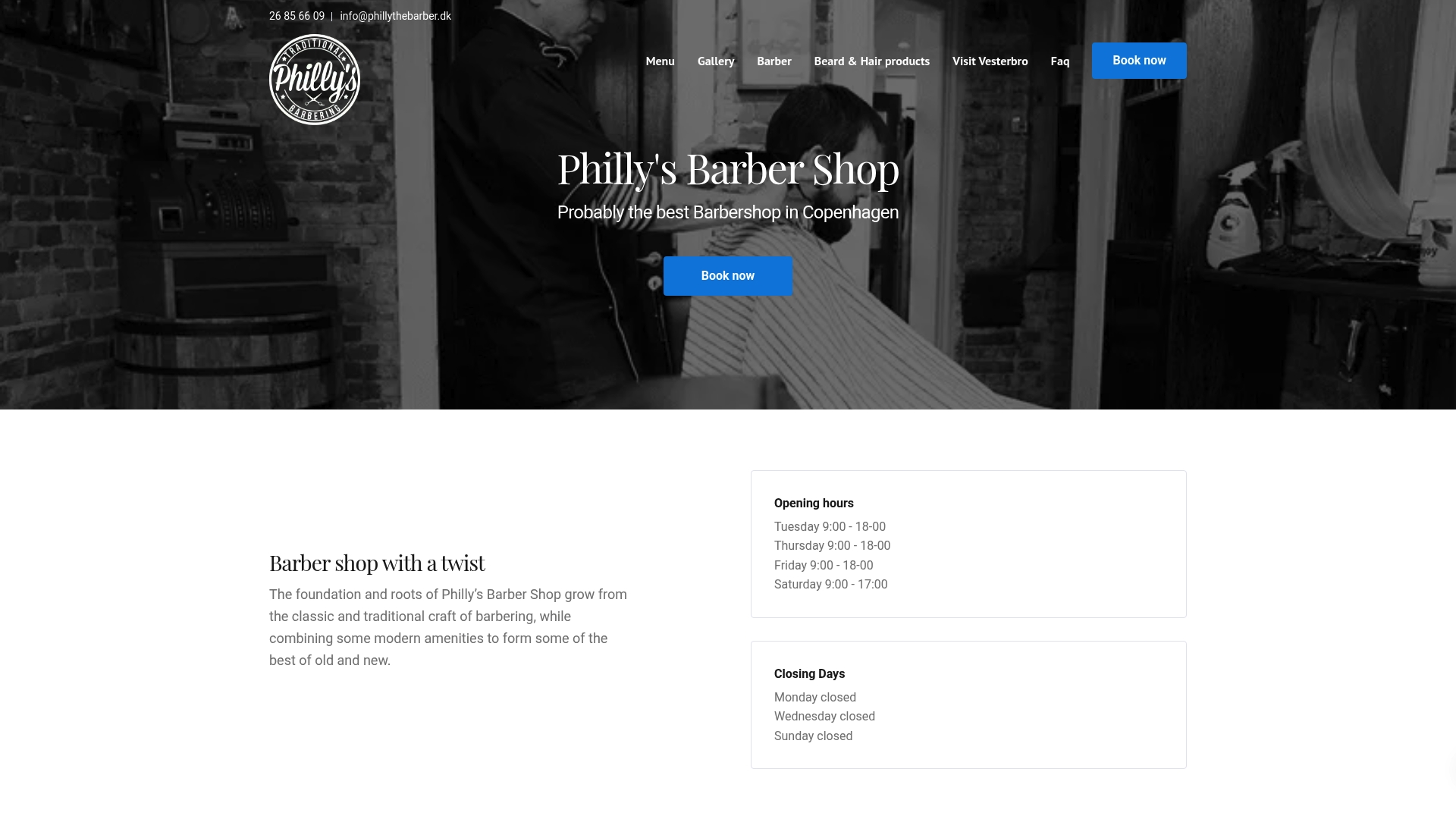
Phillythebarber is a premium barbershop in Copenhagen built around exactly the services where local barbershops excel. Philly, a certified Master Barber with over 20 years of experience, specializes in precision fades, beard shaping, and straight razor shaves. Every appointment includes a personalized grooming consultation so your cut fits your face, your lifestyle, and your maintenance schedule.
If beard care is part of your routine, the beard trim process at Phillythebarber covers everything from line definition to hot towel preparation. For men exploring the full range of beard grooming services available, Phillythebarber offers a clear, detailed breakdown of each option. Online booking is available directly through the site, making it easy to secure your slot in advance.
FAQ
What is the main difference between a barber and a hairdresser?
A barber specializes in clipper work, razor shaving, and beard care for short hair. A hairdresser, or salon stylist, is trained in cosmetology with broader skills in color, chemical treatments, and longer hair styling.
How often should I visit a barbershop versus a salon?
Barbershop cuts like fades and tapers typically need refreshing every 2–4 weeks. Salon cuts with layering or texture grow out well over 6–10 weeks, making them less frequent visits.
Can a chain salon do a good fade or beard trim?
Most chain salons are not equipped or trained for precision fades and beard shaping. These services require barber-specific tools and clipper technique that cosmetology training does not emphasize.
Do local barbershops in Copenhagen accept walk-ins?
Premium barbershops increasingly require advance bookings, though some reserve limited walk-in slots during low-traffic times like quiet weekday mornings. Booking ahead is the safest approach.
Is a local barbershop more expensive than a chain salon for a basic haircut?
Barbershops typically charge less per cut than chain salons for equivalent services. The trade-off is that barbershop cuts often require more frequent visits due to the precision of fades and tapered styles.
Key takeaways
The single most important factor in the local barbershop vs chain salon decision is matching your grooming goal to the venue’s core specialization, not its price or location.
| Point | Details |
|---|---|
| Match service to venue | Fades, tapers, and beard work belong at a barbershop; color and layering belong at a salon. |
| Training defines capability | Barbers specialize in clipper and razor work; stylists specialize in color chemistry and longer hair. |
| Maintenance frequency matters | Barbershop cuts need refreshing every 2–4 weeks; salon cuts last 6–10 weeks before growing out. |
| Booking ahead is now standard | Premium local barbershops require advance appointments; walk-in availability is increasingly limited. |
| Relationship drives quality | A barber who knows your hair history consistently delivers better results than a rotating stylist. |