What Does Hair Texture Mean at a Barbershop?
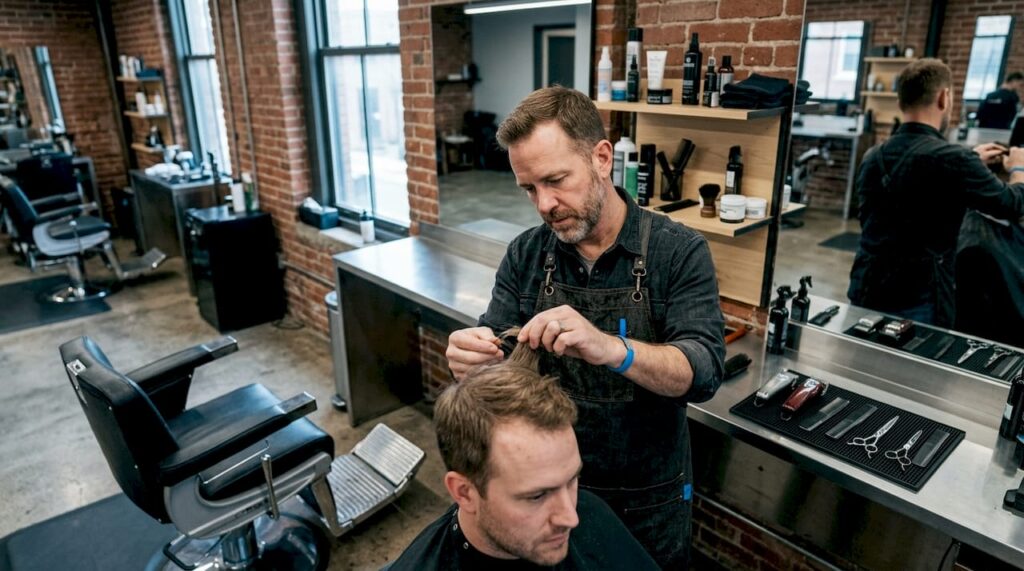
Hair texture is defined as the physical diameter of a single hair strand, and it is one of the first things a skilled barber assesses before picking up any tool. At Phillythebarber, understanding your hair texture is the foundation of every great haircut. Knowing whether your strands are fine, medium, or coarse shapes every decision, from the cutting technique to the products we recommend. If you have ever walked out of a barbershop with a style that looked nothing like what you asked for, a mismatch between your texture and the approach used was likely the reason.
What does hair texture mean in a barbershop setting?
Hair texture refers strictly to the diameter of an individual strand, classified as fine (under 0.06mm), medium (around 0.07mm), or coarse (above 0.08mm). This measurement is independent of curl pattern, which is what most people mean when they say “hair type.” A barber who understands your strand thickness can predict how your hair will behave under scissors, clippers, and styling products before a single cut is made.
This distinction matters more than most men realize. Two clients can both have tight curls, yet one has fine strands and the other has coarse strands. The fine-curled client needs volume-building products and a lighter touch with the shears. The coarse-curled client needs moisture-rich formulas and a different cutting strategy entirely. Treating them the same way produces two bad haircuts.
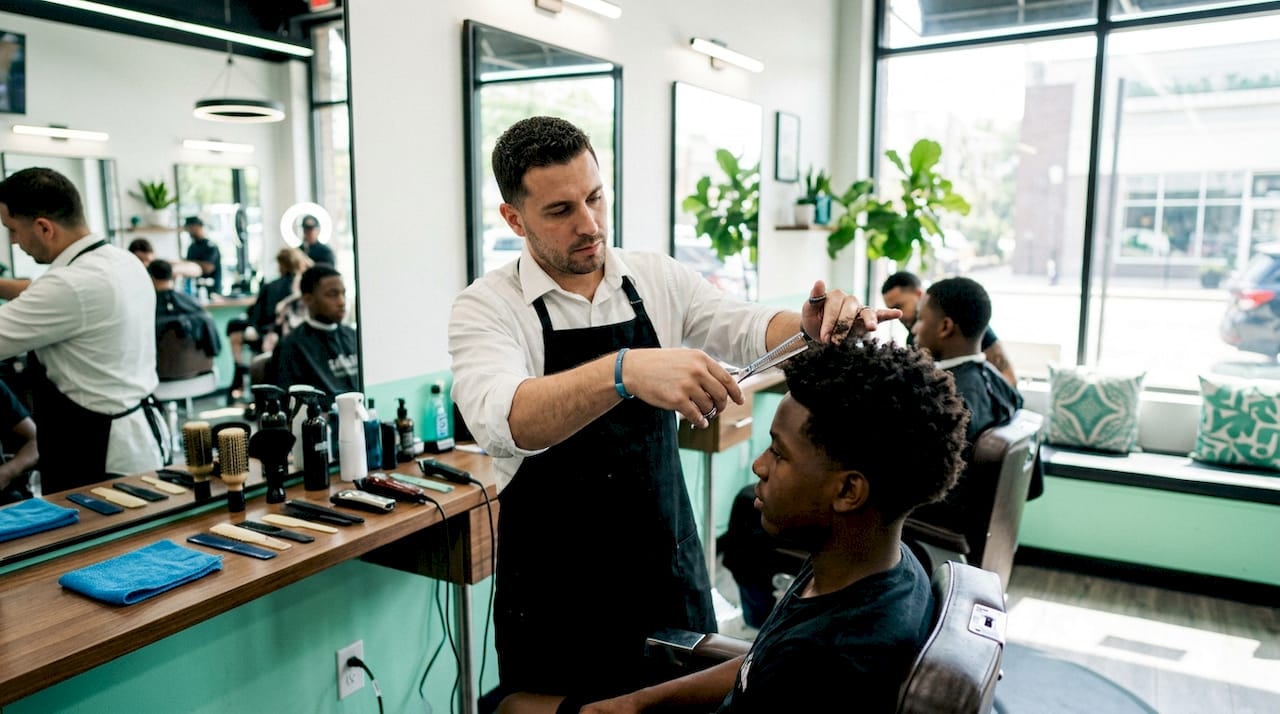
At Phillythebarber, the consultation always starts with texture assessment. It is the single most reliable predictor of how a style will hold, how much product it needs, and how often you will need a trim.
What are the main hair texture categories?
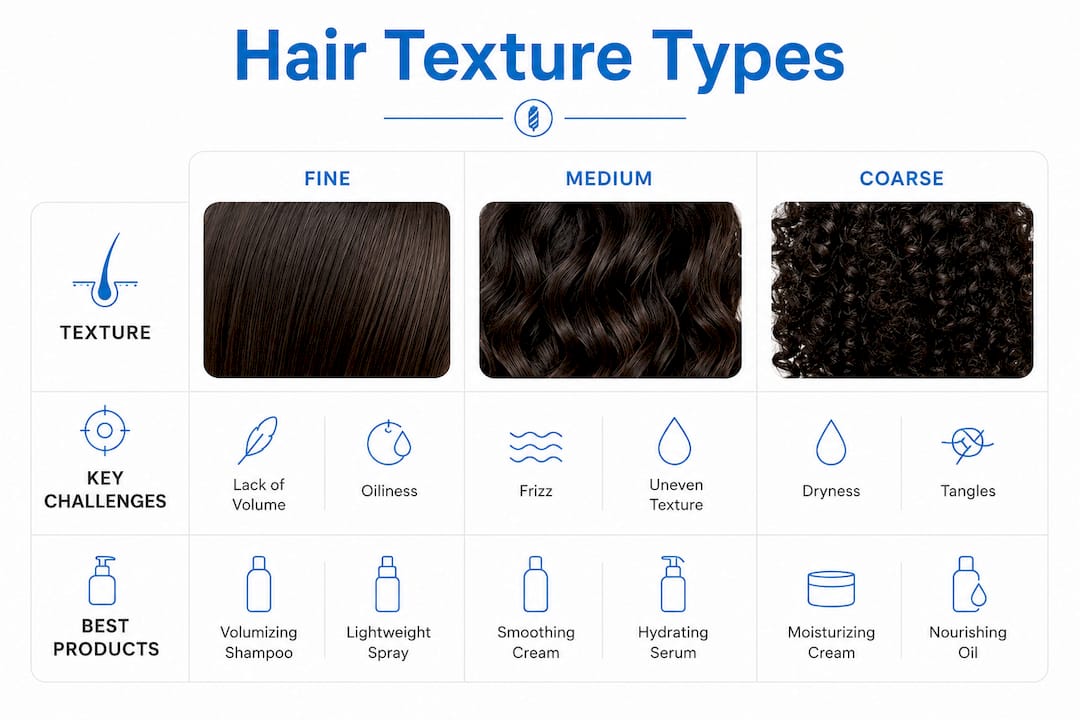
The three texture categories each behave differently under barbering conditions, and knowing yours saves time and money.
- Fine hair (under 0.06mm): Strands are fragile and prone to breakage under aggressive cutting. Fine hair tends to look flat without volume-building products. Lightweight mousses and volumizing sprays work best. Heavy creams weigh it down and make it look limp.
- Medium hair (around 0.07mm): The most common texture among men. It is versatile, holds most styles well, and responds predictably to both scissors and clippers. Most standard barbering techniques are designed with medium hair in mind.
- Coarse hair (above 0.08mm): Strands are thick and strong, which means they hold a style longer. The trade-off is that coarse hair resists moisture absorption due to a dense cuticle layer. Coarse hair needs richer, moisturizing formulas to stay manageable and avoid dryness.
Tool choice also shifts with texture. Fine hair calls for sharp scissors over clippers to avoid blunt, heavy lines. Coarse hair often benefits from razor work or thinning shears in dense areas to reduce bulk without losing shape.
| Texture | Strand diameter | Key challenge | Best product type |
|---|---|---|---|
| Fine | Under 0.06mm | Flatness, fragility | Lightweight volumizing sprays |
| Medium | Around 0.07mm | Few challenges | Most product types work |
| Coarse | Above 0.08mm | Moisture resistance, bulk | Rich creams and conditioning balms |
Pro Tip: Run a single strand between your fingers. Fine hair is almost imperceptible. Medium hair has a slight presence. Coarse hair feels clearly thick and wiry. This quick test gives you a starting point before your next visit.
How do barbers use texturizing techniques to shape your style?
Texturizing is a cutting technique, not a hair property. This distinction trips up a lot of men. Your natural hair texture is what you were born with. Texturizing is what a barber does with scissors or a razor to remove internal weight, create movement, and add visual dimension to a haircut.
Textured haircuts use techniques like point cutting, razor cutting, and slithering to remove weight from the interior of the hair without shortening the overall length. The result is hair that moves naturally, avoids a blocky or helmet-like appearance, and is far easier to style at home. These techniques trap air between layers, which adds volume without adding product.
Here is how each technique works in practice:
- Point cutting: The barber holds the scissors vertically and cuts into the ends at an angle. This softens blunt lines and creates a natural, feathered finish. It works well on fine and medium hair.
- Razor cutting: A straight razor or razor comb removes weight while adding texture simultaneously. It creates a lived-in, slightly undone look. Razor cutting works best on straight to wavy hair.
- Slithering: The barber slides open scissors down the hair shaft to thin and taper. It is a subtle technique that reduces bulk without visible layering.
- Thinning shears: These remove bulk from dense areas. However, thinning shears on curly hair can cause frizz and disrupt the curl pattern. Skilled barbers reserve them for straight or wavy hair in targeted zones only.
Pro Tip: Ask your barber specifically whether they plan to use thinning shears if you have curly or coily hair. Point cutting or razor work preserves your curl integrity far better.
What is the difference between hair texture and hair type?
Hair type describes your curl pattern, not your strand thickness. The Andre Walker scale, widely used in professional barbering, classifies hair into four types: straight (Type 1), wavy (Type 2), curly (Type 3), and coily (Type 4). Each type has subcategories based on curl tightness.
Texture and curl pattern are independent of each other. A man with Type 3 curls can have fine, medium, or coarse strands. A man with straight Type 1 hair can also have any of the three textures. This independence is why the common assumption that coily hair is always coarse is simply wrong. Fine curly hair needs volume-enhancing products, not the heavy formulas designed for coarse strands.
| Property | What it measures | Categories | Barbering impact |
|---|---|---|---|
| Hair texture | Strand diameter | Fine, medium, coarse | Tool choice, product weight, cut technique |
| Hair type | Curl pattern | Straight, wavy, curly, coily | Cutting angle, shrinkage, shape design |
Both axes matter independently. A barber who only considers curl pattern without assessing strand thickness will consistently miss the mark on product recommendations and cutting pressure. At Phillythebarber, both are assessed during every personalized grooming consultation before any work begins.
One more factor worth knowing: Type 4 coily hair experiences significant shrinkage when dry. A barber cutting wet coily hair can easily remove far more length than intended. Experienced barbers cut coily hair dry or stretch it carefully to get an accurate read on the final silhouette.
How to describe your hair texture to your barber
Clear communication beats technical jargon every time. Most men walk into a barbershop with a vague idea of what they want and no language to describe it. That gap between intention and result is where bad haircuts are born.
Barbers recommend bringing reference photos rather than relying on verbal descriptions alone. A photo shows the barber exactly how the hair falls, how much volume is present, and what the finished texture looks like. Words like “messy” or “natural” mean different things to different people. A photo removes the ambiguity.
Follow these steps before and during your next visit:
- Wash your hair and leave it product-free. Accurate texture assessment requires clean hair. Styling products mask the true strand thickness and can make fine hair appear medium or coarse hair appear more manageable than it is.
- Describe how your strands feel. Tell your barber whether your hair feels thin and silky, average, or thick and wiry. These simple descriptions map directly to fine, medium, and coarse.
- Bring two photos. One showing the style you want, and one showing your hair on a typical day with no styling effort. The second photo is often more useful to the barber.
- State your styling goals. Tell the barber how much time you spend on your hair each morning and what products you currently use. A great cut works with your routine, not against it.
- Ask about texturizing. Specifically ask whether your barber plans to use point cutting, razor work, or thinning shears, and why. A barber who can explain their technique choice is a barber who understands your hair.
Pro Tip: Visit how to describe a haircut for a full guide on getting your point across clearly before you sit in the chair.
How does hair texture affect maintenance and product choices?
Texture directly determines how often you need a trim and what sits on your shelf at home.
Straight hair requires trims every 2–3 weeks because growth is immediately visible along clean lines. Curly and coily hair can often extend to four or more weeks between visits because natural volume conceals new growth. Coarse hair, regardless of curl pattern, tends to hold its shape longer than fine hair, which loses definition faster as it grows.
Product selection follows the same logic:
- Fine hair: Use lightweight volumizing sprays, mousses, or sea salt sprays. Avoid heavy waxes or pomades. They flatten fine strands and create a greasy appearance.
- Medium hair: Most product types work. Clay, matte paste, and light pomades all perform well. Medium hair gives you the most flexibility.
- Coarse hair: Reach for creams, butters, or conditioning balms. Fine hair needs lighter products while coarse hair needs richer formulas to combat the cuticle density that blocks moisture absorption.
Layering products also depends on texture. Fine hair rarely benefits from more than one product. Coarse hair can handle a leave-in conditioner as a base, followed by a styling cream on top, without becoming weighed down. Ask your barber which products suit your specific texture. A good barber will point you toward the right options from their recommended product selection rather than guessing.
Key Takeaways
Hair texture, defined as strand diameter, is the single most important physical property a barber uses to determine cutting technique, product choice, and maintenance schedule for every client.
| Point | Details |
|---|---|
| Texture means strand diameter | Fine, medium, and coarse refer to strand width, not curl pattern or hair feel. |
| Texture and hair type are separate | Curl pattern and strand thickness are independent; both affect cutting and product decisions. |
| Texturizing is a technique, not a trait | Point cutting, razor cutting, and slithering remove weight to create movement and volume. |
| Clean hair gives accurate readings | Always arrive product-free so your barber can assess your true strand thickness. |
| Maintenance frequency follows texture | Fine straight hair needs trims every 2–3 weeks; coarser or curlier hair can extend to 4+ weeks. |
What 20 years behind the chair taught me about hair texture
Most men who sit in my chair have never thought about their hair texture. They know if their hair is curly or straight, but the strand thickness question is almost always a blank. That gap costs them. I have seen men with fine hair walk out looking flat because a previous barber used a heavy pomade that was designed for coarse strands. I have seen men with coarse, curly hair leave with frizz because someone ran thinning shears through their curls without thinking twice.
The misconception I correct most often is that coily hair must be coarse. It is not. Some of the finest strands I have worked with belong to men with tight Type 4 coils. Those clients need completely different products and a much lighter cutting hand than a man with coarse coily hair. Treating them the same way is a guaranteed bad result.
My honest advice is this: learn your texture before you book your next appointment. Run a strand between your fingers. Wash your hair without product and look at how it naturally falls. Bring a photo of a style you like. That preparation alone puts you ahead of most clients and gives your barber the information needed to do their best work.
The barbering world has evolved significantly around texture awareness. Techniques like point cutting and razor work are now standard tools for managing texture, not specialty skills. A barber who cannot explain why they are choosing one technique over another based on your strand thickness is not yet working at the level you deserve.
— Stephen
Phillythebarber: where your hair texture gets the attention it deserves
At Phillythebarber, every appointment starts with a proper consultation. Philly, a certified Master Barber with over 20 years of experience, assesses your strand texture before recommending any cut or style. That assessment shapes everything: the tools used, the techniques applied, and the products suggested.
Whether you have fine hair that needs volume, coarse hair that needs taming, or anything in between, Phillythebarber builds the approach around your actual hair, not a generic template. From precision haircuts to full grooming experiences, every service is tailored to your texture and your lifestyle. Book your appointment today and walk out with a cut that actually works for your hair.
FAQ
What does hair texture mean at a barbershop?
Hair texture refers to the diameter of individual hair strands, classified as fine, medium, or coarse. Barbers use this measurement to choose cutting techniques and recommend the right styling products for your hair.
What is the difference between hair texture and hair type?
Hair texture measures strand thickness, while hair type describes your curl pattern using categories like straight, wavy, curly, and coily. Both are independent properties that affect how a barber approaches your cut.
How do I know if my hair is fine, medium, or coarse?
Roll a single strand between your fingers. Fine hair is barely noticeable, medium hair has a slight presence, and coarse hair feels clearly thick. Your barber can confirm the assessment on clean, product-free hair.
What is texturizing in a barbershop haircut?
Texturizing is a cutting technique that removes internal weight from the hair using methods like point cutting, razor cutting, or slithering. It creates movement and volume without significantly shortening the overall length.
How often should I get a trim based on my hair texture?
Straight fine hair typically needs a trim every 2–3 weeks to maintain clean lines. Curly or coily hair, especially with coarser strands, can often go four or more weeks between visits before the shape visibly breaks down.